Precision Pipe Cutting Solutions (Catalog 01-08)
High-leverage ratchet shear cutters, calibrators, and heavy-duty aluminum alloy tools manufactured under ISO 9001 quality guidelines.
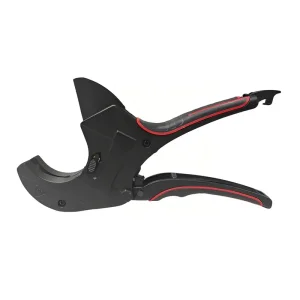
OEM China HDPE Pipe Cutter Suppliers - Professional 63mm One-Handed Tools from a Trusted Factory Supplier, Factories
View Product Specs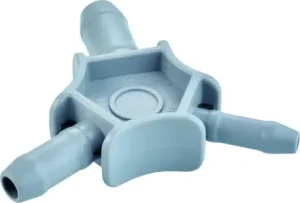
OEM China Suppliers 3-in-1 Pipe Calibrator for PEX-AL-PEX Systems - Factory Price, Precision Calibration Tool Factories, Factory
View Product Specs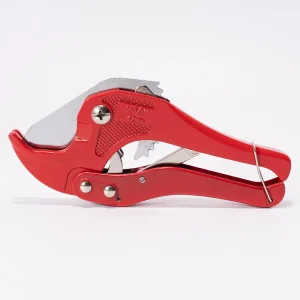
ODM Heavy-Duty 42mm Aluminum PVC Pipe Cutter from China Suppliers - Precision Factory Tool for Professionals Supplier, Factory
View Product Specs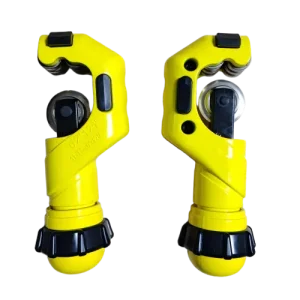
Wholesale Heavy-Duty 1.25-inch Copper Tube Cutter | China Suppliers & Factory for Professional Plumbing Tools Suppliers, Factory
View Product Specs
OEM Heavy-Duty 42mm Aluminum Pipe Cutter from China Suppliers - Professional Quality PVC Cutting Tool from Reliable Factory Factories, Factory
View Product Specs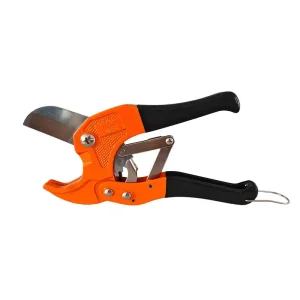
OEM Professional 42mm PVC Pipe Cutter - China Suppliers Factory with Anti-Slip Dipping Handle for High-Frequency Use Manufacturers, Manufacturer
View Product Specs
OEM Professional 42mm PVC Pipe Cutter with Anti-Slip Dipping Handle - China Suppliers and Factory Quality Tool Supplier, Factory
View Product Specs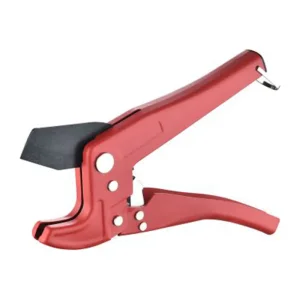
ODM 42mm Heavy-Duty Ratchet Plastic Pipe Cutter PC-25 – Durable Tool for China Suppliers and Factory Projects Suppliers, Manufacturer
View Product SpecsGlobal Sourcing Dynamics for PVC Pipe Cutters & Cutting Machinery
An analytical evaluation of material standards, procurement trends, and engineering bottlenecks in modern thermoplastic piping networks.
Polymer Shear Mechanics
Modern PVC (Polyvinyl Chloride), CPVC (Chlorinated PVC), PPR (Polypropylene Random Copolymer), and HDPE (High-Density Polyethylene) pipes demand specialized shear blade profiles. Unlike metal cutting, plastic cutting relies on rapid shear propagation without causing radial micro-fracturing or wall deformation that disrupts solvent welding or push-fit calibration integrity.
High-Carbon Alloy Tool Steel
Top-tier suppliers utilize SK5, 65Mn, or 9CrSi high-carbon steel blades treated via precise vacuum heat treatment (HRC 54–58). This metallurgy guarantees edge retention over 10,000+ cycle cuts while mitigating blade chipping when cutting thick-walled Schedule 80 PVC or cold-brittle PPR at sub-zero jobsite temperatures.
Ratchet Leverage Ratios
High-frequency mechanical advantages require precise gear-tooth incrementing. Industrial-grade ratchet cutters utilize multi-stage gear indexing to reduce required operator hand-squeeze force by up to 60%, maintaining strict perpendicularity (<0.5° deviation) required for high-pressure fluid conveyance systems.
Information Gain Insight: Mitigating Material De-lamination in Multilayer Pipes
Procurement teams sourcing tools for PEX-AL-PEX and multilayer aluminum-plastic composite piping must specify dynamic wedge-shaped blades. Standard flat-edge cutter blades subject aluminum inner layers to shear collapse, resulting in structural delamination. Optimized V-shaped knife profiles shear progressively from outer jacket to core core, preserving 100% roundness for subsequent mechanical press fitting installation.
Material Science & Manufacturing Roadmap
Direct comparative analysis of cutter body alloys, blade metallurgy, surface finishes, and ergonomic mechanical leverage mechanisms.
| Cutter Component | Standard Commercial Grade | Heavy-Duty Industrial Grade | Professional OEM / Custom Specs |
|---|---|---|---|
| Body Material | Recycled Die-Cast Aluminum (ADC12) | Virgin High-Pressure Die-Cast ADC12 Alloy | Forged Magnesium-Aluminum Alloy / Structural Ductile Iron |
| Blade Metallurgy | 420 Stainless Steel / 65Mn Carbon Steel | Japanese SK5 High-Carbon Tool Steel | Custom 9CrSi Alloy / Cr-Mo Heat-Treated Special Steel |
| Heat Treatment | Standard Induction Quenching (HRC 48-52) | Vacuum Oil Quenching + Tempering (HRC 54-58) | Cryogenic Sub-Zero Treatment (HRC 58-62) |
| Surface Coating | Standard Black Oxide / Spray Paint | PTFE (Teflon) Non-Stick Friction Coating | Titanium Nitride (TiN) PVD Nano-Coating |
| Mechanism | Single-Stroke Lever / Basic Spring Reset | Heavy-Duty Ratchet with Auto-Release Lock | Multi-Gear Compound Power Transmission |
| Pipe Size Range | 0 - 32 mm (1-1/4") | 0 - 42 mm (1-5/8") & 0 - 63 mm (2-1/2") | Custom Adjustable Jaws Up to 75mm - 110mm |
Die-Cast Structural Integrity
Under extreme force, lower-tier cast aluminum handles suffer flex or fracture at pivot stress points. OEM specifications require finite element analysis (FEA) to reinforce handle ribbing, guaranteeing zero deflection under 800N Squeeze Force tests.
PTFE Friction Minimization
Teflon-coated cutter blades reduce cutting friction against sticky CPVC and PPR materials by up to 35%. This prevents binding, allows smooth one-handed operation, and eliminates thermal fusion binding caused by high friction rates during continuous cuts.
Ergonomic Dipped Grip Design
High-frequency professional plumbers require anti-slip PVC dipped or TPR dual-injection handles. Solvent resistance against primer, acetone, and PVC cements is essential to prevent rubber degrading or peeling in commercial plumbing environments.
Procurement Use-Cases & Regional Compliance Standards
Deconstructing intent-driven procurement categories across international distribution networks, OEM brand owners, and utility infrastructure contractors.
Residential Plumbing & HVAC Distribution
Focuses on lightweight 36mm and 42mm (1-5/8") ratchet cutters suitable for PEX tubing, schedule 40 PVC, and thin-wall drain lines. Requires high aesthetic finish, blister pack/color box retail packaging, and affordable volume pricing for retail tool chains.
Municipal Infrastructure & Civil Engineering
Demands heavy-duty 50mm, 63mm, and 75mm wide-diameter cutters capable of slicing through thick-wall SDR-11 HDPE water mains and underground conduit without cracking or leaving plastic shavings that clog downstream inline pumps.
Industrial Chemical & MRO Piping Networks
Requires chemical-resistant tool coatings and ultra-precise right-angle cutting mechanics for high-purity PVDF and CPVC piping systems. Tools must comply with international workplace safety norms (e.g., ANSI B107, DIN EN ISO 9001, CE directives).
Factory Verification & Quality Assurance Protocol
How global procurement buyers evaluate China PVC pipe cutter manufacturers to guarantee consistent lot-to-lot tolerances and prevent supply disruptions.
1. Metallurgy & Hardness Testing
Reliable factories enforce raw material incoming quality control (IQC) using Rockwell Hardness Testers (HRC) and Spectrometric Chemical Analysis to verify high-carbon steel composition prior to stamping and edge sharpening.
2. Automated CNC Edge Grinding
Precision bevel angles (typically dual-bevel 17°/23° configurations) must be ground using multi-axis CNC grinding machines rather than manual bench grinders to maintain sharp, burr-free cutting profiles across 100,000+ unit production runs.
3. Fatigue & Torque Resistance Audits
Finished tools undergo continuous cycle testing machines. Ratchet pawls and springs are tested for 20,000 consecutive clicks without mechanical jamming, tooth wear, or return spring tension loss.
4. Salt Spray & Coating Adhesion Tests
To withstand humid storage and jobsites, anti-rust coatings (electro-galvanizing, Teflon plating, or powder coating) undergo 72-hour ASTM B117 salt spray testing with zero red rust emergence allowed.
5. Full-Scale Cutting Sample Inspection
Out-going Quality Control (OQC) mandates sampling test cuts on cold PVC and tough PPR pipes at 0°C. Cut ends must pass roundness laser scanning and visual burr inspection prior to export packaging approval.
6. Social Compliance & Environmental Controls
Leading suppliers maintain ISO 14001 environmental management and BSCI / SEDEX social accountability audits, ensuring eco-friendly wastewater treatment during electroplating and safe working environments.
Next-Generation Pipe Cutting Technology & ESG Trends
Exploring automated assembly lines, ultra-light carbon fiber bodies, smart wear sensors, and eco-sustainable manufacturing methods.
AI-Assisted Blade Geometry Optimization
Computational Fluid Dynamics (CFD) and Finite Element Modeling (FEM) are now integrated into tool mold design. AI algorithms simulate stress distribution during high-impact cuts, producing blade profiles with up to 40% higher fatigue resistance and minimal penetration resistance.
Composite Light-Weighting Material
To reduce technician fatigue during all-day overhead installations, next-generation cutters incorporate carbon-reinforced polyamide and hybrid magnesium matrix frames. These materials deliver steel-like tensile strength at less than half the weight of traditional cast iron tools.
Circular Economy & Recyclability
Global ESG mandates require tool manufacturers to adopt 100% recyclable alloy handles, lead-free surface coatings, and quick-disassembly blade mechanisms. Replacement blade kits extend tool lifespan by 500%, drastically reducing jobsite e-waste and metal scrap footprint.
Heavy-Duty & Specialized Cutting Equipment (Catalog 09-16)
Complete range of gas fusion welders, multi-size ratcheting cutters, and adjustable pipe beveling equipment for wholesale supply.
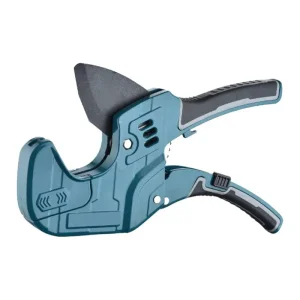
ODM Heavy-Duty Adjustable PVC Pipe Cutter 63mm – High-Performance China Suppliers & Factory Model JC-PC-22 Supplier, Manufacturers
View Product Specs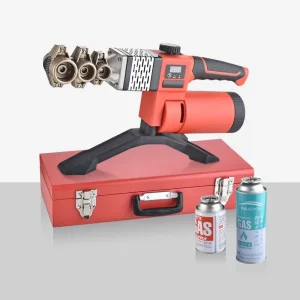
ODM 1.4KW Gas Powered PPR Fusion Welder for 20-32mm Pipes - High-Quality China Suppliers & Factory Solution Supplier, Suppliers
View Product Specs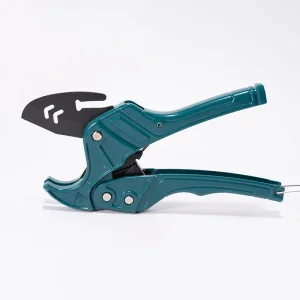
Wholesale 42mm Ratchet Plastic PPR Pipe Cutter Model 42922 - Reliable China Suppliers & Factory for PVC, PPR, PEX Pipes Suppliers, Factory
View Product Specs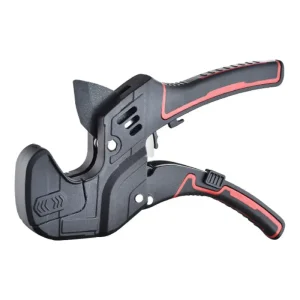
Wholesale Heavy-Duty Adjustable PVC Pipe Cutter from China Suppliers - Model JC-PC-22 for Professional Use Suppliers, Factory
View Product Specs
OEM 1.4KW Gas-Powered PPR Fusion Welder for 20-32mm Pipes - China Suppliers & Factory - Cordless Solution Manufacturer, Factories
View Product Specs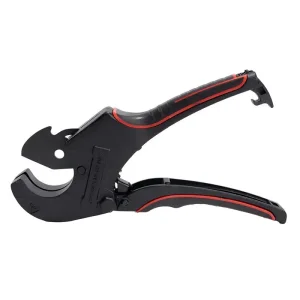
OEM High-Efficiency 42mm Ratchet PVC Pipe Cutter - Leading China Suppliers & Factory for Rapid Construction Manufacturers, Factory
View Product Specs
China Heavy-Duty Adjustable PVC Pipe Cutter 50mm/63mm - China Suppliers Factory Model JC-PC-22 Supplier, Manufacturers
View Product Specs
Wholesale 42mm Heavy-Duty Ratchet Plastic Pipe Cutter Model PC-25 - China Suppliers Heavy-Duty Factory Tool for PPR, PVC, PE Pipes Manufacturer, Factory
View Product SpecsFrequently Asked Procurement & Engineering Questions
Expert responses regarding minimum order quantities, blade replacement logistics, OEM private labeling, and custom tool engineering.
What steel grade offers the best price-to-performance ratio for PVC pipe cutter blades?
For professional and commercial-grade pipe cutters, Japanese SK5 high-carbon tool steel treated to HRC 54–58 offers the optimal balance of edge sharpness, wear resistance, and toughness. For budget retail lines, 65Mn manganese spring steel provides reliable cutting performance at lower material costs.
How do ratchet pipe cutters prevent crush deformation on thin-wall plastic pipes?
Ratchet cutters utilize incremental gear advance combined with a point-convex blade geometry. This initial wedge penetration cuts into the pipe wall before radial pressure is applied, allowing the blade to slice cleanly rather than compressing the pipe into an oval profile.
Can PVC pipe cutters be customized for private label OEM distribution?
Yes. Customization options include laser-etched brand logos, custom handle DIP or TPR injection colors (matching Pantone specs), specialized surface coatings (Teflon PTFE or black phosphate), and tailored retail packaging (double blister cards, color display boxes, or canvas pouches).
What is the typical factory Minimum Order Quantity (MOQ) for custom PVC cutter orders?
Standard factory MOQs for custom color handles and private label packaging typically start at 1,000 to 2,000 units per model. Stock factory models with standard branding can be ordered in lower wholesale quantities starting at 500 units.
How do gas-powered PPR fusion welders compare to standard electrical fusion machines?
Gas-powered socket fusion welders provide complete mobility for remote jobsites, municipal trench repairs, and construction areas where electrical generators or power outlets are unavailable. They deliver consistent thermal output to reach 260°C fusion temperatures quickly using standard butane/propane canisters.
What quality control tests should be specified in a B2B purchasing contract?
B2B contracts should mandate 100% blade hardness verification (HRC testing), a minimum 5,000-cycle mechanical ratchet endurance test, perpendicular cut angle deviation limits (<0.5°), and 72-hour salt spray corrosion resistance for metal components.
Why is a 3-in-1 calibrator necessary when installing PEX-AL-PEX multilayer piping?
When multilayer pipes are cut, the aluminum layer and outer jacket can deform slightly inward. A 3-in-1 calibrator re-rounds the pipe end, bevels the inner plastic edge, and cleans internal burrs, preventing damaged O-rings and guaranteeing a leak-tight seal during fitting press crimping.
How does factory location in Yuyao / Zhejiang benefit international tool importers?
Yuyao and the surrounding Ningbo/Zhejiang industrial cluster host the world's highest concentration of precision hardware tool factories, heat treatment specialists, and mold makers. Sourcing from this hub grants access to robust supply chain integration, competitive shipping access via Ningbo Port, and mature export logistics.