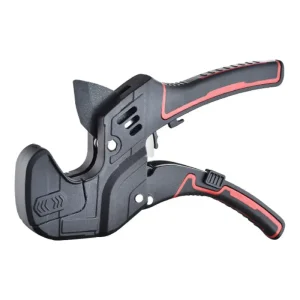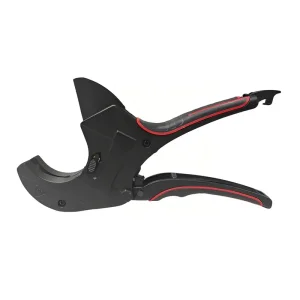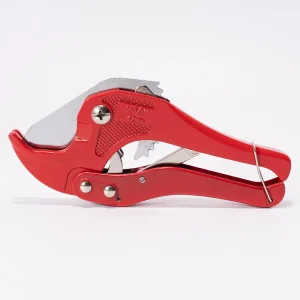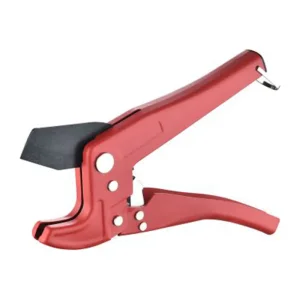
Precision Pipe Cutters & Deburring Tooling Solutions
Direct factory supply for professional HVAC, plumbing, and industrial pipe preparation systems.
Navigating the Modern Landscape of Industrial Deburring Tool Sourcing
In modern mechanical manufacturing, fluid dynamics engineering, and advanced plumbing installations, deburring is no longer merely a cosmetic touch-up—it is a critical structural quality phase. A burr, by metallurgical definition, is a unwanted ridge or projection of material created during machining, sawing, shearing, or thermal cutting operations. Left unaddressed, internal and external burrs cause catastrophic fluid turbulence, premature localized corrosion, seal deterioration (such as O-ring slicing in push-fit and press-fit piping), high stress-concentration cracking, and dangerous mechanical interferences in precision assemblies.
As a global procurement manager, engineering director, or brand distributor researching deburring tools suppliers & manufacturers, evaluating vendors requires looking beyond standard pricing tables. Achieving real competitive advantage demands analyzing blade metallurgical composition (such as M2 HSS vs. M35 Cobalt), swivel joint mechanical clearance, handle ergonomics, thermal stability during high-frequency manual deburring, and continuous supply chain resilience.
Why Edge Chamfer Precision Dictates Pipeline Integrity
In press-fitting and socket-fusion systems (PEX-AL-PEX, PPR, Copper), up to 73% of seal leakage failures in pressurized fluid lines stem directly from unchamfered pipe ends. When un-deburred pipe walls are thrust into elastomeric O-rings, micro-burrs slice the seal geometry, creating micro-channels for water or gas migration under hydrostatic pressure spikes. Professional-grade M2 HSS deburring tools eliminate this root cause entirely.
Global Deburring Industry Trends & Metallurgical Advancements
Emerging technology standards transforming edge preparation across manufacturing sectors.
Advanced M2 & M35 HSS Metallurgy
Standard carbon steel deburring blades dull rapidly when applied to abrasive materials like glass-filled polymers or hard copper alloys. Leading manufacturers have transitioned to vacuum heat-treated M2 High-Speed Steel (W6Mo5Cr4V2) and M35 Cobalt steel (5% Co content), pushing blade hardness ratings up to HRC 64–66. This extends cutting edge longevity by over 340% during continuous usage.
PVD Nano-Coatings (TiN & TiAlN)
Physical Vapor Deposition (PVD) titanium nitride coatings lower the friction coefficient between blade tip and work workpiece metal from 0.65 to 0.4. This surface lubrication prevents edge-build-up (EBU) when deburring soft metals such as aluminum 6061 or annealed copper tubing, yielding an ultra-smooth chamfer surface finish under 0.8 µm Ra.
Ergonomic Quick-Release Mechanisms
Field technician safety and task efficiency have driven design innovations in 360-degree swiveling tool heads. Modern spring-loaded ball-bearing release collars allow instant blade replacements without supplementary tooling, eliminating jobsite downtime and preventing hand strain injuries during high-repetitive assembly lines.
China Factory 4.0: Supply Chain Resilience & Yuyao Tooling Ecosystem
When evaluating Deburring Tools Suppliers & Manufacturers in the global hardware ecosystem, Ningbo and Yuyao in Zhejiang Province stand out as global epicenters for hardware tool innovation. The localized industrial cluster offers unprecedented vertical supply chain integration: from raw alloy steel forging and precision CNC blade grinding to automated injection molding and packaging.
Vertical Cost & Lead-Time Efficiency
By housing raw material sourcing, automated CNC grinding machines, heat treatment facilities, and quality assurance testing within a tight 15-kilometer radius in Yuyao, production turnaround times are reduced from industry-standard 60 days down to 20 days. This supply chain compactness minimizes shipping friction and material holding costs.
Automated Defect Prevention (<0.5% Threshold)
Leading OEM manufacturers employ vision-guided optical sorting inspection machines to verify 100% of blade edge concentricity, chamfer angle tolerance, and swivel pin clearances. Defect rates are maintained below 0.5%, meeting stringent European DIY retailer standards and ISO 9001 compliance directives.
Global Commercial Realities & Specialized Application Scenarios
Selecting the appropriate deburring tool configuration requires deep technical alignment with field application demands. Different materials yield distinct chip geometries and burr types:
| Target Material | Burr Characteristics | Recommended Blade Geometry | Optimal Tool Type |
|---|---|---|---|
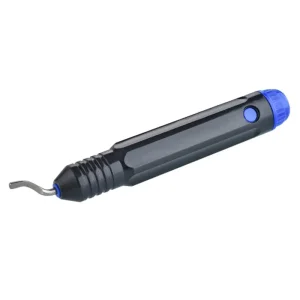
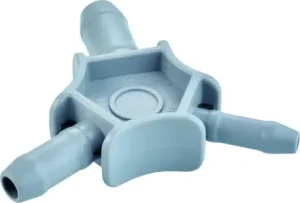
| Plastic (PVC, PPR, PEX, ABS) | Soft, continuous ductile burrs, heavy thermal distortion potential | 3.2mm M2 HSS with 45° rake angle for ultra-clean shearing | Manual Swivel Tool (DT-001) / Inner-Outer Reamer |
| Copper & Brass Tubing | Thin, sharp rollover burrs inside small-diameter walls | M2 Titanium-Coated Blade with steep relief clearance | Pen-Style Pocket Deburrer / Tube Cutter Reamer Blade |
| Aluminum & Die-Cast Metals | Gummy, high adhesion tendency; edge-build-up common | TiAlN Coated Cobalt M35 Blade with polish-ground flute | Heavy-Duty Aluminum Body Swivel Deburrer |
| Stainless Steel (304/316) | Work-hardened, high tensile stress burrs; extreme tool wear | Solid Tungsten Carbide micro-burr or M35 Cobalt Blade | Heavy-Duty Steel Blade Swivel System |
Field Application Scenarios:
- Plumbing & HVAC Installation: Preparing PEX-AL-PEX multilayer pipes prior to crimp connection requires concurrent internal reaming and outer wall chamfering to prevent sleeve dislocation.
- Automotive Machining & Hydraulic Block Manifolds: Cross-hole deburring where intersecting oil channels contain deep internal burrs that, if detached, would destroy hydraulic valves.
- Sheet Metal Fabrication & Enclosures: Removing razor-sharp punched edges along laser-cut aluminum and stainless steel panels to ensure technician safety and paint adhesion.
Frequently Asked Questions (FAQ)
Expert guidance for B2B buyers, distributors, and tool brand managers.
Explore Additional Professional Plumbing & Cutting Tools
Heavy-duty, factory-direct tools designed for high-frequency jobsite usage.