
Primary Infrastructure Tooling Solutions
Top-rated precision tools recommended for Panama City high-rise construction, Colón Free Trade Zone expansions, and marine piping installations.
Industry Whitepaper: Pipe Tooling & Infrastructure Dynamics in Panama
An authoritative analysis of macro-economic growth, local environmental challenges, technical standards, and B2B sourcing strategies for Panama importers.
1. The Panama Local Commercial & Industrial Landscape
Panama occupies a unique position in global commerce and regional infrastructure development. As the central logistical hub of the Americas—anchored by the Panama Canal, the Colón Free Trade Zone (Zona Libre de Colón - ZLC), and massive urban expansion in Panama City—the demand for high-end construction materials and specialized mechanical tools has surged dramatically over the past decade. Modern commercial real estate developments in areas such as Costa del Este, Punta Pacifica, and Santa María require strict adherence to international building standards (ANSI/ASTM, DIN, and ISO), driving contractors to upgrade from legacy manual tools to high-precision pipe preparation and joining equipment.
Furthermore, Panama’s geographical climate introduces severe environmental stresses on plumbing and HVAC systems. With atmospheric humidity levels routinely hovering between 80% and 95%, coastal atmospheric salinity, and high ambient temperatures, mechanical tools and plastic piping networks are subjected to accelerated wear, thermal expansion, and oxidative corrosion. Contractors operating across Panama require specialized pipe cutting tools engineered with anti-corrosion dipping handles, rust-resistant SK5 alloy steel blades, and gas-powered fusion equipment that functions independently of unstable power grids in remote coastal resort sites such as Bocas del Toro or the Pearl Islands.
Key Sourcing Insight for Panama Importers & Wholesalers:
Distributors serving the Republic of Panama must stock plumbing tools that meet both US ASTM standards (popularized due to historical engineering ties) and European DIN/ISO standards (widely adopted in modern PPR and PEX-AL-PEX multilayer installations). Sourcing from OEM suppliers capable of dual-standard manufacturing eliminates market friction and returns.
2. Global Macro-Trends: Transitioning to Advanced Polymer & Multilayer Piping
Globally, the building services sector is undergoing a definitive transition away from rigid metallic conduits (such as galvanized iron and traditional heavy copper) toward engineered polymers including Polypropylene Random Copolymer (PPR), Cross-linked Polyethylene (PEX-a, PEX-b), High-Density Polyethylene (HDPE), and Aluminum-Plastic Multilayer composite pipes (PEX-AL-PEX). This material shift is driven by the need for zero-scale accumulation, chemical resistance, lower transport weights, and rapid jobsite assembly.
However, the reliability of modern polymer piping systems depends almost entirely on the quality of initial pipe preparation. A clean, square, burr-free cut and precise joint calibration are non-negotiable prerequisites for leak-free performance. Incorrectly cut or uncalibrated pipes lead to sliced O-rings in press fittings or structural void inclusions during socket fusion welding—failures that result in catastrophic water damage in commercial high-rises. Consequently, global buyers are seeking direct-factory partnerships with specialized manufacturers in China capable of delivering precision-engineered tools with documented quality control.
Blade Metallurgy & SK5 Steel
High-carbon SK5 steel blades undergo vacuum heat treatment to achieve HRC 54–58 hardness, delivering clean shearing actions that prevent pipe wall crushing or delamination.
Cordless Gas Fusion Tech
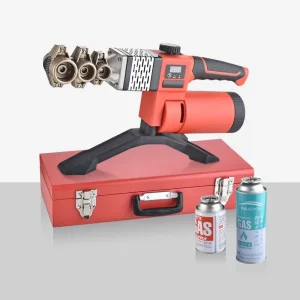
Specially engineered 1.4KW gas-powered PPR fusion welders operate without mains electricity, ideal for new construction projects in Panama prior to grid energization.
3-in-1 Calibration Systems
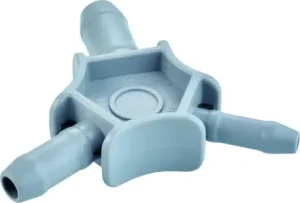
Multi-diameter calibrators simultaneously restore pipe roundness, deburr internal edges, and chamfer outer margins for error-free press-fitting insertion.
Technical Roadmap & Regional Solution Matrix for Panama
How specialized tooling addresses key installation hazards across Panama's dominant infrastructure sectors.
1. High-Rise Commercial & Residential Real Estate (Panama City Metro Area)
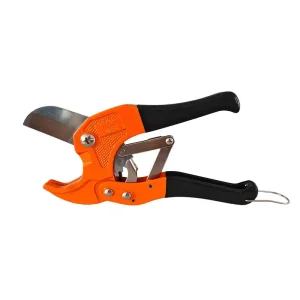
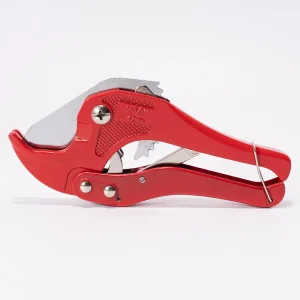
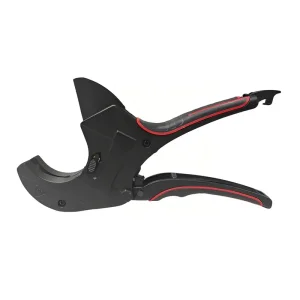
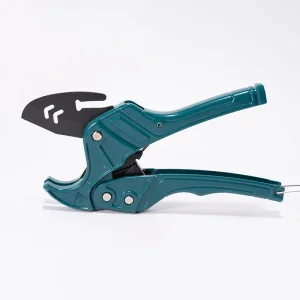
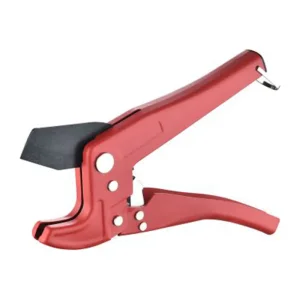
In multi-story construction, high-frequency pipe cutting using low-quality manual shears creates uneven end cuts. When joining PPR pipes via thermofusion, an angled cut leads to non-uniform socket melt, creating internal plastic beads that restrict water flow and introduce turbulence points. The Jiacheng Solution: Our heavy-duty ratchet plastic pipe cutters (Model 42922 and PC-25 series) utilize a calibrated arc-blade geometry and step-by-step ratchet drive mechanism. This ensures 90-degree perpendicular cuts with minimal effort, reducing installer hand fatigue over hundreds of daily cuts while maintaining zero internal diameter constriction.
2. Off-Grid & Island Utility Infrastructure (San Blas, Pearl Islands, Rural Chiriquí)
Installing potable water pipelines and sanitation conduits in Panama’s archipelagos or mountainous interior often means working without reliable electricity or heavy generator sets. Traditional electric fusion plates (heating sockets) cannot function under these conditions. The Jiacheng Solution: Our patented 1.4KW Gas-Powered PPR Fusion Welder provides a totally cordless socket welding capability for 20–32mm pipes. Utilizing standard, widely available gas cartridges, it reaches precise fusion temperatures (±5°C stability) in under two minutes, granting field crews total mobility without sacrificing joint integrity.
3. Marine Logistics & Industrial Port Facilities (Balboa, Cristóbal, Colón Free Zone)
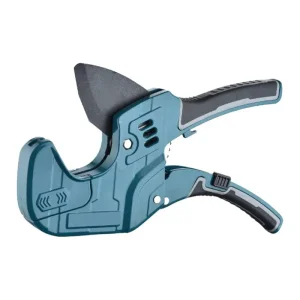
Heavy industrial HDPE and large-diameter PVC installations in container terminals require tools capable of handling thick-walled pipes (up to 63mm and 75mm) without structural blade distortion. The Jiacheng Solution: Engineered aluminum-alloy body cutters with reinforced leverage arms and M2 HSS deburring accessories ensure rapid site prep for marine fuel lines, industrial drainage, and ballast fluid conduits.
Comprehensive Panama Industrial Product Catalog
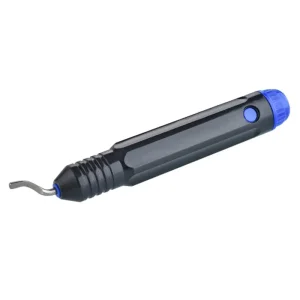
Complete selection of wholesale PVC cutters, HDPE cutting tools, heavy-duty ratchet models, and deburring solutions ready for Panama distribution.
Frequently Asked Questions for Panama Importers & Wholesalers
Expert answers regarding OEM customizations, shipping to Panama ports, ISO9001 compliance, and regional distribution terms.
What shipping options and port destinations do you support for Panama?
We ship directly from our Yuyao/Ningbo manufacturing facility via major ocean carriers (FCL and LCL) to the Port of Balboa (Pacific side) and Port of Cristóbal / Manzanillo International Terminal (Atlantic side). We also regularly arrange shipments routed directly into the Colón Free Trade Zone (Zona Libre de Colón - ZLC) for distributors re-exporting throughout Central America and the Caribbean.
Can you provide custom branding (OEM) for our tool line in Panama?
Yes. As a direct OEM/ODM manufacturer, we support custom laser-etched branding, customized handle dipping colors matching your brand palette, private label blister card packaging, double-blister retail packaging, and customized English/Spanish instruction manuals compliant with Panama retail requirements.
How do your gas-powered PPR welders hold up in Panama's humid tropical climate?
Our gas-powered fusion welders feature anti-corrosion anodized aluminum heating plates and brass catalytic control valves designed to withstand high relative humidity without internal oxidation or igniter degradation. They carry full SGS and CE safety certifications for international deployment.
What is your quality guarantee and defect rate tolerance?
Our factory operates under a strict ISO9001 quality management framework. Over 40 sets of CNC machining centers and automated grinding systems ensure that tool dimension tolerances remain microscopic. We maintain an overall defect rate under 0.5%, well below the industry standard for plumbing hand tools.
Why is the 3-in-1 pipe calibrator essential for PEX-AL-PEX installations in Panama?
When multilayer pipes are cut, the shear pressure deforms the circular profile into an oval shape. If an installer forces a press fitting into an oval pipe end, the internal rubber O-ring is dislodged or pinched, leading to leaks behind drywalls. Our 3-in-1 calibrator re-rounds the tube, chamfers the inner edge, and smoothes the face in a single 5-second operation.
What is the minimum order quantity (MOQ) for wholesale buyers in Panama?
For standard stocking items in factory packaging, MOQs start as low as 500 units per item. For full OEM private labeling, custom colors, and custom retail packaging, our standard MOQ is typically 1,000 to 2,000 units depending on the tool model.