Flagship Infrastructure Installation Tools
Precision-engineered pipe tool systems built to comply with German DIN standards and European jobsite efficiency metrics.
The German Industrial Paradigm: Precision Sourcing in a Modern Economy
Germany’s industrial landscape is undergoing a massive transformation driven by the national Energiewende (Energy Transition) initiative and the stringent requirements of the Building Energy Act (Gebäudeenergiegesetz - GEG). As Europe’s largest economic powerhouse, Germany demands unprecedented precision, reliability, and technological advancement from its plumbing, HVAC, and industrial pipeline equipment suppliers. From retrofitting urban commercial facilities in Frankfurt to expanding modern heat pump infrastructures across North Rhine-Westphalia, professional installers require heavy-duty tooling capable of zero-defect performance.
German engineering culture places zero tolerance on tool failure. Plumbers and EPC (Engineering, Procurement, and Construction) contractors operate under strict DIN 1988 standards for drinking water installations and DVGW Arbeitsblatt W 534 specifications for pipe joints. When working with complex multi-layer materials like PEX-AL-PEX, PPR-CT (Polypropylene Random Copolymer with temperature resistance), and heavy-wall HDPE, the mechanical integrity of every cut and socket fusion joint directly dictates the long-term reliability of the entire system.
Furthermore, the acute shortage of skilled labor in Germany’s Handwerk (craft/trade sector) has drastically altered procurement intent. Contractors are no longer looking merely for low-cost tools; they are seeking ergonomic, time-saving, high-efficiency equipment that reduces physical strain and minimizes operational cycle times on high-volume construction sites. Equipment manufacturers supplying the German market must provide tools that deliver flawless burr-free cuts, fast ratchet response, cordless flexibility, and calibrated chamfering in a single pass.
Strategic Supply Chain & OEM Partnering for Distributors
For tier-1 tool distributors, brand owners, and MRO (Maintenance, Repair, and Operations) suppliers competing in Germany and broader European markets, selecting an OEM manufacturing partner requires analyzing total cost of ownership (TCO), material metallurgy, structural durability, and international regulatory readiness.
Advanced Blade Metallurgy
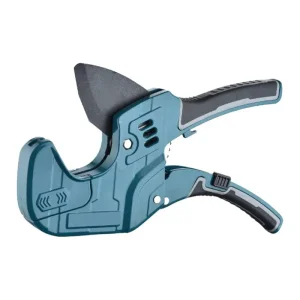
Equipped with high-carbon SK5 steel or M2 High-Speed Steel (HSS), heat-treated through vacuum quenching processes to attain HRC 58-62 hardness. Ensures long-lasting sharpness and burr-free cuts without pipe deformation.
Gas & Off-Grid Fusion Tech
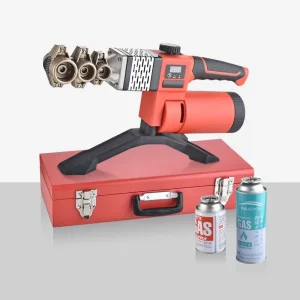
Our patented 1.4KW gas-powered PPR socket fusion welders provide independent thermal control without reliance on heavy diesel generators or temporary power drops on newly constructed jobsites.
ISO9001 & CE Quality Gates
Every production lot undergoes 100% dimensional check, torque testing, and thermal consistency calibration. Full batch traceability safeguards German importers against expensive warranty returns.
Engineering Technical Roadmap: Polymer Cutting & Fusion Dynamics
1. Mechanical Advantage Ratios in Ratchet Plastic Cutters
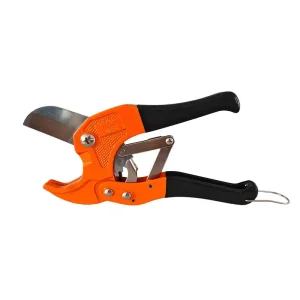
Cutting large-diameter thick-walled plastic pipes (e.g., 42mm, 50mm, and 63mm PVC/PPR/PE) requires substantial force. Traditional manual cutters subject installers to excessive repetitive hand force, leading to operator fatigue and uneven cut angles. Our heavy-duty ratchet cutters utilize a multi-gear progressive tooth curve design. This geometry optimizes the lever arm throughout the progressive stroke: as the blade penetrates deeper into the pipe wall where mechanical resistance peaks, the gear leverage increases proportionally.
2. Thermodynamics of Portable Gas PPR Socket Fusion
PPR (Polypropylene Random Copolymer) fusion welding requires a precise working temperature window between 250°C and 270°C. Lower temperatures cause incomplete molecular chain diffusion, resulting in cold joints that burst under pressure tests. Temperatures exceeding 280°C trigger polymer degradation and material displacement, constricting internal flow diameters. Our gas-powered fusion welder incorporates an integrated micro-flame burner with high-conductivity copper-aluminum matrix heating plates, maintaining uniform heating across 20mm to 32mm matrix sockets regardless of cold ambient German winter temperatures.
3. Multilayer Calibration & Internal Chamfer Geometry
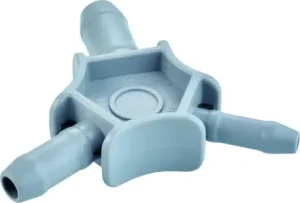
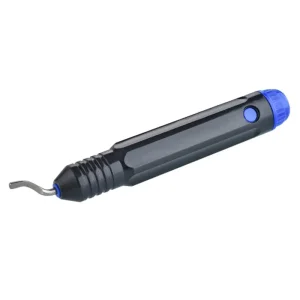
PEX-AL-PEX composite pipes consist of inner and outer cross-linked polyethylene layers sandwiching a laser-welded aluminum core. Cutting this layered structure compresses the pipe end into an elliptical profile and leaves sharp internal plastic burrs. When push-fit or press-fit connectors are inserted into uncalibrated pipe ends, the sharp aluminum/plastic edge cuts the internal rubber O-rings, leading to catastrophic concealed water leaks. Our 3-in-1 calibrators combine high-hardness M2 steel chamfering blades with precision-machined stepped mandrels. One 360-degree rotation simultaneously restores true circular geometry, creates a smooth 15-degree lead-in chamfer, and removes internal flash.
| Tool Technology Specification | Standard Market Grade | Jiacheng German-Spec OEM Grade | Jobsite Operational Impact |
|---|---|---|---|
| Blade Metallurgy & Coating | Standard 50CS / 3Cr13 Steel | SK5 High-Carbon Steel + PTFE Teflon Coating | 35% friction reduction; prevents sticky PPR residue accumulation |
| Ratchet Gear Teeth | Stamped 5 to 7 Teeth | Fine-pitched CNC Machined 11-14 Teeth | Requires 40% less hand effort per stroke; zero slip |
| Fusion Welder Power Source | 220V Electric Grid Only | Dual-Mode High-Efficiency Gas / Cordless | Eliminates generator requirement on early-stage construction sites |
| Calibrator Chamfer Angle | Rough Manual Reamer | Precision M2 Steel 15° Angle Blade | Guarantees zero damage to press-fit O-rings (DVGW compliant) |
| Handle Ergonomics | Hard PVC Plastic Covers | Dual-Dipped Anti-Slip Thermoplastic Rubber (TPR) | Maximum grip in wet/oily trench conditions; reduced fatigue |
European & German Market Compliance Infrastructure
Importing industrial tools into Germany requires strict compliance with European Directives and German safety standards. Jiacheng Tools ensures that all OEM and ODM manufacturing runs adhere strictly to EU regulatory frameworks, facilitating effortless customs clearance and rapid market entry for wholesale buyers.
CE Machinery Directive
Fully compliant with EU Directive 2006/42/EC. Powered equipment undergoes rigorous testing by independent bodies (SGS/TÜV) to earn valid CE marks.
REACH & RoHS Certified
Tool handles, plastic dipping coatings, and metallic alloys are tested for SVHC chemicals, heavy metals, and PAHs to meet stringent German chemical safety protocols.
ISO 9001 Quality System
Documented raw material verification, inline process controls, and automated final testing protocols ensure predictable container-to-container quality.
Partner with a Reliable German-Grade Tool Manufacturer
Whether you require customized handle colorways, private-label packaging, or custom blade geometries for proprietary pipe systems, our engineering team is ready to assist.
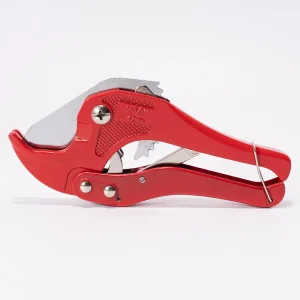
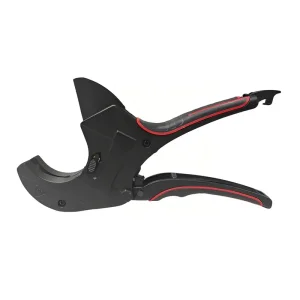
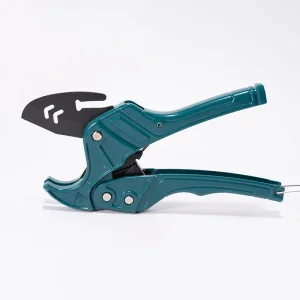
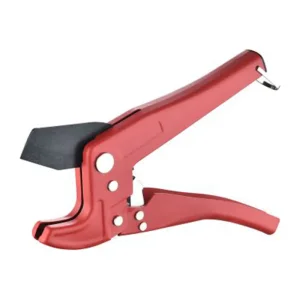
Send Inquiry NowIndustrial Grade Pipe Cutters & Deburring Tool Systems
Explore our high-demand hot-selling pipe installation equipment, optimized for high-frequency plumbing and HVAC operations.
Frequently Asked Procurement & Engineering Questions
Detailed technical answers for German importers, tool distributors, and procurement directors evaluating supplier capabilities.
Our tools are engineered to meet the exact dimensional tolerances required by German plumbing standards. Cutters deliver strictly perpendicular 90-degree cuts to ensure full insertion depth into press and fusion fittings. Our calibrators feature precise 15-degree chamfering angles recommended by DVGW W 534 guidelines to prevent rubber seal displacement during press tool assembly.
We provide end-to-end private label customization. This includes custom Pantone color matching for handles and aluminum cutter bodies, high-precision laser-etched branding, customized blister card or color box packaging (with German language translation support), and custom barcode/EAN printing ready for retail shelf placement.
Traditional electric fusion welders rely heavily on temporary 230V jobsite power boxes or cumbersome petrol generators. In remote construction sites, rural trenching, or early-stage building frames in Germany, power access is frequently unavailable. Our 1.4KW gas-powered welder uses compact butane/propane canisters, reaching working temperatures within minutes and giving technicians total freedom of movement.
Our standard OEM MOQ starts at 500 to 1,000 units per item depending on customization complexity. Standard production lead time is 25 to 35 days following sample approval. Sea freight from Ningbo/Shanghai port to Hamburg or Rotterdam typically takes 28 to 35 transit days.
We source premium SK5 high-carbon steel and M2 high-speed steel directly from audited alloy steel mills. Our blades undergo computer-controlled vacuum heat treatment followed by automated CNC edge grinding. Every batch undergoes hardness testing (HRC) and 1,000-cycle continuous cut endurance testing before mass assembly.
Accelerate Your Sourcing Advantage in Germany & Europe
Get in touch with our senior engineering and export sales teams today to receive detailed technical datasheets, factory-direct OEM pricing, and evaluation samples.
Send Inquiry Now