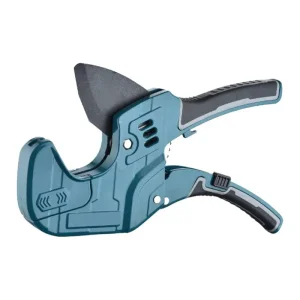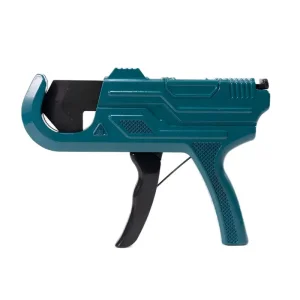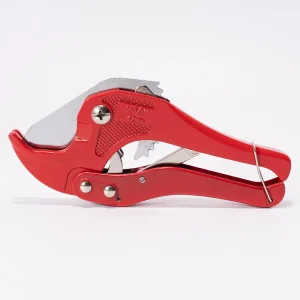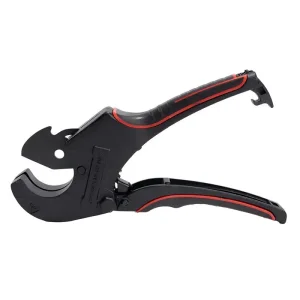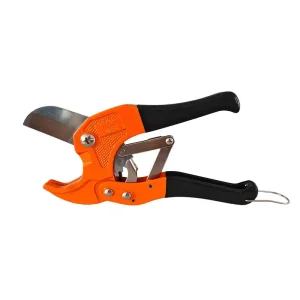
Featured Industrial PEX Cutters & Plumbing Tools
Enterprise-grade ratcheting PEX cutters, PPR fusion welders, and pipe calibration systems directly from certified OEM/ODM production lines.

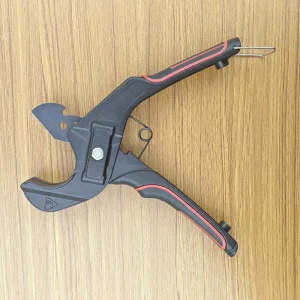
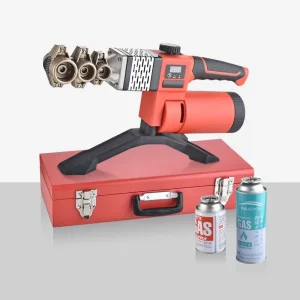
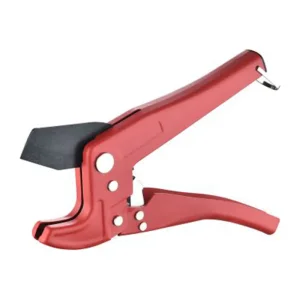
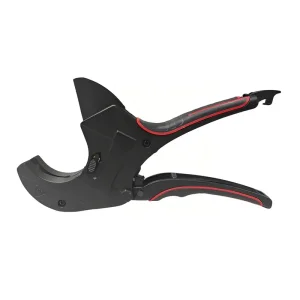
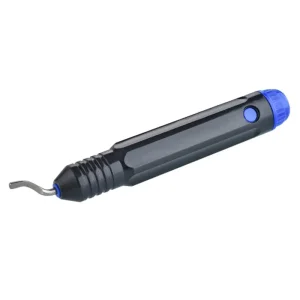
Executive Overview: Evolution of Ratcheting PEX Cutters
A comprehensive analysis of cross-linked polyethylene piping cutting dynamics, mechanical lever optimization, and global procurement trends.
The Shift from Rigid Metallic Piping to Polymer PEX Infrastructure
Over the past two decades, the global plumbing and heating sector has undergone a profound paradigm shift. Traditional rigid metallic piping systems—predominantly copper, galvanized steel, and cast iron—are increasingly being superseded by advanced polymer materials. Among these, Cross-Linked Polyethylene (PEX) and Polyethylene Raised Temperature (PE-RT) tubing have emerged as the dominant standards for residential potable water distribution, hydronic radiant floor heating, and commercial HVAC circuits.
This transition stems from the exceptional material flexibility, corrosion resistance, freeze-damage tolerance, and reduced installation labor costs of PEX. However, the integrity of a PEX piping system relies heavily on the quality of every mechanical connection. Whether utilizing ASTM F1807 crimp rings, ASTM F1960 cold-expansion fittings, or push-to-connect systems, an essential prerequisite for a leak-free joint is a perfectly perpendicular, deformation-free, and burr-free pipe end cut. Traditional shearing tools or standard scissors frequently collapse the structural wall of flexible polymer tubing, causing ovality, micro-fractures, and uneven cut edges that compromise fitting seats.
To eliminate installation failures, specialized mechanical tooling—specifically the Ratcheting PEX Cutter—has become an indispensable asset for mechanical contractors, OEM tool brands, and industrial distributors. By incorporating multi-stage progressive gear drive mechanisms, ratcheting PEX cutters amplify hand input forces, delivering controlled, incremental cutting strokes. This whitepaper provides enterprise procurement managers, B2B buyers, and technical engineers with an authoritative evaluation of ratcheting PEX cutter design, metallurgical engineering, quality assurance benchmarks, and global supply chain dynamics.
Technical Architecture & Metallurgical Engineering
A granular breakdown of gear-tooth pitch geometry, edge sharpness retention, and stress distribution mechanics.
Blade Metallurgy & Heat Treatment
High-performance ratcheting PEX cutters utilize premium SK5 high-carbon Japanese steel or M2 High-Speed Steel (HSS). Vacuum heat treatment yields a Rockwell hardness of HRC 54–58, balancing extreme edge sharpness with crack-resistant toughness. Advanced PTFE (Teflon) anti-friction coatings reduce penetration drag by up to 30%.
Multi-Stage Ratchet Drive Kinematics
The heart of the cutter lies in its precision-machined ratchet gear plate and spring-loaded drive pawl. Fine tooth pitch reduces hand travel per click while compounding mechanical leverage up to a 15:1 force ratio. This enables smooth, single-handed cutting of thick-walled PEX-AL-PEX and HDPE pipes up to 63mm without hand fatigue.
Anvil Geometry & Zero-Ovality Retention
The lower jaw anvil is CNC-profiled with a dual-radii V-groove or arc cradle. This structural support cradles the pipe during blade entry, counteracting radial compression forces. The result is a square cut with perpendicular variance within ±0.5°, protecting the internal O-rings of press fittings.
Technical Comparison Matrix: Industrial PEX Cutter Blade Materials
Enterprise procurement teams must select blade materials matched to their specific market requirements and price-performance tiers:
| Metallurgical Grade | Rockwell Hardness | Edge Retention Index | Corrosion Resistance | Best Application Fit |
|---|---|---|---|---|
| SK5 High-Carbon Steel | HRC 54 – 56 | High (8/10) | Standard (PTFE Coated) | Standard Commercial & Residential PEX-a/b/c Cutters |
| M2 High-Speed Steel (HSS) | HRC 58 – 62 | Superior (9.5/10) | High (Chrome Plated) | Heavy-Duty Multilayer PEX-AL-PEX & Metal Deburring Tools |
| 5Cr13MoV Stainless Alloy | HRC 52 – 55 | Moderate (7/10) | Exceptional (Rust-Proof) | Marine, Outdoor Wet Jobsite, and High-Humidity Operations |
| Aluminium Alloy (ADC12 Die-Cast Body) | HRB 75 (Handle Strength) | N/A (Structural Frame) | Powder-Coated Anti-Corrosion | Heavy-Duty Lightweight Handle Assemblies & Enclosures |
Global Supply Chain & Enterprise Procurement Solutions
Strategies for tier-1 distributors, hardware OEM brands, and high-volume retail sourcing managers.
Navigating Wholesale Supplier Selection in China's Hardware Hubs
Selecting a qualified manufacturing partner for ratcheting PEX cutters requires rigorous evaluation beyond simple unit pricing. High-volume buyers—ranging from North American big-box home improvement chains to European plumbing tool brand owners—must assess factory floor capabilities, engineering capacity, quality control gates, and custom branding infrastructure.
Established manufacturing centers, such as Yuyao and Ningbo in Zhejiang Province, represent the epicenter of global plumbing tool production. Advanced facilities integrate full vertically integrated operations, including die-casting, automated CNC machining of ratchet gears, robotized blade grinding, automatic heat-treatment lines, and automated packaging. Sourcing directly from these OEM/ODM factories provides global enterprise clients with crucial strategic advantages:
Quality Management Systems (ISO 9001)
Tier-1 factories maintain strict adherence to ISO 9001 standards. Every batch of ratcheting PEX cutters undergoes 100% incoming raw material spectroscopy, in-line gear engagement testing, and randomized destruction testing under high shear loads.
Comprehensive OEM/ODM Customization
Leading suppliers offer extensive private-label options: laser-engraved brand logos, custom ergonomic dip-molded or dual-color TPR handle grips, customized color powder coatings (Pantone matching), and retail-ready blow-molded case or double-blister packaging.
Regulatory Compliance Assurance
Export-ready products comply fully with international safety and material standards, including CE certification, REACH non-toxic chemical restrictions for rubber grips, RoHS compliance, and compliance with US California Proposition 65 requirements.
Field Application Solutions & Jobsite Engineering
Solving extreme installation environments, low-temperature polymer behavior, and heavy-duty commercial plumbing challenges.
Overcoming Real-World PEX Cutting Challenges
In actual field conditions, mechanical contractors encounter diverse challenges that demand engineered cutting solutions. Below are primary operational scenarios where high-performance ratcheting PEX cutters optimize installation efficiency and prevent warranty claims:
Scenario A: Sub-Zero Winter PEX-a Installation
The Challenge: At temperatures below 0°C, cross-linked polyethylene becomes rigid and brittle. Standard single-stroke cutters crush the pipe wall, causing longitudinal micro-cracks along the cut line.
The Engineering Solution: Ratcheting cutters equipped with ultra-thin (1.8mm – 2.2mm) SK5 blades featuring a dual-bevel 15° razor edge penetrate cold polymer walls incrementally without inducing brittle impact fracture.
Scenario B: High-Density Commercial Manifold Bays
The Challenge: Radiant heating manifolds feature closely spaced tubing runs inside narrow joist bays or utility risers, where standard long-handled cutters cannot swing.
The Engineering Solution: Compact ratcheting PEX cutters (e.g., 36mm tight-space models) feature a short handle arc length (under 30 degrees of stroke clearance), allowing plumbers to execute clean ratcheting cuts in cramped spaces.
Scenario C: Multilayer PEX-AL-PEX & Heavy HDPE
The Challenge: Composite pipes containing internal aluminum layers or thick SDR-9 wall HDPE require high cutting force and tend to delaminate if sheared improperly.
The Engineering Solution: Heavy-duty 42mm and 63mm ratchet cutters with reinforced alloy bodies and hardened drive pins deliver high force multiplication, cutting through aluminum layers smoothly without burring or edge distortion.
Technology Roadmap & Future Manufacturing Horizons
Emerging developments in smart mechanical tools, surface coatings, and sustainable manufacturing practices.
As the plumbing industry advances toward higher automation, improved jobsite safety, and stricter environmental accountability, the development roadmap for ratcheting PEX cutters is evolving along several key technological vectors:
- Titanium Nitride (TiN) & Diamond-Like Carbon (DLC) Nano-Coatings: Next-generation replacement blades are adopting physical vapor deposition (PVD) coatings. TiN and DLC coatings increase surface hardness to over HRC 70 and dramatically drop friction coefficients, increasing blade lifespan by more than 300% under high-volume commercial use.
- Ultra-Lightweight Magnesium & Carbon Fiber Handles: To lower daily tool weight for tradespeople without sacrificing structural frame rigidity, manufacturers are transitioning from conventional aluminum die-cast handles to high-strength magnesium alloys and carbon-reinforced polymer composites.
- One-Touch Auto-Release Mechanics: Advanced quick-return mechanisms allow contractors to retract the blade instantly with a thumb lever press at any point during the cut sequence, accelerating repetitive cutting cycles on high-density pre-fabrication lines.
- Sustainable Manufacturing & Circular Blade Recyclability: OEM factories are implementing closed-loop scrap steel recycling, eco-friendly water-based anti-rust dips, and 100% recyclable packaging materials to support global ESG procurement directives.
Localization, Regulatory Compliance & Standards Matrix
Ensuring compliance across North American, European, and Asia-Pacific regional plumbing codes.
Global importers and distributors must ensure that their imported plumbing hand tools meet destination market requirements. The table below outlines core international standards relevant to PEX piping systems and how ratcheting PEX cutter design aligns with these criteria:
| Target Region | Relevant Piping Code / Standard | Cutting Performance Requirement | Cutter Compliance Feature |
|---|---|---|---|
| North America (USA & Canada) | ASTM F876 / F877 (PEX Tubing) ASTM F1960 (Expansion Fittings) |
Square cut end within 0.030" tolerance to ensure complete insertion into expansion sleeves. | V-groove alignment anvil preventing angular misalignment during cut cycle. |
| European Union (EU) | EN ISO 15875 (Plastic Piping) Directive 2011/65/EU (RoHS) |
Zero degradation of polymer molecular structure; non-toxic tool handle materials. | REACH-certified non-phthalate TPR handles; PTFE-coated burr-free blades. |
| United Kingdom & Commonwealth | BS 7291 (Thermoplastic Pipes) WRAS Material Approval Guidelines |
Smooth wall profile post-cutting to preserve mechanical integrity of push-fit joints. | Precision ground SK5 razor bevel preventing internal ridge burrs. |
| Australia & New Zealand | AS/NZS 2492 (Cross-linked Polyethylene) | Crack-free cuts under low ambient temperature jobsite conditions. | High-toughness heat-treated blade core resisting edge chipping. |
Frequently Asked Questions (Enterprise Q&A)
In-depth technical answers for procurement officers, quality control engineers, and wholesale buyers.
Complete OEM Industrial Plumbing Tool Catalog
Explore our full range of heavy-duty pipe cutters, deburring tools, and socket fusion equipment engineered for wholesale supply chains.