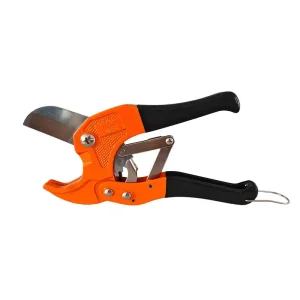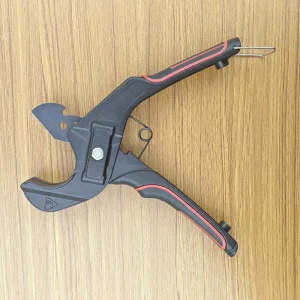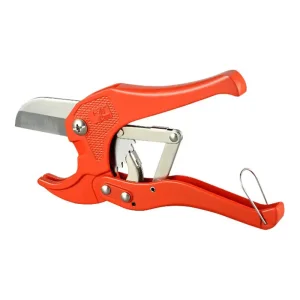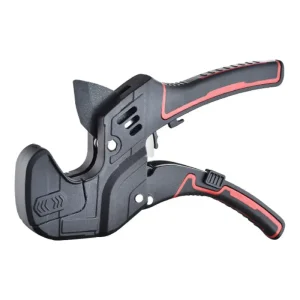
Industrial-Grade Ratchet Pipe Cutters & Tooling Solutions
Explore our top-tier wholesale range engineered for zero-deformation cuts across PVC, PPR, PEX, and Multilayer composite piping systems.
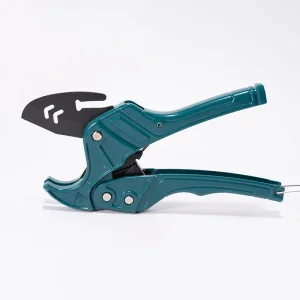
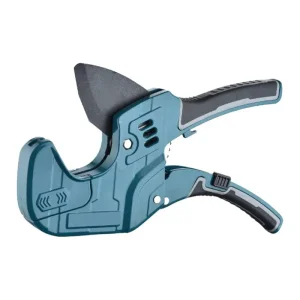
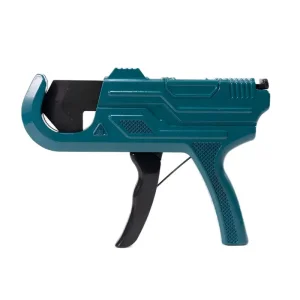
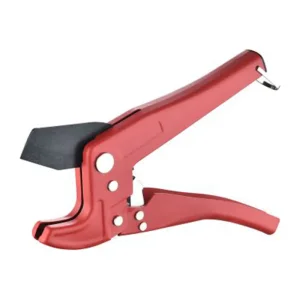
Global Commercial & Industrial Status of Ratchet Pipe Cutters
Analyzing market demand, supply chain evolution, and procurement dynamics in modern fluid delivery and piping infrastructure.
Market Expansion & CAGR Growth
The global plastic pipe cutter market is experiencing a strong compound annual growth rate (CAGR) driven by urban infrastructure development, municipal water system modernization, and agricultural micro-irrigation expansion. High-density polyethylene (HDPE), cross-linked polyethylene (PEX), and polypropylene random copolymer (PPR) pipes are steadily replacing traditional metal conduits due to corrosion resistance and long operational lifespans. As polymer pipe usage escalates, the demand for ergonomic, high-leverage ratchet cutters has surged among professional installers worldwide.
Commercial Supply Chain Dynamics
Supply chain managers and B2B hardware buyers are shifting from localized single-item sourcing to direct factory OEM/ODM partnerships in major manufacturing clusters like Yuyao, Zhejiang, China. Direct factory procurement ensures rigorous quality assurance, custom branding flexibility, low defect parts-per-million (PPM) rates, and competitive pricing tiers. B2B buyers require suppliers to guarantee metallurgical consistency, blade edge retention, and ratchet pawl fatigue resistance under high duty cycles.
E-E-A-T Quality Compliance
Under strict ISO 9001 quality management protocols and international safety certifications (SGS, CE), premier wholesale ratchet pipe cutter suppliers engineer tools capable of delivering clean, perpendicular, burr-free cuts. Zero-deformation cutting is essential prior to socket fusion welding, electrofusion, or mechanical press fittings, directly preventing fluid leakage, pressure loss, and expensive warranty claims on commercial jobsites.
Technological Architecture of Ratchet Mechanism Tooling
An in-depth look at blade metallurgy, mechanical advantage design, and structural durability standards.
High-Carbon SK5 / 8Cr13MoV Metallurgy
The heart of a professional ratchet pipe cutter lies in its blade chemistry and heat treatment. Premium factory models utilize SK5 high-carbon Japanese steel or 8Cr13MoV stainless alloy, vacuum heat-treated to a Rockwell hardness of HRC 54–58. This precise hardness balance ensures maximum edge retention while remaining elastic enough to resist micro-chipping when cutting rigid schedule-80 PVC or cold PEX pipes.
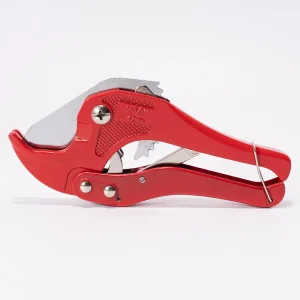
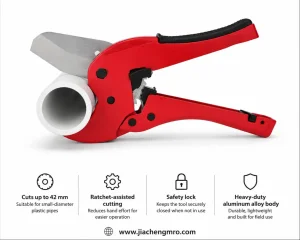
Manual pipe cutting often induces muscle strain over repeated cycles. Industrial ratchet mechanisms incorporate multi-tooth drive pawls engineered with a 1:12 mechanical advantage gear ratio. This incremental stepping system converts modest hand squeeze force into tremendous progressive shearing force, allowing installers to effortlessly cut 42mm, 50mm, or 63mm thick-walled plastic pipes with one hand in restricted spaces.
A major issue with cheap cutters is pipe wall ovalization (flattening). High-performance ratchet cutters employ V-shaped jaw profiles combined with triple-bevel ground blade edges. This geometry centers the pipe during initial penetration, distributing cutting forces evenly around the circumference. The result is a smooth, square cut end with zero internal burrs, ready for instant deburring or direct socket insertion.
| Performance Spec / Feature | Standard Commercial Grade | Jiacheng OEM Heavy-Duty Industrial Grade | Impact on Jobsite Efficiency |
|---|---|---|---|
| Blade Metallurgy | 55# Carbon Steel (HRC 48-52) | SK5 High-Carbon / M2 HSS Alloy (HRC 56-58) | 3x longer blade life, edge retention without cracking |
| Ratchet Gear System | Single-pawl stamped steel | Dual-pawl CNC machined heat-treated alloy steel | Prevents gear slippage, handles 12,000+ continuous cuts |
| Body & Frame Material | Standard Die-Cast Aluminum | High-Tensile Die-Cast Aluminum-Magnesium Alloy | Ultra-lightweight yet rigid under heavy torsional load |
| Pipe Wall Preservation | Straight wedge blade (causes distortion) | Precision V-Shaped Razor Profile & Curved Cradle | Zero ovality; preserves pipe roundness for watertight seals |
| Auto-Release Mechanism | Manual pull-apart mechanism | Spring-loaded one-touch automatic blade spring-back | 50% faster cycle time between sequential cuts |
Global Industry Trends & Supply Chain Dynamics
Key macro-environmental factors shaping the future of plumbing tools and wholesale procurement.
1. Shift Toward Multilayer & PEX Systems
Modern construction standards in Western Europe and North America are heavily favoring multi-layer composite pipes (PEX-AL-PEX) and cross-linked PEX tubing due to installation speed and corrosion resistance. Sourcing wholesale ratchet style pipe cutters that can handle aluminum core plastic pipes without delaminating the inner layers has become a priority for distributors. Specialized ratchet cutters with micro-serrated or ultra-thin blades prevent internal layer separation.
2. Ergonomic Regulations & Worker Safety
Occupational safety health standards (such as OSHA in the USA and EU-OSHA directives) emphasize reducing repetitive strain injuries (RSI) among trade workers. Older single-stroke shears require excessive hand squeeze pressure. B2B procurement managers are actively specifying ratchet-style cutters featuring ergonomic TPR (Thermoplastic Rubber) anti-slip handles, compound leverage ratios, and balanced weight distribution to meet site safety guidelines.
3. Direct OEM Factory Branding (Private Labeling)
Global tool retailers, hardware wholesalers, and brand owners are seeking factories capable of complete private-label OEM/ODM customization. This includes custom handle color dipping, laser-etched brand logos, customized blister card packaging, and custom blade hardness tuning to match target price-to-performance market segments.
Localized Application Scenarios & Regional Standards
How ratchet pipe cutters are deployed across diverse regional environments and engineering disciplines.
North America: Schedule 40/80 PVC & PEX-A
In North American residential and commercial plumbing (ASTM D1785 / ASTM F876 standards), contractors heavily utilize 42mm (1-5/8") and 50mm (2") ratchet cutters for Schedule 40 PVC DWV (drain, waste, vent) lines and PEX-A radiant heating loops. Tools must withstand extreme temperature fluctuations—from sub-zero winter jobsites in Canada to intense heat in Arizona—without brittle handle failure or blade fracture.
Europe: PPR Hot/Cold Water & DIN 8077/8078
European installations rely heavily on Polypropylene Random Copolymer (PPR) pipes for potable hot and cold water distribution. Because PPR requires socket fusion welding, cut squareness and burr-free ends are critical to prevent air pockets during heating. Compact 36mm and 42mm ratchet cutters designed specifically for narrow wall-chase environments are preferred by European installers.
Asia-Pacific & MEA: HDPE Agriculture & Municipal Piping
In rapidly developing regions across Southeast Asia, the Middle East, and Africa, large-diameter HDPE pipes (50mm, 63mm, and 75mm) are standard for agricultural irrigation and municipal water supply. Heavy-duty adjustable ratchet cutters with wide cradles and reinforced aluminum frames are required to cut thick-walled PE pipes without flex or blade binding.
Macro-Level Industrial Solutions for Turnkey Projects
Integrating ratchet pipe cutters into standard operating procedures for major infrastructure programs.
High-Speed Commercial Pre-Fabrication
In modern modular skyscraper construction, plumbing runs are pre-fabricated off-site in controlled factory environments. Integrating heavy-duty ratchet style cutters with quick auto-release springs into assembly lines speeds up pipe prep by 40% compared to traditional band saws, while eliminating hazardous plastic dust shavings that can clog downstream valves.
Industrial chemical processing plants and micro-electronics manufacturing facilities rely on high-purity PVDF and CPVC piping systems. Cutting these delicate, expensive polymer pipes requires zero thermal stress or mechanical micro-fracturing. Precision-ground SK5 ratchet cutters maintain strict razor-sharp contact, preserving chemical purity and wall structural integrity.
Utility repair crews operating in tight trenches or sub-surface crawlspaces require lightweight, spark-free cutting solutions. Manual ratchet cutters operate without electricity, eliminate fire hazards in gaseous utility trenches, and allow technicians to execute emergency line cuts in confined spaces where power tools cannot maneuver.
Technology Roadmap & Future Outlook
Next-generation innovations shaping mechanical hand tool engineering over the coming decade.
Phase 1: Advanced PTFE & Ceramic Coatings
Future blade iterations are integrating industrial PTFE (Teflon) and titanium nitride (TiN) physical vapor deposition (PVD) coatings. These advanced nano-coatings reduce blade friction co-efficient by up to 60%, enabling effortless cutting through sticky or soft plastic polymers while protecting carbon steel from chemical corrosion and jobsite moisture.
Phase 2: Hybrid Carbon-Fiber Lightweight Frames
To reduce tool weight for high-volume trade contractors, factory R&D departments are testing carbon-fiber reinforced polymer handles paired with forged aluminum ratchet housing. This hybrid construction cuts tool weight by 35% while increasing structural flex resistance under heavy leverage.
Phase 3: Integrated Chamfering & Multi-Tools
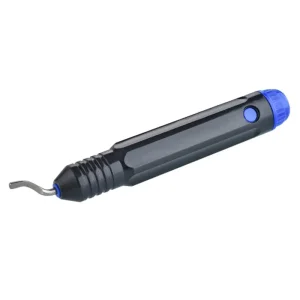
The next generation of ratchet style pipe cutters will feature integrated deburring and chamfering edge attachments directly on the jaw housing. Installers can cut and chamfer the pipe end in a single continuous movement, reducing tool swapping and speeding up press-fitting workflows.
Frequently Asked Questions (FAQ) for Global Buyers
Essential technical and commercial insights for hardware importers, tool distributors, and procurement managers.
What is the primary operational advantage of a ratchet-style pipe cutter over a single-stroke shear?
A ratchet-style cutter utilizes a multi-step gear pawl system that multiplies hand squeeze pressure exponentially. While single-stroke shears require immense manual force and frequently crack thick plastic or cold pipes, a ratchet cutter incrementally drives the blade through the pipe with minimal effort, resulting in square, burr-free cuts with zero pipe wall crushing.
Which blade materials offer the best cost-to-performance ratio for B2B wholesale markets?
Japanese SK5 high-carbon steel heat-treated to HRC 54–58 offers the absolute gold standard for professional tools, providing extreme razor sharpness and high wear resistance. For economy or entry-level retail programs, 65Mn carbon steel delivers reliable performance at lower price points.
How does factory OEM/ODM customization work for private label tool brands?
As a direct factory manufacturer, we offer full OEM/ODM services including: custom handle dipping colors (matching Pantone codes), laser-etched corporate logos on blades or frames, customized blister card or color box packaging, and tailored blade geometry adjustments based on regional pipe specifications.
What quality control (QC) procedures are implemented to maintain a defect rate under 0.5%?
Factory QC follows rigorous ISO 9001 procedures: 100% incoming metallurgical material testing, automated CNC precision blade edge inspection, continuous sampling fatigue testing (putting ratchet pawls through 10,000 continuous action cycles), and pre-shipment trial cuts on real PVC, PPR, and PEX samples.
Can ratchet pipe cutters be used on metallic pipes such as copper or steel?
No. Ratchet-style wedge cutters are strictly designed for plastic and composite pipes (PVC, PPR, PEX, PE, CPVC, PEX-AL-PEX). Cutting metallic pipes like copper or stainless steel with a ratchet cutter will immediately chip or destroy the sharp blade edge. Metallic tubes require rotary wheel tube cutters or deburring tooling.
Explore Complete Factory Tooling Range
Discover additional specialized models, deburring accessories, and heavy-duty pipe installation equipment.