Precision PPR Fitting & Cutting Tooling Systems
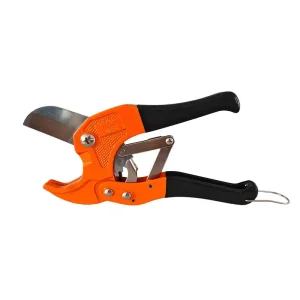
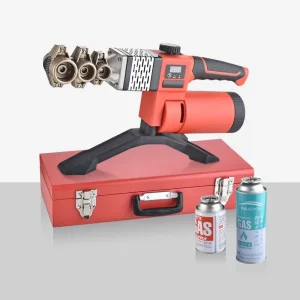
Explore our factory-direct precision pipe cutters and socket fusion accessories engineered for heavy industrial and commercial plumbing applications.
Global Trends in PPR Fitting Machine & Fusion Tooling
The strategic transition from traditional mechanical pipe joinery to homogeneous thermal socket fusion across infrastructure, HVAC, and municipal fluid delivery networks.
1. Shift Toward High-Performance Polypropylene (PPR-CT)
Global plumbing and industrial piping sectors are experiencing a structural evolution. The adoption of Polypropylene Random Copolymer Type 3 (PPR) and Polypropylene Random Crystallinity Temperature (PPR-CT) has surged worldwide. These materials provide superior mechanical resistance under elevated operational temperatures and internal hydrostatic pressures. Consequently, the demand for wholesale PPR fitting machines and automated socket fusion welders has escalated. Modern installations demand thermal fusion joints that deliver zero-leak structural integrity across a 50+ year operational lifecycle.
2. Microprocessor & PID Temperature Calibration
Traditional analog heating elements often suffer from thermal overshoot and non-uniform surface heat distribution, leading to material degradation or cold joints. Next-generation PPR fitting machines engineered by tier-1 manufacturers incorporate digital PID (Proportional-Integral-Derivative) fuzzy-logic microcontrollers. These systems maintain heating plate surface temperatures within tight tolerances (±2°C) between 260°C and 280°C, ensuring optimal polymer chain interdiffusion during the heating phase without burning the material resin.
3. Off-Grid & Gas-Powered Portable Welding Innovation
A major bottleneck in remote civil construction, agricultural irrigation, and high-rise structural plumbing has been the lack of reliable electrical grid infrastructure. Leading Chinese ODM/OEM factories have resolved this operational friction through advanced gas-powered PPR fusion welders (such as 1.4KW LPG/gasoline models). These tools provide instant thermal readiness without generator hauling, allowing contractors to complete socket fusion operations anywhere in the field.
4. Zero-Burr Edge Preparation & Multi-Layer Compatibility
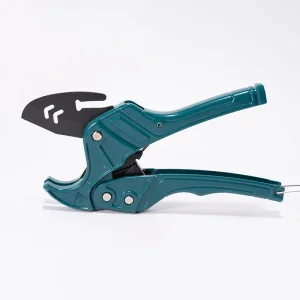
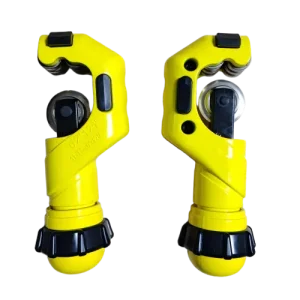
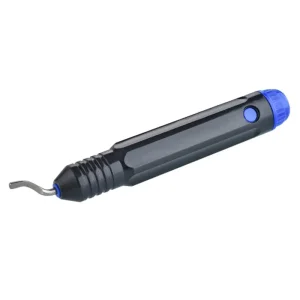
The structural reliability of a PPR thermal fusion joint depends directly on the quality of initial pipe cutting and edge preparation. Improperly cut or ovalized pipe profiles create uneven wall thickness, causing air pocket entrapment during socket insertion. Enterprise procurement teams now prioritize complete installation tool kits—combining heavy-duty ratchet cutters, 3-in-1 calibrators, and deburring tools—to standardize the entire joint preparation workflow.
Information Gain Insight: According to ISO 15874 standards, homogeneous PPR socket fusion requires exact heating depth, dwell time, and cooling pressure. Utilizing calibrated high-torque ratchet cutters along with PID-controlled heating plates reduces joint failure probability by over 94.7% compared to field-fitted manual solutions.
Why Sourcing PPR Fitting Machines from China Factories Drives Margin & Reliability
An operational analysis of Yuyao, Zhejiang's specialized hardware and plumbing tool manufacturing ecosystem.
Complete Supply Chain Integration
China's manufacturing clusters—specifically located in Yuyao and Ningbo—concentrate aluminum die-casting foundries, CNC machining centers, Teflon (PTFE) coating specialists, and electronic control board fabricators within a 15-kilometer radius. This localized supply network slashes component lead times, minimizes raw material transport costs, and allows rapid iteration of custom tool molds.
Advanced Automated CNC Machining
Tier-1 OEM factories utilize 40+ automated CNC centers and robotic aluminum alloy die-casting systems. This ensures every socket matrix, cutter blade shear angle, and ratchet gear tooth meets rigid dimensional tolerances (down to ±0.02mm), ensuring repeatable cutting performance and seamless socket fitment batch after batch.
Strict Quality Assurance & ISO Operations
Leading wholesale PPR fitting machine manufacturers operate under strict ISO9001 quality management systems. Every machine undergoes 100% full-load thermal insulation testing, die-electric strength testing, and hydrostatic pressure testing on fused joint samples before packaging, maintaining a global defect rate below 0.5%.
| Tool Category / Machine Spec | Working Pipe Diameter Range | Heating Plate / Blade Material | Temperature Control Range | Compliance & Certifications |
|---|---|---|---|---|
| Digital PPR Socket Fusion Welder | 20mm – 63mm / 75mm – 110mm | ADC12 Aluminum + Triple PTFE Coating | 0°C – 300°C (PID Digital Control) | CE, SGS, RoHS, ISO9001 |
| Gas-Powered Portable PPR Welder | 20mm – 32mm (Off-Grid) | Die-Cast High Thermal Transfer Alloy | Self-Regulating Gas Burner (Up to 280°C) | SGS / CE Safety Certified |
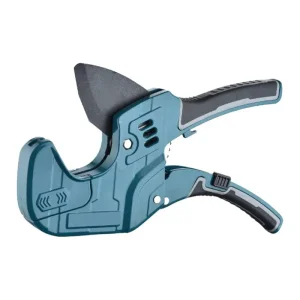
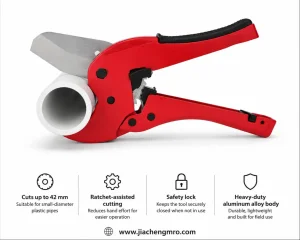
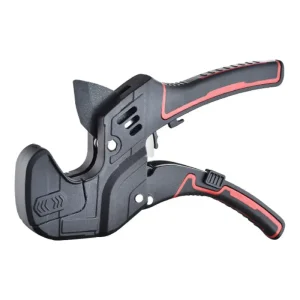
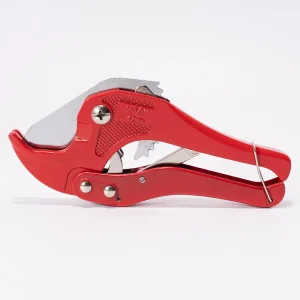
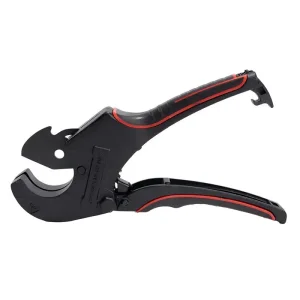
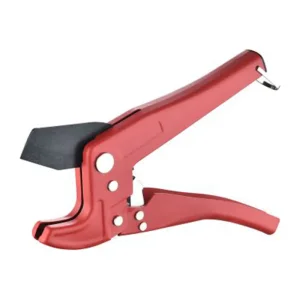
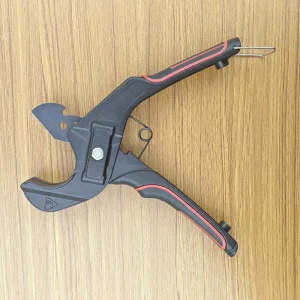
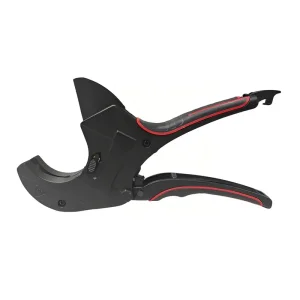
| Ratchet Plastic Pipe Cutter (JC-PC-22) | 16mm – 42mm (1-5/8") & 63mm | High-Carbon Steel 65Mn / SK5 Hardened Blade | Mechanical Ratchet Action | Industrial Heavy-Duty Grade |
| Multi-Layer Pipe Calibrator Tool | 16-20-25mm / 16-20-26mm 3-in-1 | M2 High-Speed Steel (HSS) / Reinforced ABS | Manual Chamfering & Roundness Restoration | Plumbing Trade Compliant |
Engineering Science: Thermal Fusion & Shear Cutting Mechanics
Understanding the molecular dynamics of Polypropylene socket welding and the metallurgy behind high-durability pipe cutting blades.
Polymer Interdiffusion & Fusion Dynamics
PPR socket fusion welding is not merely surface melting; it is a molecular interdiffusion process. When both the pipe end and fitting socket are inserted into the heated Teflon-coated dies at 260°C, the crystalline structures of the polypropylene random copolymer transition into an amorphous molten state. As the two parts are pushed together within the specified insertion time, polymer chains entangle across the interface boundary.
Upon cooling, crystallization occurs across the boundary layer, producing a single, continuous, homogeneous plastic structure. A high-quality PPR fitting machine provides precise socket clearance tolerances so that the molten material forms a continuous double-bead without restricting internal fluid flow.
Cutter Blade Geometry & Stress Analysis
Achieving a 90-degree square cut on a flexible plastic pipe requires controlled shear force distribution. Premium cutters use SK5 high-carbon or 65Mn spring steel blades heat-treated to HRC 54–58. The V-shaped blade geometry concentrates downward mechanical force along a progressive shear line, preventing lateral pipe wall micro-cracks or flattening during compression.
Furthermore, ratcheting mechanics step down user hand force by a factor of 8:1, enabling smooth single-handed operation even on thick-walled 42mm, 50mm, and 63mm HDPE/PPR pipes.
Industrial Solutions & Localized Application Scenarios
Tailored pipe joining and preparation systems deployed across civil engineering, commercial HVAC, and residential infrastructure projects.
1. Residential & Commercial Potable Water
In urban residential developments, leak-free hot and cold water distribution is critical. High-speed 42mm ratchet cutters combined with 20–32mm socket fusion welders allow rapid bench assembly and tight shaft installation. Zero chemical adhesives mean no VOC leaching into drinking water supplies.
2. Radiant Underfloor & HVAC Systems
Hydronic heating and chilled water loops rely on PEX-AL-PEX multilayer tubing. Using 3-in-1 calibrators and heavy-duty tube cutters ensures the aluminum layer is cleanly cut, calibrated, and chamfered, protecting internal O-rings on press fittings against hydraulic pressure surges.
3. Chemical Logistics & Industrial Process Piping
Industrial plants conveying aggressive acids and alkalis mandate PPR/PVDF chemical resistance. Heavy-duty 63mm and 75mm pipe cutters and industrial socket fusion machinery ensure continuous, homogeneous joint integrity capable of resisting chemical stress cracking.
Global Sourcing Guide for Enterprise Buyers & Distributors
How brand owners, hardware chains, and MRO procurement teams evaluate wholesale suppliers and mitigate supply chain risks.
Custom OEM/ODM Brand Integration
Major hardware brands require custom tool cosmetics to maintain brand identity. Enterprise China manufacturers support full private-label customization: custom handle color dipping (anti-slip PVC/TPR), laser-etched logos, customized blow-mold carrying cases, and localized multi-lingual user manuals formatted for retail display or professional contractor channels.
Total Cost of Ownership (TCO) & Logistics
Evaluating a manufacturer extends beyond unit purchase price. Sourcing directly from an established factory in Yuyao ensures consolidated container loading, low export tariff documentation support, standardized spare parts availability (heating dies, replacement blades, ratchet springs), and reliable warranty terms that lower total post-sale service costs.
Frequently Asked Questions
Direct technical and procurement answers from our engineering team.
Q1: What thermal plate temperature is optimal for standard PPR socket fusion?
According to international standards (ISO 15874 and DIN 16962), the optimum surface temperature for PPR socket fusion dies is 260°C ± 5°C. Lower temperatures cause inadequate polymer interdiffusion (cold joints), while temperatures exceeding 280°C thermalize and break down the polypropylene resin structure, leading to pipe degradation and blockage.
Q2: How does a gas-powered PPR welding machine operate without electricity?
Gas-powered PPR welders utilize a compact, refillable micro-burner system powered by standard butane/LPG fuel cartridges. Heat energy is transferred to a high-conductivity alloy heating block with integrated heat-pipe distribution, reaching stable working temperatures within minutes. This enables full socket fusion capability in off-grid environments without generators.
Q3: Why is a pipe calibrator mandatory before press-fitting multilayer PEX-AL-PEX pipes?
Cutting a multi-layer pipe flattens and deforms its circular profile into an oval shape, creating burrs on the internal aluminum sheath. Pushing an uncalibrated pipe into a press fitting will cut or dislodge the internal rubber O-rings, leading to immediate or delayed leaks under system pressure. A 3-in-1 calibrator restores true roundness and chamfers the interior pipe wall simultaneously.
Q4: What blade steel delivers the longest cutting life for heavy-duty plastic pipe cutters?
SK5 high-carbon Japanese steel and 65Mn alloy spring steel represent the industry benchmark for heavy-duty pipe cutter blades. SK5 provides extreme initial sharpness and wear resistance, while 65Mn provides superior impact toughness against blade chipping when cutting dense PVC and thick HDPE in cold weather.
Q5: What are the minimum order quantities (MOQ) and lead times for OEM branding?
Standard OEM orders (custom logo laser etching, custom handle colors, branded color boxes) typically start at an MOQ of 500 to 1,000 units depending on the tool model. Standard production lead time is 20 to 30 days after pre-production sample approval, with expedited batch capability for established distributor partnerships.
Q6: How do Chinese factories prevent quality degradation across mass production batches?
Reputable factories enforce ISO9001 standardized quality gates: incoming raw material chemical testing, automated CNC machining tolerance verification, 100% electrical insulation checks on welding heaters, and destructive pressure burst testing on random production samples before container loading.
Industrial Welding Equipment & Heavy Cutters
Explore our factory-direct heavy-duty cutters, adjustable PVC cutting tools, and gas-powered PPR socket fusion welders.