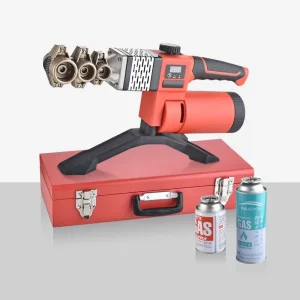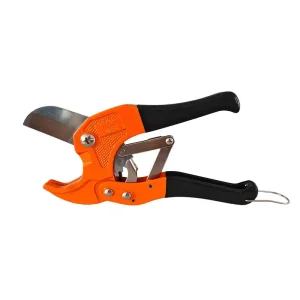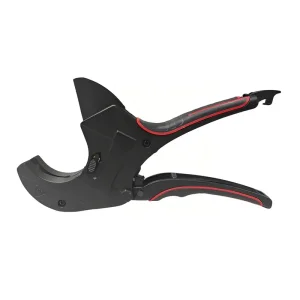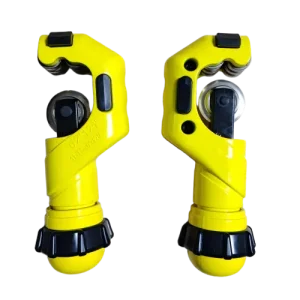
Featured Pipe Joining & Preparation Solutions
Engineered for high field reliability, precision square cuts, and zero-leak hot melt jointing.
Comprehensive Technical Whitepaper: Polyethylene & Polymer Pipe Fusion Metallurgy
Exploring the thermodynamic mechanisms, joint structural integrity, and strict ISO/DVS engineering standards that govern modern poly pipe joining.
In modern civil engineering, municipal water distribution, industrial chemical conveyance, and HVAC infrastructure, polyolefin piping systems—specifically Polyethylene (PE, HDPE, MDPE) and Polypropylene Random Copolymer (PPR)—have largely supplanted traditional ductile iron and copper networks. The fundamental engineering advantage of poly piping lies in its material homogeneity. When joined via thermal socket fusion, butt fusion, or electrofusion, the interface between pipe and fitting ceases to exist as a mechanical joint; instead, it undergoes macromolecular interdiffusion, yielding a monolithic weld that matches or exceeds the tensile strength of the parent pipe body.
Technical Insight (DVS 2207 / ISO 12176 Standard): True zero-leak poly fusion requires three precise operational variables: exact temperature stabilization (260°C ± 5°C for PPR; 200°C–220°C for HDPE), calibrated interface pressure during heating/soaking, and strictly unperturbed alignment during the molecular crystallization phase.
To achieve this structural integrity across demanding commercial jobsites, engineering procurement teams rely on specialized Poly Pipe Welding Machines and precision preparation equipment. As a leading manufacturer based in Yuyao, China—a global hub for advanced hardware and tooling production—our engineering teams design, validate, and manufacture industrial-grade socket fusion welders, gas-powered cordless fusion equipment, and heavy-duty ratchet cutting systems engineered specifically to eliminate joint failures, pipe end ovality, and thermal degradation.
Thermodynamics of Polymer Fusion: Socket vs. Butt vs. Electrofusion
Understanding the exact user intent of civil contractors and mechanical plumbing distributors requires analyzing the three primary thermal fusion methodologies utilized across global project sites:
| Fusion Technology | Standard Pipe Diameters | Core Mechanism | Primary Application Areas | Critical Equipment Requirement |
|---|---|---|---|---|
| Socket Thermal Fusion | 16mm – 125mm (DN16 - DN110) | Simultaneous outer pipe & inner fitting melt via Teflon matrix sockets. | PPR/PE domestic hot & cold water, HVAC, chemical dosing lines. | Constant temperature micro-processor control, PTFE non-stick sockets. |
| Hydraulic Butt Fusion | 63mm – 1200mm+ | Planed square pipe ends heated directly against a central heating plate under pressure. | HDPE municipal water mains, overland mining slurry lines, gas distribution. | High-rigidity hydraulic alignment chassis, electronic data logging. |
| Electrofusion Welding | 20mm – 63mm+ | Internal electrical resistance wires within specialized fittings melt interfacial resin. | Trenchless gas networks, high-pressure repair work, tight spatial corridors. | Automated barcode-scanning power supply units, precise pipe deburring tools. |
Competitive Advantages of China OEM/ODM Manufacturing
How Yuyao's specialized hardware industrial cluster delivers unmatched cost efficiency, technical precision, and reliable global export compliance.
Yuyao Industrial Ecosystem
Situated in Ningbo-Yuyao, our 2,667 m² facility benefits from direct access to specialized raw material suppliers (die-cast aluminum alloys, SK5 high-carbon steel, precision thermistors), reducing supply chain lead times by 35% compared to non-clustered factories.
Advanced CNC Automated Machining
Equipped with over 40 sets of automated CNC turning centers, robotic welding cells, and precision blade grinding lines, we achieve dimensional tolerances within ±0.02mm, ensuring perfectly square cutter alignment and zero-wobble heating plates.
Export Certification & Regulatory Compliance
Our complete manufacturing pipeline operates under ISO9001:2015 quality management system protocols. Products carry SGS and CE certifications, allowing global importers and tool brand owners to pass regional compliance audits without friction.
Flexible OEM/ODM Customization
From custom handle dipping finishes and private label silk-screening to bespoke voltage electronics and ergonomic ratcheting geometries, our in-house design engineering team converts raw client concepts into production samples within 10 days.
Global Industry Trends & Technology Drivers (2025–2030)
Analyzing key technological shifts shaping the poly pipe joining and field tool manufacturing landscapes.
1. Shift Toward Cordless & Off-Grid Fusion Technology
Traditional electric socket welders require 220V/110V mains power or bulky portable diesel generators. Modern jobsites—especially in remote civil engineering projects or tight residential retrofit basements—demand cordless portability. Innovative gas-powered PPR fusion welders (such as our 1.4KW LPG/Butane units) and high-density lithium battery socket welders represent the fastest-growing equipment category globally.
2. Microprocessor Digital Temperature Control
Analog bimetallic thermostats are increasingly rejected by European and North American quality auditors due to temperature hysteresis drift (±15°C variances). Next-generation poly pipe welding machines feature dual digital displays, micro-PID controllers, and automated heating timer alarms to maintain precise fusion window tolerances, completely avoiding thermal oxidation of the PE/PPR matrix.
3. High-Leverage Ratchet Geometry & Burr-Free Blades
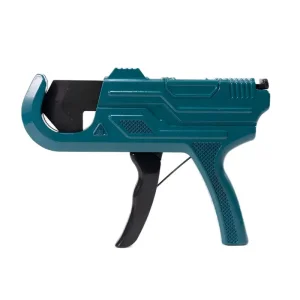
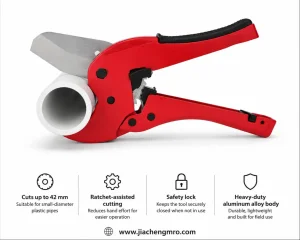
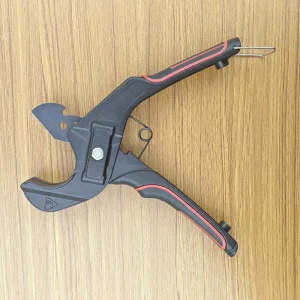
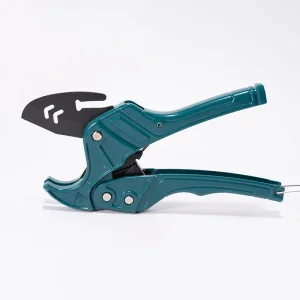
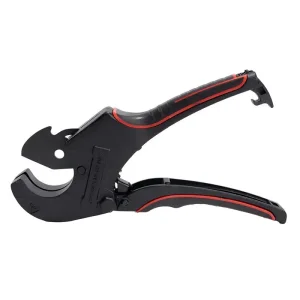
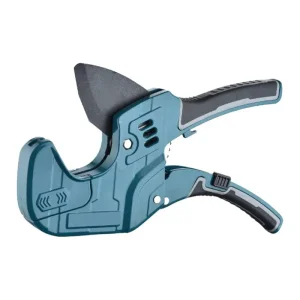
Cutting large-diameter plastic pipes (42mm, 50mm, 63mm, 75mm) manually has historically caused hand fatigue and radial crushing. Current tooling design focuses on multi-stage progressive ratchet mechanisms, Teflon-coated SK5 high-carbon alloy blades, and V-shaped jaw profiles that produce perfectly square cuts with zero inner burrs, eliminating downstream deburring steps.
Localized Field Application Scenarios & Engineering Solutions
How tailored poly pipe joining and cutting tools perform across demanding commercial environments.
Residential Plumbing & Radiant Heating Retrofits
Challenge: Working inside wall cavities, under subfloors, or in cramped ceiling joists where standard fusion machines and bulky saws cannot fit.
Solution: Compact 36mm & 42mm ratchet cutters combined with lightweight 20-32mm socket fusion welders allow single-operator installation, clean square cuts, and tight clearance welds without damaging adjacent building structures.
Municipal Water Supply & High-Rise Riser Networks
Challenge: Heavy-wall 63mm to 75mm HDPE/PPR riser pipes require substantial cutting force and absolute joint integrity under 16-bar continuous pressure.
Solution: Heavy-duty adjustable cutters (e.g., JC-PC-22 model) equipped with hardened alloy steel wheel/blade assemblies provide balanced perimeter cutting without deforming heavy SDR-rated pipe walls.
Agricultural Irrigation & Mining Overland Pipelines
Challenge: Field installation across extensive rural acres where electrical power drops are non-existent and ambient temperatures fluctuate violently.
Solution: Gas-powered PPR thermal fusion welders delivering 1.4KW constant heat output allow rapid field assembly of PE drip irrigation headers and water delivery lines, completely independent of electric power lines.
Macro Industry Solutions: Integrated Standardized Tool Systems
A complete 4-step professional pipeline joining workflow engineered to eliminate field installation failure modes.
Step 1: Precision Cutting
Utilize 42mm, 50mm, or 63mm ratchet cutters to produce a perfectly perpendicular 90° cross-section, ensuring uniform insertion depth around the entire circumference.
Step 2: Deburring & Chamfering
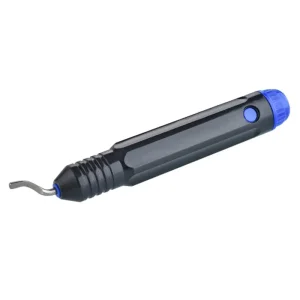
Apply M2 HSS deburring tools (DT-001) or calibrators to peel away inner/outer burrs and create an entry chamfer, preventing socket O-ring displacement or polymer scraping.
Step 3: Calibration & Depth Marking
For multi-layer PEX-AL-PEX pipes, use 3-in-1 calibrators to re-round squashed pipe ends and accurately mark the required socket insertion depth according to DVS standards.
Step 4: Thermostatic Fusion
Insert pipe and fitting into calibrated Teflon sockets on a 260°C digital or gas-powered welding machine. Hold for the specified heating cycle, then join without rotation.
Global Enterprise Procurement & Supplier Evaluation Guide
Key audit criteria for hardware importers, retail brand managers, and industrial catalog buyers when sourcing poly pipe tooling.
When selecting a China wholesale manufacturer for poly pipe welding machines and companion hand tools, enterprise buyers must look beyond basic unit pricing. Supply chain resilience, material metallurgical standards, and warranty liability mitigation form the core pillars of a sustainable sourcing contract.
1. Heat Plate Matrix & Coating Quality
In thermal fusion machines, low-quality aluminum castings contain internal porosity, causing localized cold spots. Professional manufacturers utilize die-cast aluminum alloys with high thermal conductivity, coated with dual-layer DuPont PTFE non-stick matrix to prevent molten resin adhesion during withdrawal.
2. Blade Metallurgy & Heat Treatment
Pipe cutter longevity hinges on blade steel quality. Sourcing managers should specify SK5 or M2 High-Speed Steel (HSS) with vacuum heat treatment, reaching 58–62 HRC hardness. This guarantees edge retention over thousands of cuts without chipping or dulling.
3. Electrical Safety & Component Sourcing
For electric socket fusion devices, internal wiring must feature high-temperature silicone insulation (rated >200°C), double-insulated grounding, and CE/GS certified power cords to pass European safety inspections at port entry.
Technical Knowledge Base & Comprehensive B2B Q&A
Addressing core engineering, manufacturing, and procurement inquiries from global tool distributors.
Complete Poly Pipe Installation Machinery & Tools Range
Explore our full catalog of certified fusion welders, pipe cutters, and deburring systems.