
Featured OEM Pipe Preparation & Fusion Catalog
Explore our premium factory-direct line of high-efficiency ratchet cutters, PEX calibrators, deburring units, and socket fusion welding systems manufactured under rigorous ISO9001 protocols.
-
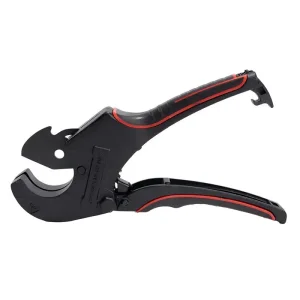 OEM High-Efficiency 42mm Ratchet PVC Pipe Cutter - Leading China Suppliers & Factory for Rapid Construction Manufacturers, FactoryView Details
 -
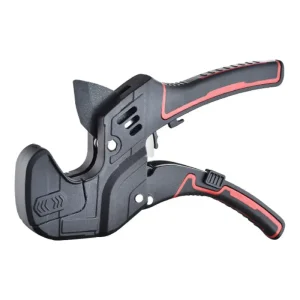 Wholesale Heavy-Duty Adjustable PVC Pipe Cutter from China Suppliers - Model JC-PC-22 for Professional Use Suppliers, FactoryView Details
 -
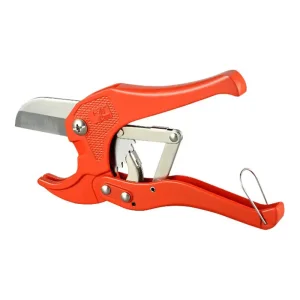 ODM 42mm Manual Plastic Pipe Cutter for PVC, PPR & PEX - China Suppliers, Durable Factory Model JC-PC-001 Manufacturers, FactoriesView Details
 -
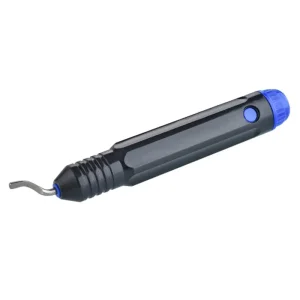 OEM M2 HSS Deburring Tool for Metal & Plastic Pipes - DT-001 from China Suppliers & Factory Supplier, FactoriesView Details
 -
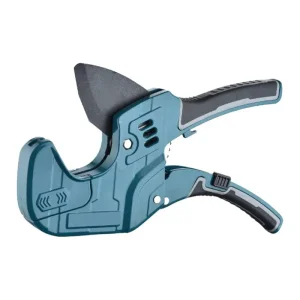 China Heavy-Duty Adjustable PVC Pipe Cutter 50mm/63mm - China Suppliers Factory Model JC-PC-22 Supplier, ManufacturersView Details
 -
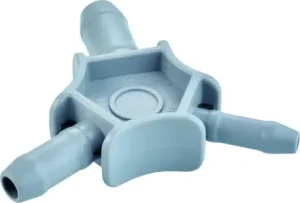 OEM China Suppliers 3-in-1 Pipe Calibrator for PEX-AL-PEX Systems - Factory Price, Precision Calibration Tool Factories, FactoryView Details
 -
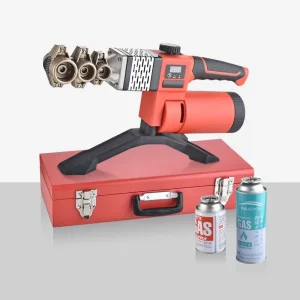 ODM 1.4KW Gas Powered PPR Fusion Welder for 20-32mm Pipes - High-Quality China Suppliers & Factory Solution Supplier, SuppliersView Details
 -
OEM M2 HSS Deburring Tool DT-001 for Metal & Plastic Pipes - China Factory Suppliers for Professional Finishing Suppliers, FactoryView Details
Global Macro-Landscape: The Shift to Molecular Polyolefin Fusion
Analyzing the industrial transition from threaded metallic plumbing to high-integrity homogeneous thermofusion in global civil, municipal, and industrial fluid transportation infrastructure.
The global plumbing and industrial piping market is undergoing a structural transformation. Traditional galvanized iron, copper, and threaded PVC connections are rapidly being superseded by modern polyolefin polymer piping networks, specifically Polypropylene Random Copolymer (PPR), High-Density Polyethylene (HDPE), and Polyethylene of Raised Temperature Resistance (PE-RT). This shift is driven by the structural requirement for zero-leakage longevity, corrosion immunity, and seismic flexibility in modern architectural and municipal engineering.
At the center of this technological transition lies the water pipe welding machine—an essential piece of thermofusion equipment designed to heat the polymer matrix past its crystalline melting point (typically 260°C ± 5°C for PPR) and form a homogeneous molecular bond between pipe segments and fittings. Unlike solvent welding or mechanical compression, a properly executed thermal socket or butt fusion joint results in a continuous polymer chain with zero mechanical joints, rendering the weld interface stronger than the pipe wall itself.
Information Gain: Why Thermal Mass & PID Precision Dictate Joint Integrity
In low-tier fusion welders, temperature undershoot causes incomplete polymer chain interdiffusion, leading to cold joints susceptible to micro-cracks under hydraulic stress. Conversely, overshoot triggers thermal degradation and polymer chain scission, causing material charring and severe internal pipe necking (flow restriction). Precision OEM water pipe welding machines utilize thick aluminum matrix heating plates and intelligent PID (Proportional-Integral-Derivative) micro-controllers to guarantee ±3°C stability across extreme ambient ranges (-10°C to +45°C).
Industry Trends: Smart Sensing, Off-Grid Operation & Ergonomics
Four key engineering vectors shaping the next decade of water pipe fusion tool manufacturing and site implementation.
1. Off-Grid & Gas-Powered Fusion Autonomy
Traditional electric socket welders depend heavily on site generators or stable AC grid infrastructure. Modern jobsite logistics demand cordless flexibility. Innovative 1.4KW gas-powered PPR fusion welders bypass electrical cords entirely, using specialized micro-combustion burners to maintain exact fusion plate temperatures in remote agricultural, utility, or emergency repair zones where grid power is nonexistent.
2. Digital Closed-Loop Telemetry & IoT Control
Contractors on commercial high-rise projects now require real-time temperature verification and digital logging. Advanced OEM welding units integrate digital LED displays with optical status indicators (Red/Green solid readiness signals) and dual-sensor feedback loops that alert operators instantly if environmental cross-winds cool the heating matrix below working thresholds.
3. Multi-Layer PTFE Matrix Coatings
Stickiness of molten polymer to the heating die face leads to material residue drag, weld contamination, and downtime for cleaning. High-tier OEM suppliers now engineer socket die heads with dual-layer Japanese Daikin or Swiss Teflon PTFE non-stick coatings, increasing wear endurance up to 3,000 fusion cycles per socket set.
4. System-Wide Integration: Cut-Deburr-Calibrate Workflow
Professional plumbing tool procurement has shifted from isolated tools to integrated pipe preparation systems. A high-integrity weld requires a perfectly perpendicular cut (using high-efficiency ratchet cutters), smooth outer chamfering (deburring tools), and exact roundness restoration (3-in-1 PEX calibrators) prior to insertion into the socket welder.
Global Enterprise Procurement Decision Matrix
B2B procurement directors, brand owners, and channel wholesalers evaluate fusion welding hardware across four main technology typologies. The table below outlines technical operational parameters to guide contract sourcing.
| Fusion Technology Type | Applicable Pipe Materials | Pipe Diameter Range | Thermal Energy Source | Ideal Field Scenario | Critical OEM Quality Metric |
|---|---|---|---|---|---|
| Manual Socket Fusion Welder | PPR, PE-RT, PB, PEX | 20mm – 63mm (3/4" to 2") | Electric Resistance (800W–1500W) | Residential plumbing, indoor hot/cold water branch lines | Cast aluminum plate density, thermal mass retention |
| Industrial Benchtop Socket Fusion | PPR, HDPE, PVDF | 63mm – 110mm+ | High-Wattage Dual-Element (2000W+) | Commercial risers, hotel plumbing, industrial chemical transport | Mechanical alignment track accuracy, clamp concentricity |
| Gas-Powered Portable Welder | PPR, PE | 20mm – 32mm | Liquefied Gas Micro-Combustion (1.4KW) | Off-grid agricultural irrigation, emergency utility repairs | Burner orifice precision, ignition reliability under moisture |
| Semi-Automatic Butt Fusion Rig | HDPE, PP, PE100 | 90mm – 315mm+ | Hydraulic Power Unit + Heating Plate | Municipal water mains, gas transmission, civil infrastructure | Hydraulic cylinder pressure seal stability, facing tool sharpness |
China Factory 4.0: Supply Chain Resilience & Manufacturing Precision
Inside the Yuyao hardware ecosystem—leveraging vertical integration, automated die-casting, and stringent quality control to deliver competitive global OEM advantages.
Precision CNC Tooling
Over 40 sets of high-precision CNC machining centers ensure heating plate planarity within 0.05mm, guaranteeing uniform thermal contact across socket dies.
In-House Die-Casting & Coating
By executing aluminum alloy die-casting and electro-static PTFE spray coating under one roof in Yuyao, supply lead times are compressed by up to 35% compared to outsourced operations.
100% Full-Cycle Quality Inspection
Every single heating element undergoes dielectric voltage resistance tests, ground continuity checks, and 60-minute thermal burn-in testing before final packaging.
The strategic advantage of sourcing OEM water pipe welding machines from a specialized manufacturer in Yuyao, Zhejiang lies in the dense cluster of specialized component suppliers. From high-grade electrical heating wires and ergonomic anti-slip dipped handles to high-tensile ratchet cutter blades, raw materials are sourced within a 15-kilometer radius. This geographic concentration buffers international buyers against global supply chain shocks while guaranteeing rapid prototype turnarounds (under 7 days for customized private-label tooling).
Localized Application Scenarios & Engineering Practices
Examining field installation dynamics across four diverse commercial and environmental conditions.
Scenario A: Residential Plumbing Riser Replacement (Europe & UK)
The Challenge: Strict noise ordinances and cramped wall chases prevent the use of bulky machinery or loud power tools.
The Solution: Utilizing a compact 800W–1000W dual-socket PPR fusion welder paired with 42mm ratchet PVC/PPR pipe cutters. The ratchet cutter delivers zero-noise, burr-free cuts in tight wall cavities, while the narrow heating plate design allows socket fusion within 35mm clearance of structural concrete walls.
Scenario B: Remote Utility & Irrigation Networks (LATAM & Middle East)
The Challenge: High ambient temperatures combined with zero available site electricity in remote agricultural lands.
The Solution: Deployment of 1.4KW Gas-Powered PPR Fusion Welders (20mm-32mm). Operating on standard butane/propane canisters, installers achieve rapid 3-minute warm-up times, carrying a lightweight, self-contained fusion kit over vast terrain without dragging diesel generators.
Scenario C: Multilayer PEX-AL-PEX HVAC Press Systems (North America)
The Challenge: Shearing of inner aluminum layers during pipe cutting leads to O-ring damage and catastrophic leak failures inside crimp fittings.
The Solution: Mandatory step-by-step pipeline preparation using 36mm or 50mm multi-layer pipe cutters, followed immediately by 3-in-1 Pipe Calibrators (16-20-25mm/26mm). The calibrator restores concentric roundness while beveling the inner polymer wall, ensuring smooth sleeve insertion.
Scenario D: Municipal HDPE Underground Distribution (Southeast Asia)
The Challenge: High atmospheric humidity causing surface moisture on HDPE pipes, risking weak fusion bonds during butt welding.
The Solution: High-wattage 63mm one-handed HDPE pipe cutters provide instantaneous square cuts, minimizing open-air exposure, while heavy-duty M2 HSS deburring tools quickly strip outer oxidized polymer layers prior to thermal jointing.
Frequently Asked Questions (FAQ) for OEM Buyers & Engineers
Addressing core procurement questions regarding quality standards, OEM customization, thermal physics, and order workflows.
The standard working temperature for PPR socket fusion welding is 260°C (500°F) with an allowable tolerance of ±5°C. At this temperature, PPR material achieves optimal melt flow viscosity without causing thermal polymer degradation. Our machines feature precise thermostat controls to lock in this temperature range reliably.
Gas-powered PPR welders (such as our 1.4KW model) provide complete independence from electrical power cords or generators, making them ideal for remote field repairs. They heat up quickly using standard fuel canisters while maintaining consistent thermal transfer across 20mm to 32mm pipe sockets, passing rigorous SGS and CE certifications.
We provide comprehensive OEM/ODM services including custom handle color dipping (pantone matching), laser-etched brand logos, custom-molded steel or blow-molded carrying cases, specialized heating socket sizes (metric & imperial standards), and customized user instruction manuals.
When cutting multilayer pipes, the shear force compresses the pipe wall, creating an oval shape and jagged inner aluminum edges. A 3-in-1 Pipe Calibrator re-rounds the pipe diameter and chamfers the inner edge simultaneously, preventing internal O-ring displacement when inserting press or compression fittings.
Our production facilities operate strictly under ISO9001 Quality Management System certification. Furthermore, our electric and gas fusion welders comply with CE and SGS safety directives, ensuring hassle-free customs clearance and market compliance across Europe, North America, and LATAM.
Our socket dies are cast from high-grade aluminum alloy and coated with premium multi-layer PTFE non-stick coating. Under standard jobsite conditions with proper cleaning, each die set retains non-stick performance for up to 3,000 fusion cycles, preventing polymer adhesion and smoke generation.
Precision Cutters, Calibrators & Finishing Machinery
Complete your catalog with our industrial-grade ratchet pipe cutters, PEX tools, deburring units, and heavy-duty plastic cutting hardware.
-
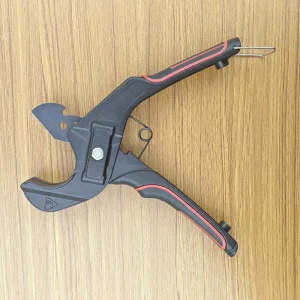 ODM China Suppliers: 36mm Precision PEX Pipe Cutter from Factory - Eliminate Installation Failures in Tight Spaces Supplier, FactoriesView Details
 -
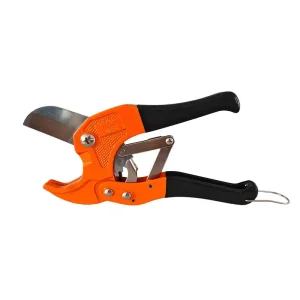 OEM Professional 42mm PVC Pipe Cutter - China Suppliers Factory with Anti-Slip Dipping Handle for High-Frequency Use Manufacturers, ManufacturerView Details
 -
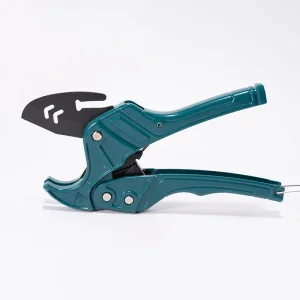 Wholesale 42mm Ratchet Plastic PPR Pipe Cutter - Model 42922 by China Suppliers and Factory for PVC, PPR, PEX Pipes Factories, FactoryView Details
 -
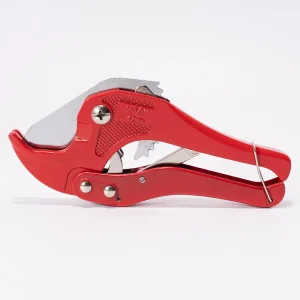 ODM Heavy-Duty 42mm Aluminum PVC Pipe Cutter from China Suppliers - Precision Factory Tool for Professionals Supplier, FactoryView Details
 -
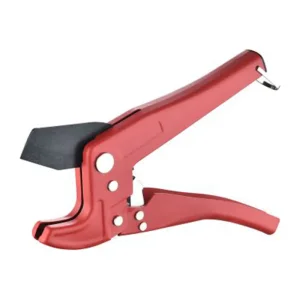 Wholesale 42mm Heavy-Duty Ratchet Plastic Pipe Cutter Model PC-25 - China Suppliers Heavy-Duty Factory Tool for PPR, PVC, PE Pipes Manufacturer, FactoryView Details
 -
ODM 42mm Heavy-Duty Ratchet Plastic Pipe Cutter PC-25 – Durable Tool for China Suppliers and Factory Projects Suppliers, ManufacturerView Details
-
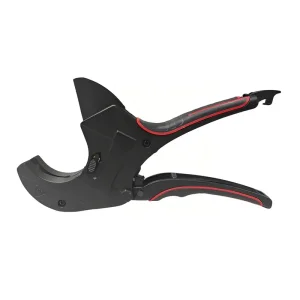 OEM China HDPE Pipe Cutter Suppliers - Professional 63mm One-Handed Tools from a Trusted Factory Supplier, FactoriesView Details
 -
China M2 HSS Deburring Tool DT-001 for Metal & Plastic Pipes - Quality China Suppliers & Factory Manufacturers, ManufacturerView Details