
Precision Pipe Joining & Cutting Technologies
1. Architectural Blueprint & Thermal Mechanics of PPRC Socket Fusion
Polypropylene Random Copolymer (PPRC / PPR Type 3) has revolutionized modern sanitary, HVAC, and industrial fluid distribution. Achieving a homogenous, leak-free, non-toxic connection requires socket fusion machinery capable of precise thermodynamic performance.
As a premier OEM PPRC Welding Machine Manufacturer, our engineering philosophy focuses on eliminating the three primary causes of pipe fusion failure: thermal degradation, radial stress misalignment, and cold-weld voids. Standard PPR-C pipe fusion demands strict adherence to DVS 2207-11 guidelines, maintaining a heating plate temperature accurately regulated at 260°C ± 5°C.
High-density aluminum heating plates cast with internal ceramic heating elements deliver rapid thermal recovery, resisting ambient wind drop during outdoor jobsite operation.
Heating sockets and spigots are coated with high-grade Daikin Japanese PTFE, preventing polymer adhesion, wall thinning, and molten resin buildup across 3,000+ fusion cycles.
Digital display models feature dual-sensor Closed-Loop Proportional-Integral-Derivative (PID) controllers to maintain thermal accuracy even during line voltage fluctuations.
When PPR-C pipes are heated, the polymer transitions past its crystalline melting point (~140°C–150°C) into a viscoelastic melt state. If the fusion welder temperature drops below 245°C, the molecular chains fail to interdiffuse across the interface, leading to micro-seams. Conversely, temperatures exceeding 275°C induce thermal degradation, breaking down the polymer matrix and causing inner bead expansion (pipe necking). Premium OEM equipment integrates dual heating elements with localized thermal sensors to stabilize the melt zone across 20mm to 160mm diameters.
2. Technical Roadmap & Next-Generation Fusion Innovation
As green building standards (LEED, BREEAM) drive global adoption of plastic piping systems, pipeline fusion machinery is evolving from basic manual tools into intelligent, data-driven installation systems.
| Technology Phase | Legacy Thermal Welders | Current OEM Standard (Jiacheng) | Next-Gen Horizon (2026-2030) |
|---|---|---|---|
| Temperature Regulation | Analog Mechanical Thermostat (±15°C drift) | Digital Microprocessor PID (±2°C precision) | AI Infrared Thermal Surface Feedback Sensor |
| Power & Portability | AC Grid Dependency (110V/220V Cables) | Gas-Powered Cordless & Dual AC/DC Hybrid | High-Density Solid-State Lithium-Ion Packs |
| Data Traceability | Manual Timers & Visual Inspection | Visual LED Countdown & Audio Prompts | IoT Bluetooth Cloud Sync & QR Code Logging |
| Heating Plate Surface | Single PTFE Coating Layer | Triple-Layered Japanese Daikin PTFE Coating | Nanocomposite Self-Cleaning Ceramic-Teflon Matrix |
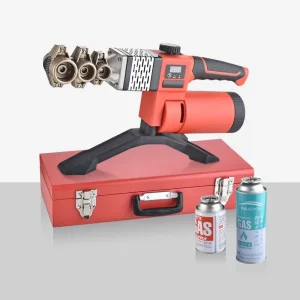
To solve jobsite challenges where electrical infrastructure is lacking, our patented gas-powered PPR fusion welder utilizes a regulated butane/propane combustion cell capable of heating 20-32mm dies to 260°C within 3 minutes, eliminating reliance on portable diesel generators.
For large-diameter PPR piping (90mm–160mm), manual axial alignment becomes difficult. Next-generation mechanical guide carriages incorporate linear ball bearings and torque-limiting clamps to ensure exact insertion depth and zero angled deflection during cooling.
3. Macro-Industry Solutions & Application Paradigms
Different mechanical sectors impose unique physical and chemical demands on pipe joining. A high-volume OEM PPRC welding machine manufacturer must design tool systems adapted for diverse international environments.
PPR-C systems ensure zero heavy metal leaching. Fusion welders must maintain smooth internal bead profiles to prevent bacterial biofilm aggregation and pressure drops across municipal residential networks.
Hydronic heating systems experience constant thermal cycling (20°C to 85°C). Socket fusion tools must achieve homogeneous fusion zones capable of resisting cyclic shear stress over a 50-year service life.
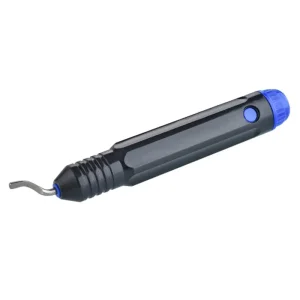
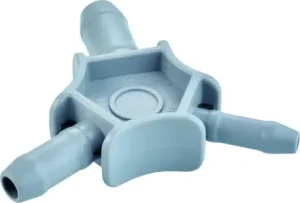
For aggressive fluid transportation (acids, alkalis), PPR-H and PEX-AL-PEX systems require precision deburring and pipe calibrators to prevent chemical degradation of internal metallic reinforcements.
4. China Industry 4.0: Supply Chain Resilience & Yuyao Manufacturing Ecosystem
Located in Yuyao, Zhejiang Province—the global epicenter of hardware tooling, plastics engineering, and die casting—Yuyao Jiacheng Tools Industry and Trade Co., Ltd. combines advanced manufacturing technology with complete supply chain control.
Equipped with over 40 sets of CNC machining centers, high-pressure die-casting units, and automated electrostatic powder coating lines, we maintain complete control over blade geometry, heat plate planar tolerances, and structural casting density.
Raw material sourcing (6063 aluminum alloys, SK5 high-carbon steel blades, M2 HSS deburring elements, non-recycled PPR resins) occurs within a 30-kilometer radius, drastically shortening lead times and reducing component freight overhead.
To ensure consistent quality for global buyers, every fusion welder undergoes a 4-step quality assurance protocol: 1) Dielectric High-Voltage Insulation Test (1500V leak check), 2) 2-Hour Continuous Thermal Cycling Audit (verifying thermostatic stability), 3) Socket Hydrostatic Pull-Off Shear Testing, and 4) 100% Visual Surface Defect Scan before final OEM packaging.
5. Global Enterprise Procurement & Tender Specification Matrix
B2B procurement teams and OEM brand managers require absolute consistency between product data sheets, tender compliance docs, and actual physical deliveries.
| Spec Parameter | Standard Commercial Grade | Jiacheng OEM Industrial Grade | Tender Compliance Standard |
|---|---|---|---|
| Heating Element Wattage | 600W – 800W Single Circuit | 1500W – 2000W Dual Independent Circuits | DIN 16962 / CE Compliance |
| Thermostat Range | 50°C – 300°C Mechanical Wheel | 0°C – 320°C Digital Microcontroller | DVS 2207-11 Precision Spec |
| Handle Insulation | Standard PVC Soft Dipping | Ergonomic Reinforced Anti-Slip ABS + TPR Rubber | EN 60335-1 Thermal Safety |
| Matrix Socket Sizes | 20mm, 25mm, 32mm | 20mm to 160mm (Custom OEM Sets) | ISO 15874 / Metric Pipe Std |
| Blade Material (Cutters) | Low Carbon Steel 45# | T10 High Carbon Steel or SK5 Teflon Coated | HRC 54 – 58 Hardness Testing |
OEM & Private Label Branding Capabilities
We offer extensive customization for global distributor networks, tool catalog companies, and big-box retailers (including retail programs serving North American and European markets):
Pantone-matched plastic handles, powder-coated metal bodies, and custom branding die plates.
Laser engraving, silkscreen branding logos, high-durability nameplates, and custom molded logos on carrying cases.
Full color box design, blow-molded heavy-duty steel cases, blister packaging, and barcode compliance.
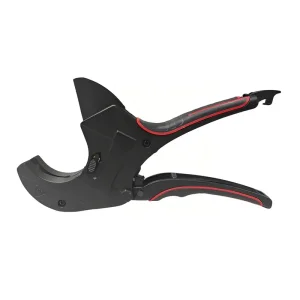
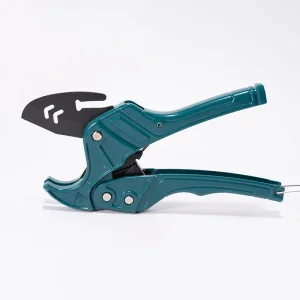
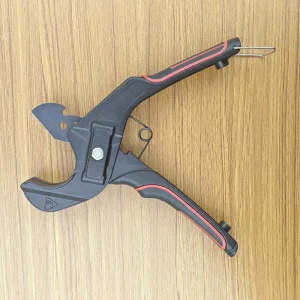
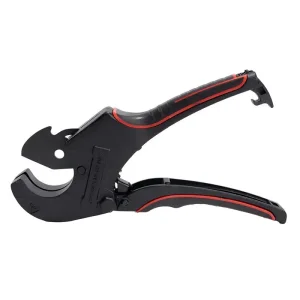
Modular kits combining PPR welders, ratchet pipe cutters, tape measures, gloves, and deburring tools in single case.
6. Localization Support, Regional Regulatory Compliance & Certification
Distributing plumbing tools globally requires meeting rigorous local electrical, environmental, and mechanical safety regulations.
Our factory management system operates under strict ISO9001 guidelines, ensuring full raw material batch traceability and standardized assembly procedures across every production line.
Electric fusion welders comply with European Union Low Voltage Directive (LVD 2014/35/EU) and Electromagnetic Compatibility (EMC 2014/30/EU), enabling unrestricted market access.
Our flagship gas-powered pipe fusion welder holds full SGS testing and CE compliance documentation, passing safety standards for gas canister pressure containment and burner emission stability.
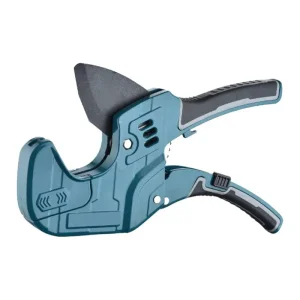
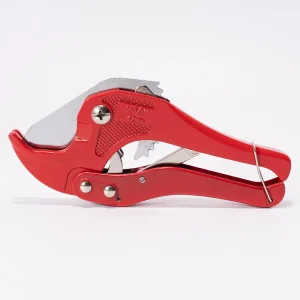
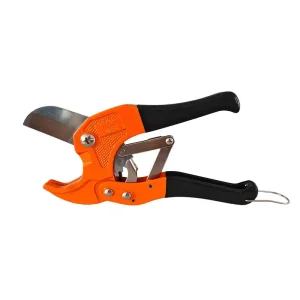
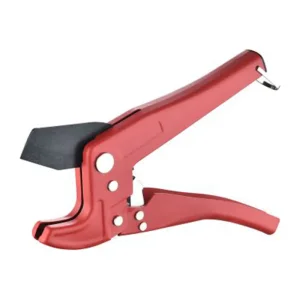
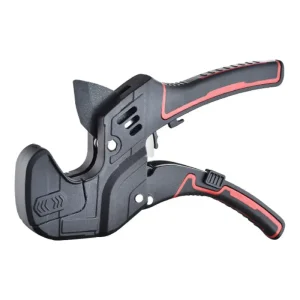
Heavy-Duty Cutters, Calibrators & Finishing Equipment
7. Frequently Asked Questions (Technical & Sourcing Procurement FAQ)
Comprehensive answers regarding PPR welding physics, tool customization, minimum order quantities (MOQs), quality testing, and international shipping logistics.