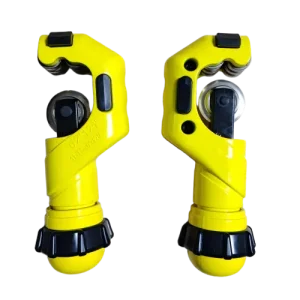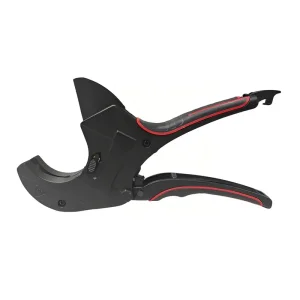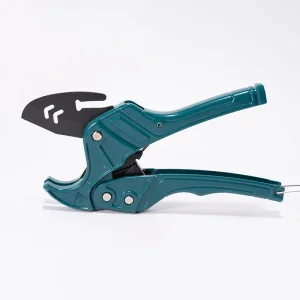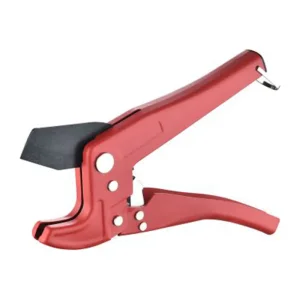
Precision Pipe Cutting & Preparation Tools
Essential companion tooling and OEM components engineered for modern PPR, PVC, and PEX piping systems.
The Global OEM PPR Pipe Machine Manufacturing Ecosystem
Analyzing the shift toward energy-efficient extrusion lines, automated socket fusion machinery, and standardized quality assurance protocols.
Polypropylene Random Copolymer Dynamics
Modern fluid transport infrastructure increasingly relies on PPR (Type 3) and PPR-CT due to their operational life (>50 years), high temperature resistance (up to 95°C), and zero chemical leaching. OEM machinery must accommodate variable Melt Flow Index (MFI) resins without causing polymer degradation during melt conveyance.
Extrusion & Tooling Integration
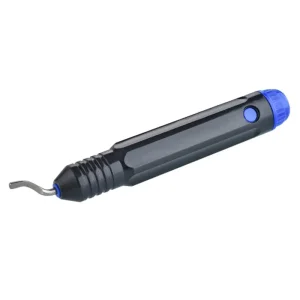
Achieving structural uniformity across pipe walls requires cohesive engineering between high-torque single screw extruders, spiral co-extrusion die heads, vacuum calibration tanks, and precise ratcheting or deburring companion tools for site installation.
Turnkey OEM/ODM Capability
Leading Chinese manufacturing clusters in Zhejiang (such as Yuyao) deliver integrated B2B solutions—from customized screw L/D ratios (30:1 to 38:1) to private-label ergonomic cutters designed to minimize micro-cracking in cold environments.
Mechanical & Thermal Architecture of PPR Machinery
A comprehensive breakdown of structural parameters governing high-speed PPR extrusion, socket welding, and pipe wall calibration.
The manufacturing of PPR pipes requires precise thermal control and mechanical stability. Unlike standard PVC or PE extruders, a dedicated PPR pipe production line must handle polymer melt temperatures fluctuating tightly between 200°C and 230°C. Overheating damages the crystalline structure of the polypropylene random copolymer, causing long-term pressure rating degradation, whereas underheating leads to un-melted gel particles and wall thickness variances.
| Machine Component | Technical Parameter | Engineering Function | OEM Customization Scope |
|---|---|---|---|
| Extruder Drive System | AC Servo / Inverter Motor (30-38 L/D Ratio) | Delivers constant melt torque without thermal surge; ensures steady polymer shear rate. | Motor rating (15kW to 132kW), barrel cooling zone configurations. |
| Co-Extrusion Die Head | Spiral Distribution Die (16mm - 160mm SDR range) | Eliminates weld lines in multi-layer PPR pipes (e.g., Fiber-glass reinforced or Aluminum-PPR). | Layer distribution ratio (33%/34%/33%), chrome-plated internal runner polish. |
| Vacuum Calibration Tank | Stainless Steel SUS304 (0.09 MPa vacuum degree) | Enforces precise outer diameter tolerances according to DIN 8077/8078 standards. | Dual-chamber design, water temperature auto-tuning valves. |
| Socket Fusion Welder | Microprocessor Temp Control (260°C ± 2°C) | Provides homogeneous molecular fusion between pipe ends and PPR socket fittings. | Teflon-coated die heads (20-110mm), digital display, auto-timer notification. |
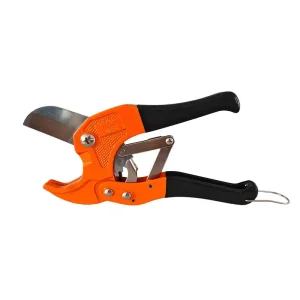
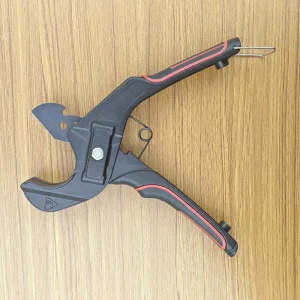
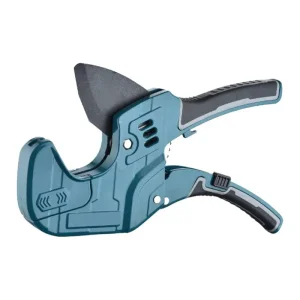
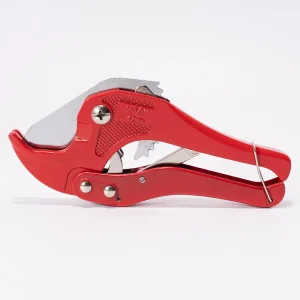
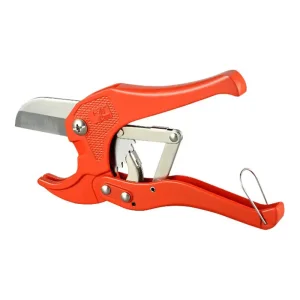
| Precision Ratchet Cutter | SK5 / M2 High-Speed Steel Blade (58-62 HRC) | Produces a clean, 90-degree square cut with zero internal burrs to ensure seamless socket insertion. | Blade angle geometry, anti-slip rubberized handles, OEM branding colors. |
Regional Demand Drivers for PPR Machinery & Tooling
Market segmentation, urbanization catalysts, and regulatory standards driving B2B procurement globally.
Europe & DACH Region
Driven by strict drinking water purity standards (DVGW, WRAS), European contractors favor multi-layer PPR-AL-PPR and PPR-Fiber optic lines. OEM manufacturers must provide machinery compliant with EN ISO 15874 and low-energy consumption CE standards.
Middle East & North Africa (MENA)
Rapid infrastructure expansion and high ambient temperatures make traditional metal pipes prone to internal corrosion. PPR pipe lines capable of outputting high SDR-6 and SDR-7.4 pressure pipes are high in demand across Saudi Arabia, UAE, and Egypt.
Latin America & Southeast Asia
Industrialization and affordable housing projects drive high-volume demand for single-layer 20mm to 63mm residential PPR piping. Local distributors seek cost-effective turnkey OEM extrusion lines paired with durable, compact manual ratchet cutters.
Localized Engineering Deployment Scenarios
Practical application cases where machinery precision directly dictates installation performance.
High-Rise Commercial Plumbing
Challenge: Pressure fluctuations in 30+ story buildings can trigger thermal expansion leaks if PPR pipe wall thickness varies by even 0.2mm.
Machinery Solution: Utilizing gravimetric dosing units and ultrasonic wall thickness measurement systems during extrusion ensures 100% wall uniformity.
HVAC Hydronic Radiant Heating
Challenge: Oxygen ingress into closed-loop heating systems leads to pump impeller cavitation and boiler corrosion.
Machinery Solution: 5-layer co-extrusion PPR lines integrating EVOH (Ethylene Vinyl Alcohol) barrier layers, coupled with precise deburring and calibration tools.
Industrial Chemical Transportation
Challenge: Transporting mildly acidic or alkaline industrial fluids requires stress-crack resistant PPR raw material formulations.
Machinery Solution: Specialized low-shear extruder screws designed to process modified PPR resins without inducing internal shear stresses.
Factory Quality Assurance & Scale
Verifiable manufacturing metrics demonstrating specialized focus, low defect rate, and global compliance.
Technology Roadmap: The Next Era of PPR Manufacturing
How Industry 4.0, AI-driven thermal calibration, and sustainable material recycling are shaping the next decade.
AI-Calibrated Extrusion (2025–2027)
Integration of real-time ultrasonic wall monitoring with closed-loop extruder motor feedback. AI algorithms automatically adjust melt pressure and vacuum tank pressure to offset polymer batch viscosity deviations instantly.
In-Line Scrap Circular Recycling
Zero-waste production setups featuring immediate inline granulators that collect trimmed pipe ends, re-introduce regrind material at precise 5% ratios without compromising burst pressure metrics.
Smart IoT Socket Fusion Welders
Handheld socket fusion units equipped with Bluetooth data logging to record pipe fusion temperature, holding time, and ambient moisture for full quality traceability on commercial jobsites.
Enterprise Macro-Solutions for B2B Importers
A structured evaluation methodology for selecting qualified China PPR machine manufacturers and OEM partners.
1. Screw Geometry & Metallurgy
Ensure the extruder screw uses 38CrMoAlA alloy steel with nitriding treatment (depth 0.5-0.7mm, hardness ≥950HV). This prevents premature screw wear when processing filled PPR compounds.
2. Quality Management Audit
Verify factory ISO9001 certification and request third-party testing reports (SGS/CE) for socket fusion welders and automated haul-off units to guarantee safety compliance.
3. Complete Tooling Ecosystem
In addition to primary extrusion lines, partner with suppliers capable of delivering matching chamfer tools, calibrators, and high-leverage ratchet cutters to supply end-users with a unified brand kit.
Frequently Asked Questions by Technical Buyers
Direct answers addressing technical parameters, OEM customizations, and maintenance considerations.
What is the optimal screw L/D ratio for PPR pipe extrusion?
For high-quality PPR processing, an L/D ratio between 30:1 and 34:1 is optimal. This length allows sufficient plasticizing time and homogeneous temperature distribution without excessive shear heating that degrades molecular weight.
How do OEM factories prevent pipe ovality in vacuum calibration tanks?
Ovality is controlled by matching the vacuum degree (typically -0.03 to -0.09 MPa) with precise water jet distribution inside the calibration sleeve. High-end lines employ multi-stage vacuum regulation and dual-circuit cooling rings.
Why is blade hardness critical in manual PPR and PVC pipe cutters?
Cutting PPR pipes without heating can cause cracking if the blade is dull or incorrectly angled. High-quality SK5 or M2 HSS blades hardened to 58-62 HRC maintain a razor-sharp edge, guaranteeing a clean 90-degree burr-free cut.
Can a single PPR pipe machine produce multi-layer aluminum-composite pipes?
No, multi-layer pipes require co-extrusion crosshead dies and secondary extruders for adhesive layers, along with specialized aluminum ultrasonic seam-welding or overlap welding units inline.
What custom branding (OEM) options are available for tool distributors?
OEM services include custom handle dipping colors, laser-engraved brand logos on blades and machine bodies, customized blow-mold carrying cases, and tailored instruction manuals complying with local market standards.
What is the standard lead time for OEM tooling orders from China?
Standard OEM tool production cycles range from 20 to 35 days depending on batch size and packaging complexity, with sample approval typically executed within 7 to 10 working days.
Heavy-Duty Cutters, Deburring & Copper Tools
Complete your catalog with factory-direct OEM products engineered for seamless field performance.