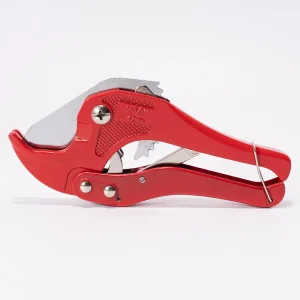
Precision PPR Welding & Pipe Preparation Tool Line
Explore our export-ready OEM/ODM pipeline installation machinery and manual cutting systems engineered for tier-1 distributors.
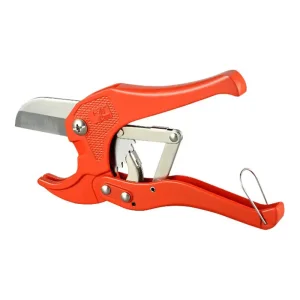
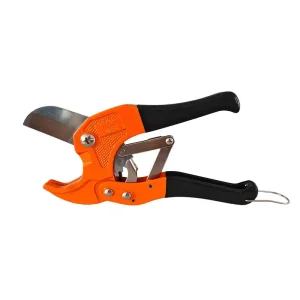
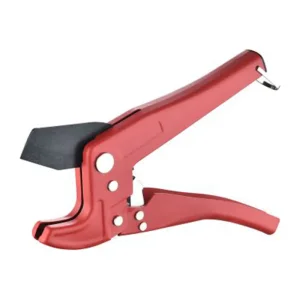
The Engineering & Physics of PPR Pipe Thermo-Fusion
An in-depth analysis of Polypropylene Random Copolymer joint integrity, heating dynamics, and OEM factory manufacturing precision.
In modern pressure fluid conveyance and sanitary plumbing networks, Polypropylene Random Copolymer (PPR-80 and PPR-100 / PPR-CT) has emerged as the definitive material standard. Unlike traditional metallic piping systems secured via threaded joints, soldering, or compression mechanical fittings, PPR installation relies entirely on thermo-fusion socket welding. When executed with precision engineering tools, thermo-fusion converts separate pipe segments and fittings into a monolithic, homogeneous polymer structure. The resulting joint possesses identical mechanical, chemical, and pressure-resistant properties to the pipe wall itself, effectively eliminating joint failure points across a 50-year service life.
Homogeneous Polymer Interdiffusion
At the controlled melting window of 260°C (±5°C), the semi-crystalline PPR polymer chains transition across their glass transition threshold. Socket pressure forces interphase polymer chains to entangle across the interface boundary, creating a seamless joint free of weak bonded seams.
Thermal Socket Depth Calibration
Precision die matrix engineering guarantees accurate socket insertion depth, preventing over-insertion (which restricts internal fluid bore diameter) or under-insertion (which leads to reduced shear joint area and pressure rating loss).
DIN 16962 & DVS 2207-11 Compliance
OEM PPR pipe fusion machine factories must manufacture heating elements and aluminum die matrix sets strictly conforming to DVS 2207-11 parameters. This dictates exact heating, changeover, and cooling durations relative to pipe diameter (20mm to 160mm+).
E-E-A-T Technical Insight: Quality PPR socket welding depends on maintaining a constant surface heat flux. Substandard fusion welders suffer from severe temperature drop-offs (cold spots) during socket insertion, leading to incomplete polymer chain entanglement and latent micro-leaks under hydro-static testing.
Next-Generation Technology Roadmap for PPR Fusion Machines
How IoT smart sensors, off-grid gas thermal power, and advanced PTFE matrix coatings are transforming jobsite efficiency.
As international construction standards demand shorter project timelines, zero defect rates, and total digital auditability, OEM PPR pipe fusion machine factories are rapidly evolving beyond basic resistive heating plates. Technology integration across heating element metallurgy, digital micro-controllers, and off-grid mobility solutions is redefining thermal pipe joining performance.
| Technology Architecture | Traditional Socket Welder | Next-Gen OEM Fusion Welder (Jiacheng Standard) | Field Advantage & Impact |
|---|---|---|---|
| Thermal Regulation | Bimetallic Thermostat (±15°C drift) | Intelligent Microprocessor PID Controller (±2°C accuracy) | Prevents polymer thermal degradation and burnt joints. |
| Power Source Flexibility | Mains AC Electric Cords Only | Dual Electric & Portable Gas-Powered (1.4KW Cordless) | Fuses PPR in off-grid sites, high-rises, & trenching without generators. |
| Die Matrix Coating | Single-layer Basic PTFE coating | Triple-Layered Japanese PTFE Anti-Stick Matrix (>45μm) | Resists 300°C wear, eliminating plastic residue sticking and socket pitting. |
| Data Connectivity | None (Manual Operation) | IoT Bluetooth Loggers (Welding Cycle Recorders) | Provides digital quality certificates for municipal infrastructure compliance. |
The Gas-Powered Fusion Innovation: Off-Grid Independence
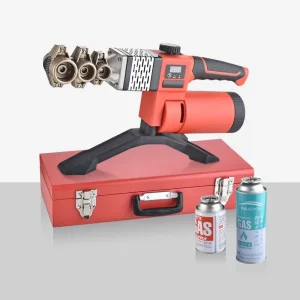
A persistent bottleneck for plumbing contractors operating on newly constructed residential or remote agricultural jobsites is the absence of reliable grid electricity. Battery-powered fusion tools often lack the thermal capacity (up to 1500W continuous draw) required to maintain 260°C for multiple fusion cycles. Yuyao Jiacheng Tools solved this through engineered gas-powered PPR socket fusion technology (such as the 1.4KW Gas Powered PPR Fusion Welder). Certified by SGS and CE, these units utilize clean-burning butane/propane canisters to generate rapid, stable thermal energy directly beneath the aluminum heating plate, enabling complete mobility across off-grid plumbing installations.
Macro-Industry Solutions & Enterprise Workflows
Engineering customized pipeline tool packages tailored for high-volume commercial, industrial, and municipal projects.
Commercial High-Rise Sanitary Plumbing
High-frequency socket fusion across multi-story riser pipes requires robust thermal recovery time. Jiacheng dual-element welders ensure rapid heat replenishment between successive 20mm-63mm joints, keeping plumbing crews moving without waiting for plate re-heating.
Residential Radiant Heating & HVAC
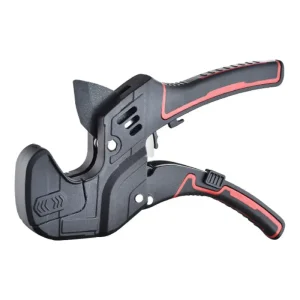
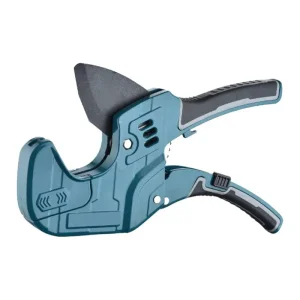
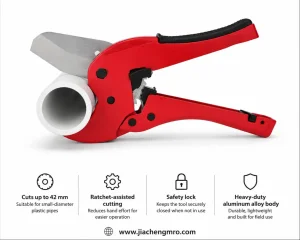
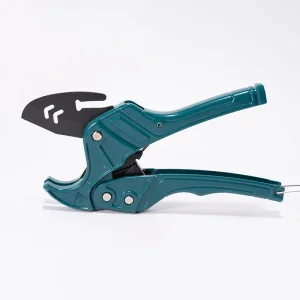
Underfloor heating manifolds and PEX-AL-PEX multilayer pipe networks demand burr-free cuts and precise calibration. Pair Jiacheng's heavy-duty 42mm ratchet cutters with 3-in-1 calibrators to ensure zero O-ring displacement during fitting press insertion.
Industrial Chemical & Process Piping
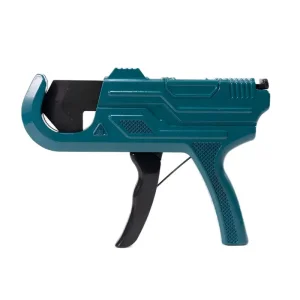
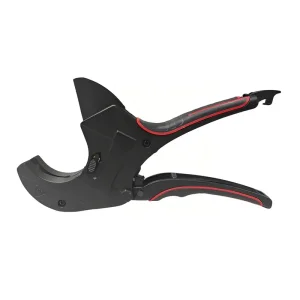
Transporting aggressive acids or ultra-pure deionized water requires PVDF and HDPE thermo-fusion. Jiacheng large-diameter 63mm-75mm cutters provide square cuts, enabling uniform contact during butt and socket fusion cycles.
China Factory 4.0: Supply Chain Resilience & Yuyao Advantage
Inside Yuyao Jiacheng Tools Industry and Trade Co., Ltd. — A modern 2,667 m² manufacturing ecosystem built for global OEM tool brands.
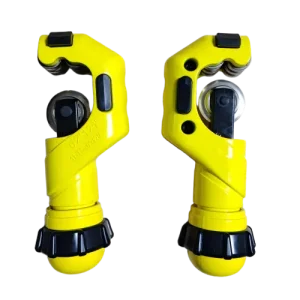
Located in Yuyao City, Zhejiang Province — the core hardware and plumbing engineering hub of East China — Yuyao Jiacheng Tools Industry and Trade Co., Ltd. represents the modern standard of specialized B2B tool manufacturing. By concentrating on pipe installation equipment (PVC/PPR pipe cutters, gas-powered socket fusion welders, copper tube cutters, deburring tools, and calibrators), Jiacheng eliminates sub-tier outsourcing risks.
Integrated Quality Assurance & Metallurgy Control
Unlike trading intermediaries that aggregate disparate low-end products, Jiacheng operates over 40 sets of automated CNC lathes, high-tonnage precision die-casting presses, and laser blade sharpening units under an ISO9001 quality management system. Raw materials — including high-grade aluminum alloys for cutter bodies, manganese steel (65Mn / SK5) for pipe cutter blades, and heavy-wall copper heating plates — undergo spectrographic verification before enter mass production lines. Every fusion machine undergoes dielectric strength testing, insulation resistance checks, and thermal plateau verification prior to packing.
Global Enterprise Procurement & OEM / ODM Customization
A detailed sourcing guide for procurement directors, hardware brand managers, and retail category buyers.
When selecting an OEM PPR pipe fusion machine supplier, international buyers must look beyond initial unit price to evaluate Total Cost of Ownership (TCO), brand protection, and regulatory compliance. Jiacheng Tools supports custom private-label manufacturing programs tailored for tier-1 distributors across Europe, the Americas, the Middle East, and Southeast Asia.
Custom Branding & Color Matching
Custom Pantone dipping handles, laser-etched brand logos, custom BMC (Blow Mold Case) toolboxes, and multi-lingual retail instruction manuals optimized for Amazon, home centers, and industrial supply channels.
Voltage & Socket Customization
Global electrical compliance including 110V/60Hz (North America), 220V-240V/50Hz (EU/UK/AU plugs), dual-voltage switches, and high-efficiency gas burner orifices engineered for localized fuel canisters.
Container Logistics & Supply Chain Security
Flexible MOQ structures, palletized container loading from Ningbo/Shanghai ports, export packaging compliant with ISTA drop testing, and guaranteed production lead times.
International Certifications & Quality Assurance Standards
Ensuring frictionless customs clearance, retailer audit approval, and end-user liability protection.
Building a sustainable international tool brand requires total adherence to regional safety and environmental legislation. Sourcing uncertified piping machinery exposes importers to heavy customs impoundments, retail recalls, and liability claims.
- ISO9001 Quality System: Documented step-by-step manufacturing and raw material batch traceability.
- SGS / CE Certification: Rigorous low-voltage directive (LVD) and electromagnetic compatibility (EMC) testing for fusion welders.
- RoHS & REACH Compliance: Eco-friendly handle dipping polymers and lead-free aluminum matrix alloys.
- Retail Audit Ready: Compliant with major retail chain vendor onboarding standards (e.g., Lowe's, Home Depot suppliers).
Audit Summary & Technical Compliance Guarantee
Every production batch of Jiacheng PPR fusion welders and pipe cutters undergoes pre-shipment quality control. Defect logs, die temperature mapping reports, and load cell shear test certificates are available to partner buyers prior to bill of lading issuance.
Request Certificate Package & Audit DocumentsFrequently Asked Questions: PPR Fusion & OEM Manufacturing
Direct answers from our engineering team on fusion mechanics, custom ordering, and quality management.
What is the standard heating temperature for PPR pipe thermo-fusion?
The standard welding temperature for PPR (Polypropylene Random Copolymer) socket fusion is 260°C (±5°C). At temperatures below 250°C, the polymer fails to reach full interdiffusion enthalpy; above 270°C, the plastic suffers thermal degradation, weakening the joint dynamic pressure resistance.
How does a gas-powered PPR fusion welder compare to traditional electric welders?
Gas-powered fusion welders (such as the Jiacheng 1.4KW Gas Powered Welder) utilize clean butane/propane canisters to generate heat, eliminating dependence on mains power cables or generators. They reach working temperature rapidly and provide full mobility for outdoor, trench, or remote construction sites while maintaining strict temperature consistency.
What is the typical Minimum Order Quantity (MOQ) for OEM private-label branding?
Our standard OEM MOQ starts at 500 to 1,000 units per model depending on custom handle color, laser marking, and customized BMC case printing requirements. Stock neutral packaging units can be ordered in lower trial quantities.
Why is burr-free pipe cutting essential before socket or butt fusion?
Uneven or burred pipe cuts create non-uniform contact surface area within the heating socket, causing uneven heating, trapped air pockets, and internal polymer beads that reduce fluid flow rate. Using precision ratchet cutters ensures clean square cuts every time.
How does Yuyao Jiacheng guarantee a defect rate below 0.5%?
Through our integrated manufacturing workflow: in-house CNC machining of critical parts, 100% electrical insulation testing, real-time heat sensor calibration, and raw material chemical analysis under ISO9001 quality guidelines.
Explore Additional Heavy-Duty Plumbing & Pipe Cutting Tools
Direct factory supply for high-performance cutters, adjustable PVC shears, and specialty fusion welders.