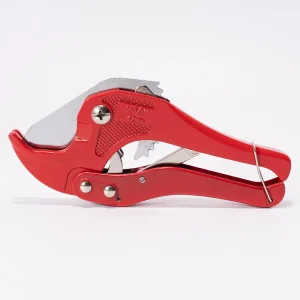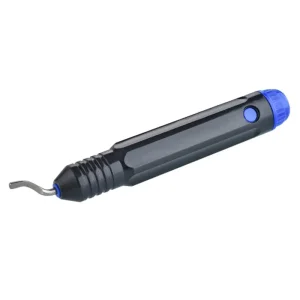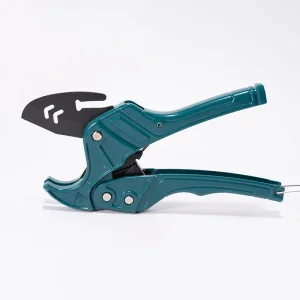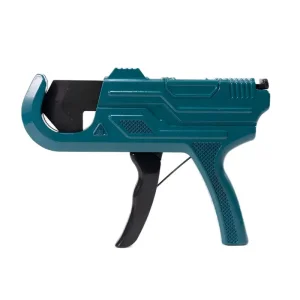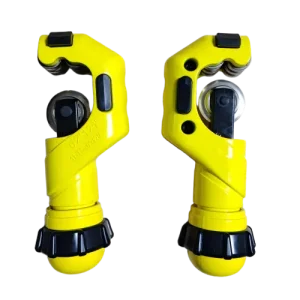
Precision Cutting & Preparation Tooling Systems
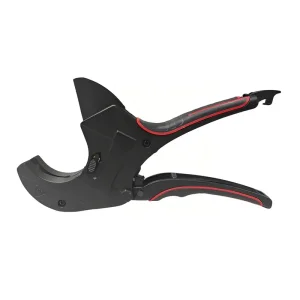
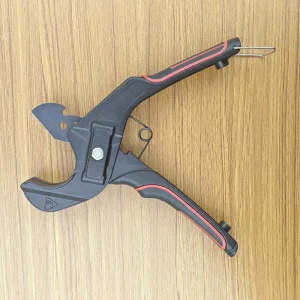
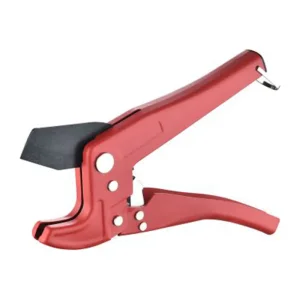
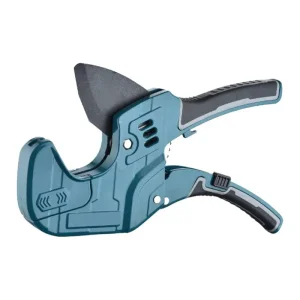
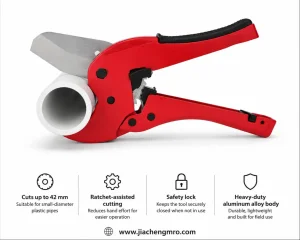
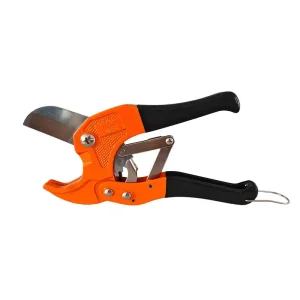
Explore our factory-direct precision pipe cutters and installation accessories engineered for seamless poly pipe site preparation prior to fusion welding.
Polyethylene Pipeline Evolution & Welding Equipment Paradigm
The strategic transition from legacy metallic conduits to high-density polyethylene (HDPE, PE100, PE100-RC) represents a fundamental technological shift across municipal, mining, industrial, and energy distribution networks worldwide.
Infrastructure Modernization Drivers
Global infrastructure investments are accelerating the replacement of corroding ductile iron, carbon steel, and concrete piping with flexible, lightweight, and chemically inert High-Density Polyethylene (HDPE). Modern PE100-RC (Resistance to Crack) resins allow trenchless directional drilling (HDD) and subsea installations. However, the operational integrity of these extended-lifespan (50+ years) systems depends entirely on the molecular continuity of fused joints executed by certified OEM polyethylene pipe welding machines.
Zero-Leak Mandates & Quality Expectations
Unlike mechanical fittings that risk rubber gasket degradation and joint separation under ground movement or thermal contraction, thermofusion produces a homogeneous, monolithic pipeline. Engineers demand zero-leakage rates for high-pressure gas distribution, hazardous chemical transport, and municipal potable water mains. Achieving this level of reliability requires factory-calibrated fusion machinery capable of maintaining precise melt enthalpy, drag pressure compensation, and automated dwell cycle timing.
Thermofusion Thermodynamics & Mechanical System Design
A deep dive into the polymer molecular interdiffusion process, pressure-temperature time domain curves, and machine construction standards essential for tier-one OEM equipment buyers.
1. Polymer Inter-Chain Diffusion
During butt fusion welding, PE pipe end-faces are heated above the crystalline melting temperature ($T_m \approx 130^\circ\text{C}$ to $135^\circ\text{C}$) under low soak pressure ($P_{\text{soak}} \approx 0.05 \text{ MPa}$). This melts the semi-crystalline matrix into an amorphous molten state. When joined under fusion pressure ($P_{\text{weld}} \approx 0.15 \text{ MPa}$), macromolecular chain entanglements re-crystallize across the interface, restoring the joint strength to equal or exceed that of the virgin pipe body.
2. Drag Pressure Compensation
Field machinery must calculate dynamic carriage drag—the force required to overcome hydraulic friction, carriage sliding resistance, and pipe weight drag along support rollers. Premium OEM hydraulic power units (HPUs) integrate digital transducer feedback loops that dynamically adjust system hydraulic pressure ($P_{\text{sys}} = P_{\text{theoretical}} + P_{\text{drag}}$) to guarantee exact interface pressure regardless of pipe length.
3. Automated Temperature Profiling
Thermal stability across the aluminum heating plate is critical. Advanced OEM factories construct heating elements with multi-zone embedded cartridge heaters coated in high-grade DuPont PTFE. Plate surface temperature gradient must remain strictly within $\pm 5^\circ\text{C}$ across the entire contact surface at operating setpoints ($200^\circ\text{C}$ to $220^\circ\text{C}$) to prevent localized thermal degradation or cold-fusion voids.
Information Gain Insight: The table below details the engineering parameters across the three primary polyethylene fusion methodologies manufactured by OEM specialized factories.
| Fusion Methodology | Applicable Size Range (OD) | Primary Pressure Range | Key Standard Compliance | Optimal Application Scenario |
|---|---|---|---|---|
| Hydraulic Butt Fusion | 90mm – 2000mm+ | 0.15 MPa – 0.20 MPa (Interface) | ISO 12176-1, DVS 2207-1, ASTM F2620 | Long-distance municipal water, gas trunklines, mining slurry lines. |
| Electrofusion (EF) | 20mm – 1200mm | Internal expansion via resistive wire | ISO 12176-2, EN 1555-3, EN 12201-3 | Trenchless repair, high-density city gas distribution, branch saddles. |
| Socket Fusion (Bench / Handheld) | 16mm – 125mm | Manual / Mechanical Insertion | DVS 2208, ISO 15874 (PPR / PE-RT) | Building plumbing networks, HVAC risers, residential water services. |
Market Demands & OEM Strategic Sourcing
Analyzing regional specification variances, regulatory hurdles, and procurement frameworks for international tool brands, industrial distributors, and EPC contractors.
Europe & Middle East (EMEA)
EMEA infrastructure projects strictly enforce DVS 2207-1 and ISO 12176 protocols. Hydraulic machines destined for these markets must incorporate automated data-logging (microprocessor-controlled fusion cycles) to generate tamper-proof PDF welding reports. High ambient temperature operation (up to 55°C in Gulf Cooperation Council countries) requires oversized oil coolers on hydraulic power packs.
North & South America
North American contractors follow ASTM F2620 and PPI TR-33 guidelines. Sourcing demands center on heavy-duty, high-clearance chassis frames capable of traversing rough terrain in oilfields and shale gas basins. Dual-voltage input capabilities (110V/220V 60Hz) and quick-disconnect hydraulic couplers with flat-face anti-contamination seals are critical sourcing requirements.
Asia-Pacific & Emerging Markets
Driven by rapid urbanization and agricultural irrigation expansion, APAC importers prioritize high cost-to-performance ratios, robust electrical surge protection, and modular field repairability. Factories capable of offering complete private-label OEM tooling packages—combining butt fusion units with precision pipe cutters, deburring blades, and re-rounding clamps—dominate market share.
Inside the Factory: OEM Precision Manufacturing
How lead manufacturing facilities in China engineer and audit high-integrity Polyethylene Pipe Welding Machines under strict ISO9001 quality management standardizations.
1. Multi-Axis CNC Machine Alignment
Structural alignment of the four-clamp carriage frame is vital. Inaccurate jaw alignment induces angular misalignment during the fusion phase, leading to asymmetric bead profiles and stress concentration points. OEM suppliers utilize multi-axis CNC gantry machining centers to mill carriage guide-bar seats to tolerances within $\pm 0.02\text{ mm}$, ensuring zero frame distortion under maximum clamping loads.
2. Hydraulic Unit Pressure Hold Testing
Every hydraulic power pack undergoes rigorous 24-hour pressure hold testing at 1.5 times maximum rated system pressure. Proportional control valves, Italian-imported quick couplings, and high-pressure oil seals are audited to eliminate micro-leaks that could cause pressure drift during long cooling cycles under pressure ($t_5$ cooling phase).
3. Electrical Safety & Dielectric Insulation
Welding machines operate in extreme outdoor field environments involving mud, rain, and humidity. Electrical systems undergo 2500V high-voltage dielectric strength testing, insulation resistance checks, and IP54 or IP67 ingress protection validation. Heating plates feature double-insulated wiring harness channels to protect operators against electrical shock.
4. Customization & Brand White-Labeling
Leading Chinese OEMs provide comprehensive ODM/OEM support, including customized chassis powder coating in client brand colors, custom-molded aluminum insert die reducers, multi-lingual LCD controller software interfaces, and bespoke ruggedized steel transport cases tailored for international sea and air freight.
Field Application Scenarios & Fusion Quality Diagnostics
Real-world deployment practices across municipal, industrial, and mining job sites, featuring systematic non-destructive and destructive joint failure inspection protocols.
Municipal Water & Sewer
Pipe Material: PE100 SDR 11 / SDR 17 (OD 110mm - 800mm)
Critical Practice: Using heavy-duty rotary pipe scrapers to remove the outer oxidized layer ($0.2\text{ mm}$ depth) prior to electrofusion or butt welding. Failure to scrape off oxidized polymer results in brittle interfacial failure under dynamic surge pressure (water hammer).
Mining Slurry & De-Watering
Pipe Material: Thick-walled PE100-RC / Heavy Slurry Pipe (SDR 7.4 / SDR 9)
Critical Practice: Heavy-wall pipes require extended heating soak times and precise hydraulic pressure ramp-up speeds. OEM machines with dual-stage hydraulic pumps prevent mechanical shock during initial bead-up phase.
Natural Gas Trunklines
Pipe Material: Yellow PE80 / Orange PE100 Gas Mains (SDR 11)
Critical Practice: Strict adherence to zero-contamination standards. Automated CNC butt fusion machines lock the carriage during heat plate withdrawal ($t_3$ changeover time) to limit exposure of molten pipe ends to atmospheric dust and wind gusts.
Quality Assurance Protocol: Below is a field inspection guide utilized by QA engineers to diagnose joint imperfections during visual inspection of the butt fusion bead.
| Visual Bead Anomaly | Root Cause Analysis | Preventive Corrective Action |
|---|---|---|
| Asymmetric Bead Size | Misalignment of pipe clamps or uneven heating plate surface temperature. | Re-align pipe clamps; verify plate temperature with calibrated surface Pyrometer across all zones. |
| Bead Too Small / Narrow Profile | Insufficient heat soak time or low fusion joining pressure ($P_{\text{weld}}$). | Recalibrate HPU pressure transducer; verify drag pressure calculation; follow DVS 2207 time matrix. |
| Bead Flap / Excessive Rollover | Excessive joining pressure or overheating during soak phase ($T > 230^\circ\text{C}$). | Reduce heating plate setpoint to $210^\circ\text{C}$; recalculate effective fusion interfacial area. |
| V-Groove at Bead Center | Premature carriage cooling release or movement during early cooling cycle. | Ensure carriage remains pressurized under full $P_{\text{weld}}$ until the specified $t_5$ time elapses completely. |
| Pitting / Bubbles in Bead | Moisture contamination on pipe ends or degraded polymer due to plate overheating. | Clean end faces with lint-free isopropyl alcohol wipes; store pipes on clean ground sheets. |
Industry 4.0 & Next-Gen Thermofusion Innovations
Where polyethylene pipe welding technology is heading over the next decade: Smart connectivity, IoT data verification, robotics, and eco-friendly field power integration.
1. IoT Cloud Logging
Modern OEM units now feature integrated GPS, 4G SIM modules, and Bluetooth barcode readers. Every weld profile (temperature, pressure curve, operator ID, spatial coordinates) is auto-synced to cloud databases for real-time compliance auditing by project owners.
2. Fully Automated CNC
Human operator error accounts for over 80% of joint failures. Fully automated CNC butt fusion units utilize motorized heat plate insertion and extraction, electronic sensors, and linear encoders to perform changeover cycles ($t_3$) in under 3 seconds.
3. High-Efficiency Heating
Transitioning from traditional resistive wire elements to rapid induction heating systems reduces heating plate warm-up times from 25 minutes down to 4 minutes while cutting generator fuel consumption by up to 35% on job sites.
4. Cordless Power Fusion
For remote field installations and compact socket fusion tasks, zero-emission high-density LiFePO4 battery power stations replace bulky diesel generators, allowing lightweight mobile operation in confined utility vaults.
B2B Sourcing & Technical Frequently Asked Questions
Direct, engineer-verified answers to critical technical and trade compliance questions asked by OEM purchasing committees and global tool brand importers.
Qualified OEM factories must maintain ISO9001 quality management certification. For machinery entering the European Union, full CE compliance under the Machinery Directive (2006/42/EC) and Low Voltage Directive (2014/35/EU) is mandatory, backed by SGS or TUV testing reports. Furthermore, the welding control units should comply with ISO 12176-1 (butt fusion equipment standards) and ISO 12176-2 (electrofusion equipment standards) to ensure compatibility with international pipeline operator specifications.
Tier-one OEM manufacturers engineer flexible power input configurations tailored to the destination country. Small to mid-range machines (up to 315mm) can be equipped with wide-input transformers (220V $\pm 15\%$ 50/60Hz single-phase), while large workshop and hydraulic field units (355mm to 1600mm) are configured for 380V/415V/440V 3-phase systems. Power junction boxes feature quick-change terminal blocks and heavy-duty industrial plugs compliant with regional standards (e.g., NEMA for North America, CEE for Europe).
Standard minimum order quantities (MOQ) for custom private-label branding (custom color powder-coating, brand nameplates, customized LCD firmware screens, and instruction manuals) typically start at 5 to 10 units for hydraulic butt fusion series, and 20 to 50 units for manual socket welders or hand-held pipe cutters. Production lead times average 20 to 30 business days following sample approval, depending on multi-size insert die reducer casting requirements.
Carriage radial high-low misalignment (mismatch) must not exceed $10\%$ of the pipe wall thickness per ISO 12176-1 guidelines. If clamps are out of alignment, shear stress occurs at the weld interface under tensile loading. During FAT, factories utilize dial gauge indicators mounted on hardened chrome guide-bars to verify concentricity across all four jaws under full hydraulic clamping force before dispatch.
Yes. Polyethylene pipe fusion machines can fuse other semi-crystalline thermoplastics including Polypropylene (PPR), Polyvinylidene Fluoride (PVDF), and Polybutylene (PB). However, the operator must select the specific temperature and pressure parameters dictated by standard DVS 2207 for that resin grade. For example, PVDF requires higher heating plate setpoints ($260^\circ\text{C}$ to $275^\circ\text{C}$) and modified cooling pressure curves compared to standard PE100 ($210^\circ\text{C}$).
A comprehensive B2B spare parts package should contain high-wear items: replacement dual-edge planer blades (HSS/M2 steel), quick-connect hydraulic seals/O-rings, spare heating plate thermocouple sensors, solid-state relays (SSR) for temperature controllers, micro-switches for the facer safety interlocking mechanism, and a spare PTFE heat-resistant cloth or tape set.
Professional Deburring & Pipe Prep Equipment
Complete your pipeline installation kit with factory-grade aluminum cutters, deburring tools, and precision metal tube cutters engineered for heavy industrial duty.