Global Macro Commercial Landscape & Industrial Procurement Intent
As municipal water supply networks, mining slurry transportation, agricultural irrigation, and natural gas infrastructure undergo worldwide modernization, the engineering mandate for zero-defect thermoplastic pipe joining has never been more critical.
Infrastructure Growth & Poly Pipe Adoption
Polyethylene (HDPE, PE100-RC) and Polypropylene (PPR, PP-RCT) piping systems have displaced traditional ductile iron and copper across major global sectors due to their chemical inertness, flexibility, and resistance to scale build-up. Sourcing robust fusion joining machinery and calibrated prep tools directly dictates project lifespan.
Global OEM Sourcing Shift to Tier-1 Hubs
Global tool brands, industrial MRO suppliers, and civil engineering contractors are transitioning from off-the-shelf procurement to custom OEM/ODM factory partnerships. Manufacturing hubs like Yuyao, Zhejiang, combine localized supply chains for die-cast aluminum alloys, specialized PTFE non-stick coatings, and automated assembly.
The Cost-of-Quality (CoQ) Imperative
In thermal pipe fusion, a single joint failure due to micro-gaps, uneven heating, or out-of-round pipe ends can trigger catastrophic site downtime costing tens of thousands of dollars. Evaluating factory engineering capabilities, thermal stability, and blade sharpness is the key benchmark for procurement teams.
Industrial Poly Pipe Welders & Preparation Tooling
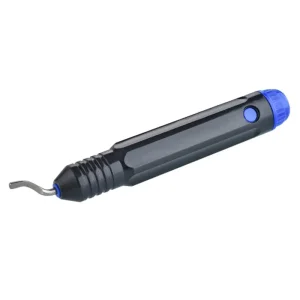
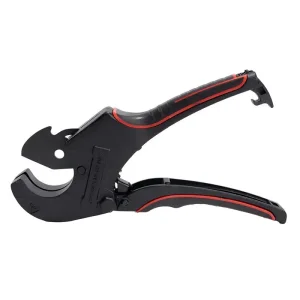
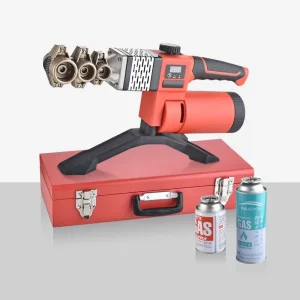
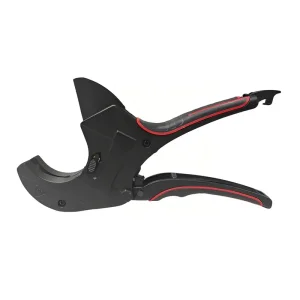
High-precision socket fusion welders, heavy-duty ratchet cutters, and HSS deburring solutions manufactured under rigorous quality systems.
Macro-Industry Solutions & Thermal Fusion Mechanics
A detailed technical breakdown of plastic pipe welding thermodynamics, polymer cross-linking dynamics, and joint strength standards.
Polymer Fusion Thermodynamics (DVS 2207-1 Standard)
Thermal fusion welding of poly pipes (HDPE, PPR, PE-RT) operates by heating the outer surface of the pipe end and the inner surface of the fitting socket to their respective crystalline melting temperatures (typically 260°C ± 10°C for PPR, 210°C ± 10°C for HDPE).
Upon reaching the molten state, the polymer chains uncoil. Controlled insertion force interlocks these polymer chains. As the melt zone cools under ambient pressure, molecular recrystallization creates a homogeneous joint structure. An optimal OEM poly pipe welder must maintain uniform heat distribution across all heating sockets to prevent localized thermal degradation or cold-weld points.
Solving Off-Grid Power Challenges: Gas-Powered Innovations
Traditional electric fusion welders require stable AC power (110V/220V) or heavy diesel generators, creating major logistical friction on remote infrastructure, trenching, or high-rise construction sites.
Our engineered 1.4KW Gas-Powered PPR Fusion Welder utilizes localized butane/propane combustion coupled with high-conductivity copper-aluminum heat exchange plates. This cordless design achieves operational temperatures (260°C) in under 3 minutes, liberating plumbers and utility teams from power cords while maintaining precise thermostatic equilibrium.
| Welding Technology | Primary Material Matrix | Thermal Range (°C) | Power Source / Portability | Key Engineering Advantage |
|---|---|---|---|---|
| Electric Socket Fusion | PPR, PP-RCT, PE-RT (20-110mm) | 250°C - 270°C (PTC Control) | AC 220V/110V Mains / Generator | High repeatability for residential & commercial riser plumbing |
| Gas-Powered Socket Fusion | PPR, PE, PB (20-32mm) | 240°C - 280°C Adjustable | Standard Gas Canister (Cordless) | 100% field mobility for remote repair, trench & off-grid work |
| HDPE Butt Fusion (Manual/Hydraulic) | HDPE PE100, PE80 (63-630mm+) | 200°C - 220°C (DVS Guidelines) | Electro-hydraulic Unit | High structural integrity for high-pressure municipal mains |
| Electrofusion Saddles & Couplers | HDPE Gas & Water Lines | Internal Resistance Wire Melt | Barcoded Electrofusion Processor | Minimal space required; ideal for underground repair sleeves |
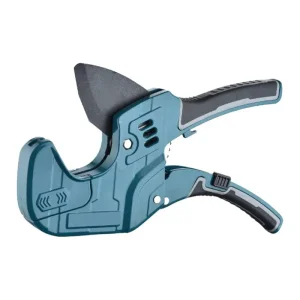
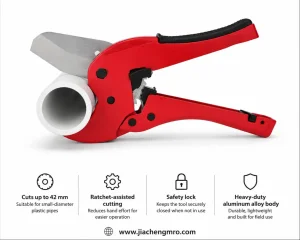
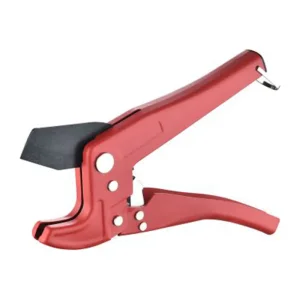
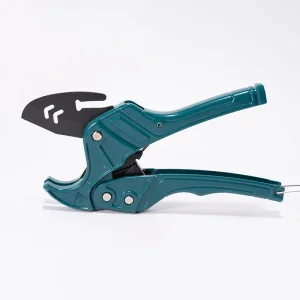
A fusion joint is only as reliable as the mechanical cut and edge chamfering. Using an uncalibrated cutter crushes the pipe wall out-of-round, creating localized stress concentrations and uneven melt pools. Integrating precision ratchet cutters and M2 HSS deburring tools into your installation protocol guarantees full fitting insertion depth and zero O-ring displacement.
Technical Engineering Roadmap & Material Science
How our factory advances metallurgy, heat transfer dynamics, and ergonomic design to deliver market-leading field performance.
SK5 & M2 High-Speed Steels
Cutters utilize SK5 high-carbon alloy steel with precision V-shape blade grinding and Teflon PTFE coating. Deburring tools feature M2 HSS swivel blades hardened to HRC 63-65 for clean edge finishing on both plastic and copper tubing.
Triple-Layer PTFE Coating
Fusion sockets are die-cast from ADC12 aluminum for rapid thermal conductivity, then coated with imported non-stick PTFE. This prevents molten polymer residue build-up, ensuring clean socket extraction without plastic stringing.
Ratchet Force Amplification
Ergonomic cutter handles integrate progressive gear-drive ratchet mechanisms. This reduces manual grip effort by up to 60%, allowing effortless single-handed cuts through heavy-wall 63mm HDPE and Schedule 80 PVC pipes.
Thermal Isolation Handles
Welding machine body housings utilize glass-fiber reinforced PA66 engineering plastics, providing thermal isolation, impact durability on rugged jobsites, and electrical insulation compliance.