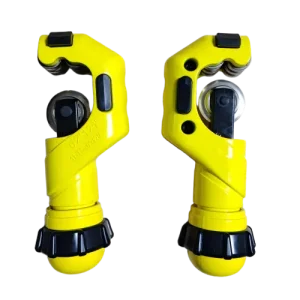
High-Precision Pipe Preparation & Fusion Tooling
Direct OEM/ODM enterprise product solutions for professional plastic piping, PEX, PPR, PE-RT, and metallic duct installations.
Global Enterprise Demand & Industrial Thermoplastic Pipe Joining Trends
An engineering-led analysis of poly pipe fusion technology, macro-economic infrastructure investments, and modern quality assurance metrics.
1. The Shift to High-Density Polyethylene (HDPE) & PPR Infrastructures
Across the globe, industrial piping infrastructure is undergoing a massive shift away from legacy metallic, ductile iron, and concrete conduits toward advanced polymer composites such as High-Density Polyethylene (HDPE PE100 / PE100-RC), Polypropylene Random Copolymer (PPR Type 3 / Type 4), and Cross-linked Polyethylene (PEX). Driven by stringent municipal zero-leakage mandates, mining slurry abrasion requirements, and offshore desalination demands, civil engineering groups increasingly specify poly piping systems due to their total immunity to electrochemical corrosion and chemical degradation.
However, a polymer pipeline network is only as robust as its joint interfaces. Unlike threaded or gasketed metallic joints, poly pipe systems rely on molecular fusion thermal joining—specifically Butt Fusion, Electrofusion, and Socket Fusion—to create a continuous, monolithic structure. When executed with precision OEM Poly Pipe Fusion Machines, the fused joint exhibits tensile strength equal to or exceeding that of the virgin pipe body itself. Consequently, global procurement directors, EPC contractors, and OEM tool distributors are seeking high-precision fusion equipment that guarantees strict compliance with International Standards including ISO 12176-1 (butt fusion alignment), DVS 2207 (German welding guidelines), and ASTM F2620.
2. Total Cost of Ownership (TCO) & OEM Sourcing Frameworks
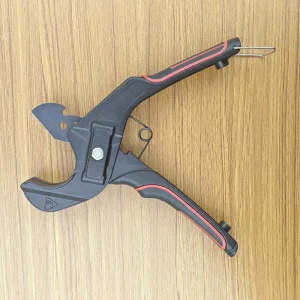
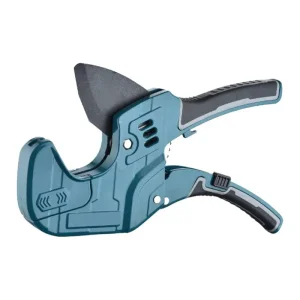
When evaluating an OEM Poly Pipe Fusion Machine Supplier & Manufacturer, elite procurement groups analyze far beyond the initial FOB unit pricing. Total Cost of Ownership calculations encompass machine lifecycle durabilities, power efficiency ratios, field repairability, heating plate PTFE coating longevity, and the availability of pre-fusion preparation tools such as heavy-duty ratchet cutters, rotary deburring tool bits, and pipe calibrators.
Structural Reliability & Alignment
Precision-milled aluminum alloy clamps prevent pipe ovality displacement during clamping, ensuring uniform interfacial heat distribution across SDR 7 to SDR 41 pipe walls.
Thermal Micro-Control
Digital PID microprocessors maintain plate surface temperature uniformity within ±3°C, guarding against thermal polymer degradation or cold-melt interface defects.
Full Tooling Ecosystem
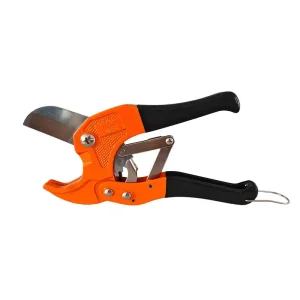
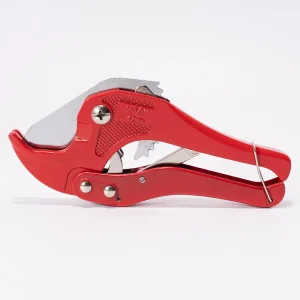
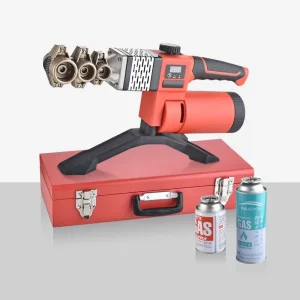
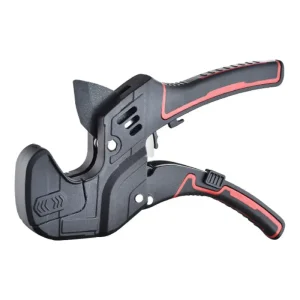
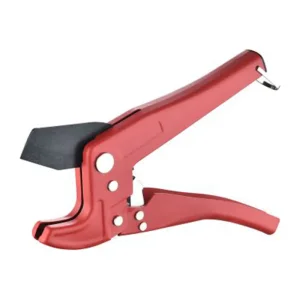
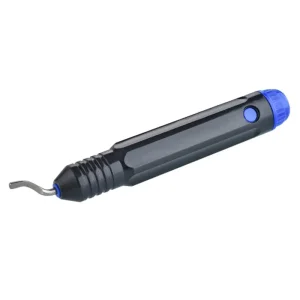
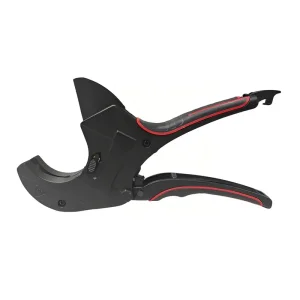
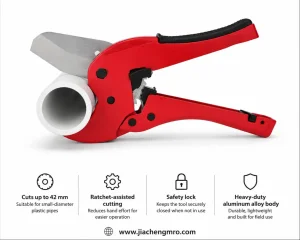
Integrated matching tools including gas-powered PPR fusion welders, 3-in-1 calibrators, M2 HSS deburring blades, and 42mm–75mm ratchet cutters for zero-defect end prep.
Poly Pipeline Joining Technologies: Comparative Engineering Matrix
A comprehensive breakdown of Thermoplastic Fusion Methods, Mechanical Parameters, and Surface Preparation Standards.
| Fusion Technology | Applicable Materials | Diameter Range | Primary Pressure Mechanism | Critical Success Factor | Compliance Standard |
|---|---|---|---|---|---|
| Hydraulic Butt Fusion | HDPE (PE100/PE80), PP, PVDF | 63mm to 1600mm+ | Hydraulic Pumping Station / Drag Calc | Melt bead geometry & dwell pressure balance | ISO 12176-1, DVS 2207-1 |
| Socket Fusion (Gas / Electric) | PPR, PE, PB, PE-RT | 16mm to 125mm | Manual / Mechanical Insertion Force | Socket/Spigot insertion depth & anti-twist soak | DVS 2207-11, EN ISO 15874 |
| Electrofusion (EF) | HDPE, PE-RT, Gas Distribution PE | 20mm to 1200mm | Internal Wire Expansion via Voltage | Scraper deburring & 100% oxide film removal | ISO 12176-2, ASTM F1055 |
| Precision Pipe Prep Cutting | PVC, PEX, PPR, Multilayer PEX-AL | 16mm to 75mm | Ratchet Blade / Wheel Rotation | Burr-free 90° perpendicular cut plane | BS EN ISO 15875 |
3. Mechanics of the Thermoplastic Fusion Cycle
Achieving a zero-leak joint requires executing a strictly controlled five-stage thermodynamic sequence:
Stage 1: Facing & Alignment: The pipe ends are secured in the machine's hydraulic chassis clamps. A motorized facing cutter removes non-perpendicular face anomalies until continuous, unbroken ribbons of plastic are planed from both pipe faces, establishing absolute axial alignment.
Stage 2: Initial Bead-Up (Pre-Heating): The PTFE-coated heating plate (maintained at 200°C–230°C depending on polymer grade) is inserted. The pipe ends are pressed against the heating mirror under high drag pressure ($P_1$) until a uniform melt bead forms around the entire pipe circumference.
Stage 3: Heat Soak Cycle ($P_2 \approx 0$): Pressure is dropped to near zero to allow heat to penetrate axially into the pipe walls without squeezing the molten polymer out of the joint zone. This forms the essential viscous heat-affected zone (HAZ).
Stage 4: Heater Plate Removal (Changeover): The clamps retract rapidly, the heating plate is removed, and the molten pipe ends are brought together. Changeover must occur within seconds to prevent atmospheric oxidation or surface skin cooling.
Stage 5: Fusion & Cooling Phase ($P_5$): The molten ends are pressed together under specified joining pressure, creating a double-bead roll-over. The joint must remain under locked pressure in the machine clamps without vibration or movement throughout the entire cooling cycle.
Macro Sector Solutions & Turnkey Application Modules
Tailored OEM tooling solutions designed for high-stress operational environments across global supply chains.
Municipal Water & Wastewater Infrastructure
Large-diameter HDPE butt fusion machines engineered for trunk lines up to SDR 11. Built with rugged hydraulic stations that resist dust, mud, and power fluctuations during trench side installations.
Off-Grid Gas & Plumbing Contracting
Proprietary gas-powered PPR socket fusion welders operating on LPG/Butane canisters. Eliminates reliance on heavy diesel generators or battery drain in remote rural or unpowered job sites.
Mining Slurry & Industrial Process Lines
Heavy-walled PE100-RC fusion systems with reinforced clamp chassis. Designed to weld thick-walled slurry pipes that withstand abrasive tailing transport and high chemical exposure.
Engineering Roadmap: Next-Gen Smart Fusion (2026–2035)
Pioneering IoT-enabled fusion logging, automated laser alignment, and advanced blade metallurgy.
IoT Data-Logging & GPS Cloud Traceability
Integration of Bluetooth 5.4 sensors and GPS modules into butt fusion hydraulic units. Automatically logs heating time, drag pressure, ambient temperature, and operator ID to cloud compliance portals for instant municipal sign-off.
Automated Optical Alignment & Ovality Compensation
Implementation of real-time 3D optical laser scanners within facing units to measure pipe end squareness and ovality. Machine hydraulics automatically apply differential micro-pressure to re-round out-of-spec pipes prior to heating.
Ultra-Grade M2 HSS Metallurgy & Zero-Carbon Welders
Advancements in blade tool coatings (TiAlN ceramic matrix over M2 High-Speed Steel) extending cutter blade lifetimes to 50,000+ continuous clean cuts on tough PEX-AL-PEX multilayer tubing, alongside zero-emission hydrogen-assisted cordless fusion units.
Manufacturing Rigor, Testing Protocols & International Compliance
Empirical evidence of quality management, zero-defect manufacturing lines, and certified lab validations.
ISO 9001 System Control
Every raw material ingot, hydraulic valve, heating element, and cutter blade undergoes incoming QA inspection. Production routes track heat batch numbers from raw alloy to finished tool assembly.
Destructive Tensile Testing
Randomly selected fused pipe samples are subjected to high-speed tensile elongation tests until failure. Welds must exhibit ductile yielding outside the fusion interface, validating 100% bond integrity.
CE & SGS Safety Markings
Gas-powered fusion units and electrical butt fusion machinery hold full CE certification under the Machinery Directive 2006/42/EC and Low Voltage Directive 2014/35/EU.
Blade Fatigue Resistance
Our PC-25 and JC-PC-22 ratchet cutter blades undergo 10,000-cycle continuous shear testing on heavy-walled PVC/PPR pipes to guarantee zero blade chipping, flexing, or tooth wear.
OEM/ODM Private Label Services & Global Logistics Support
Flexible enterprise manufacturing capabilities tailored to international tool brands, regional stocking distributors, and retail programs.
Custom Branding & Color Matching
Complete OEM service including laser-engraved branding, custom handle dip colors (PVA/Rubberized anti-slip coatings), molded blow-case logos, and localized user instruction manuals in over 20 languages.
Custom Electrical & Voltage Configuration
Custom fusion welder voltage wiring tailored to target markets: 110V/60Hz for North America (ANSI/NEMA plugs), 230V/50Hz for European Union (Schuko/UK plugs), or dual-voltage industrial configurations.
Rapid Logistics & Spare Parts Supply
Dedicated export packaging standards including heavy-duty corrugated export cartons, reinforced wooden cases for hydraulic fusion rigs, and guaranteed 10-year spare blade and heating element inventory availability.
Frequently Asked Questions: Poly Pipe Fusion & OEM Sourcing
Direct technical answers to common queries raised by pipeline engineers and procurement officers.
What parameters determine the required heating temperature for HDPE butt fusion?
Standard HDPE (PE100) butt fusion specifies a heating plate surface temperature of 220°C ± 10°C (according to DVS 2207-1 and ISO 12176). Wall thickness ($s$) and Standard Dimension Ratio (SDR) determine the precise soak time ($t_2$), changeover time ($t_3$), and cooling duration under pressure ($t_5$).
How does a gas-powered PPR fusion welder compare to traditional electric socket fusion units?
A gas-powered PPR fusion welder utilizes clean-burning LPG/Butane fuel cells to heat socket matrix dies to 260°C without requiring electrical generators or extension cords. It provides identical heat transfer rates while offering total independence for field repair technicians working on remote jobsites or overhead scaffolding.
Why is pipe deburring and calibration critical before mechanical or fusion joining?
When cutting plastic or multilayer PEX-AL-PEX pipes, shear forces can deform the pipe end into an oval shape and leave sharp burrs. Using a 3-in-1 calibrator or M2 HSS deburring tool restores absolute roundness and chamfers the inner/outer pipe edges at a 15° angle. This prevents cutting internal O-ring seals during push-fit insertion and ensures uniform heat distribution during socket fusion.
What is the Minimum Order Quantity (MOQ) for factory-direct OEM customized tools?
Standard OEM private label orders (custom color dipping, laser logo, custom blister card packaging) typically begin at 500 to 1,000 units for manual hand tools (cutters/deburrers) and 50 to 100 sets for poly pipe fusion machines. Flexible sample evaluation runs can be arranged for qualifying global distributors.
High-Frequency Commercial Cutting & Welding Solutions
Factory-direct pricing, heavy-duty ratchet mechanisms, and gas-powered fusion welders engineered for long service lifespans.