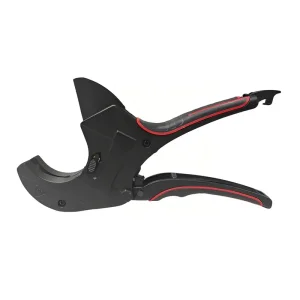
Featured OEM Plastic Water Pipe Cutters
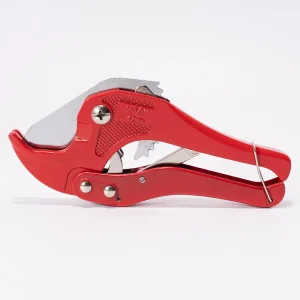
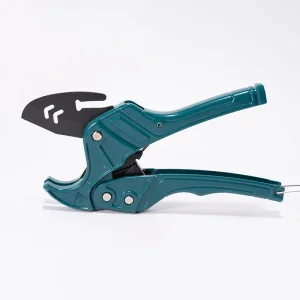
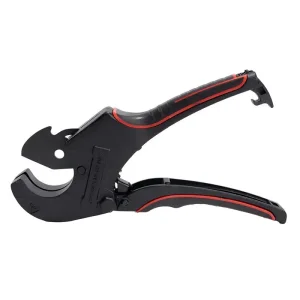
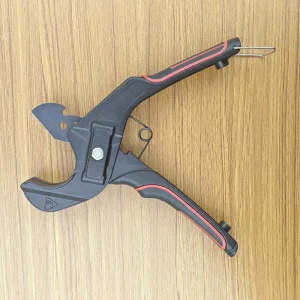
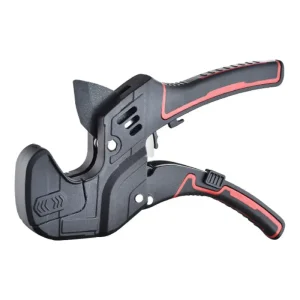
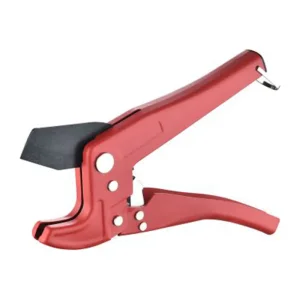
Explore our high-demand OEM factory cutters, precision-engineered for PVC, PPR, PE, and PEX piping systems.
Global Commercial & Industrial Landscape of Plastic Water Pipe Cutters
The global construction, municipal infrastructure, and industrial piping sectors have experienced a foundational material transition over the past two decades. Traditional metallic conduits—such as galvanized iron, copper, and cast iron—are increasingly being superseded by advanced polymer networks. Materials such as Unplasticized Polyvinyl Chloride (PVC-U), Polypropylene Random Copolymer (PPR), Cross-linked Polyethylene (PEX), and High-Density Polyethylene (HDPE) now dominate global fluid transport systems due to their anti-corrosive properties, lightweight profiles, and extended operational life spans exceeding 50 years.
This macro transition directly impacts the tool manufacturing domain. A modern plastic water pipe cutter is no longer treated as a simple manual shears mechanism; it is engineered as a precision cold-cutting instrument. In high-pressure residential plumbing, radiant floor heating installations, and chemical processing networks, a single flawed pipe cut can compromise an entire system's integrity. When plastic pipes are severed unevenly, crushed, or frayed during initial field preparation, subsequent solvent welding, socket fusion, or mechanical press-fitting connections face high failure rates, causing costly structural leakages.
Polymer Material Diversity
Modern field cutting demands versatility across distinct plastic polymers. While brittle PVC requires razor-sharp point pressure without micro-cracking, flexible PEX requires anti-deformation support to maintain pipe roundness for press fittings.
Zero-Burr Cutting Directives
Global building codes (including IPC and UPC standards) demand zero internal or external burrs on cut pipe ends. Clean, perpendicular 90-degree cuts ensure complete insertion depth and prevent O-ring destruction during fitting assembly.
Ergonomic Field Efficiency
Contractors operating on commercial job sites make hundreds of cuts daily. Tool design must incorporate ratcheting force multipliers to minimize user wrist strain while maintaining consistent blade feed speeds under variable temperatures.
Metallurgical Engineering & Ratchet Mechanics
At the core of an enterprise-grade OEM plastic water pipe cutter lies advanced metallurgy paired with kinematic mechanical design. As an authoritative manufacturer based in China's industrial hardware hub, our engineering processes focus on two crucial parameters: blade edge retention and mechanical advantage optimization.
Blade Material Science: SK5 Steel vs. M2 HSS
We utilize premium grade SK5 High-Carbon Tool Steel and M2 High-Speed Steel (HSS) for our cutting blades. Through precise vacuum heat treatment and multi-stage oil quenching, our blades achieve a uniform Rockwell Hardness of HRC 54 to 58.
This metallurgical hardness strikes the optimal balance between razor-sharp edge retention and impact toughness, preventing blade chipping when cutting dense schedule-80 PVC or cold-conditioned PPR pipe at sub-zero temperatures. Furthermore, blades are electro-coated with micro-thin PTFE (Teflon) or rust-resistant chrome plating to reduce frictional resistance against plastic walls by up to 35%.
Ratchet Mechanics & Leverage Multipliers
Manual cutting of large-diameter plastic pipes (such as 42mm, 50mm, and 63mm OD) requires substantial mechanical force. Our ratchet pipe cutters feature heavy-duty gear teeth with precise pitch geometries that lock securely into place with every squeeze of the handle.
By engineering an optimized leverage fulcrum ratio (up to 8:1 mechanical advantage), our ratchet drive systems allow plumbing technicians to slice through thick-walled schedule-40/80 pipes effortlessly using single-handed compression. Quick-release leaf spring mechanisms instantly return the blade back to the open position once the cut is completed.
| Cutter Classification | Target Pipe Material | Diameter Range (OD) | Blade Metallurgy | Key Mechanical Feature |
|---|---|---|---|---|
| Compact PEX Shears | PEX, PE-RT, Soft Rubber Hose | 16mm – 36mm (1/4" to 1") | SK5 Carbon Steel / V-Edge Geometry | Direct-drive spring loaded handle with safety latch |
| Ratchet PVC/PPR Cutter | PVC-U, CPVC, PPR, PEX-AL-PEX | 20mm – 42mm (1-5/8") | SK5 High-Carbon Steel + PTFE Coating | Multi-step ratchet gear engagement, quick-release blade |
| Heavy-Duty Aluminum Cutter | Thick-wall PVC, PPR, PE Mains | 32mm – 63mm (2-1/2") | M2 High-Speed Steel (HSS) / Vacuum Treated | Die-cast ADC12 aluminum body, reinforced lever arm |
| Large-Diameter Rotary Cutter | HDPE, Large PVC Drainage Pipes | 50mm – 110mm+ | Alloy Steel Rotary Cutting Wheels | Guided roller tracking system for exact 90° square cuts |
China Manufacturing Efficiency & Supply Chain Advantage
Sourcing OEM plastic water pipe cutters from our specialized facilities in Yuyao, Zhejiang Province, offers international buyers distinct competitive edges in manufacturing agility, cost optimization, and quality governance.
Localized Supply Chain Clustering
Our Yuyao factory sits at the center of the world's most concentrated hardware manufacturing ecosystem. Raw materials—including ADC12 aluminum alloy, high-grade carbon steel stock, non-toxic PVC handle-dip coatings, and stainless steel springs—are sourced within a 30-mile radius, drastically eliminating component transit delays.
Automated Precision Machining
Our workshops house over 40 sets of automated CNC machinery, robotic die-casting stations, automated blade grinding lines, and continuous vacuum heat treatment furnaces. Automated grinding ensures every blade edge bevel meets strict tolerance windows within ±0.02mm.
Rigorous Quality Management (ISO9001)
Every manufacturing batch undergoes comprehensive Quality Assurance (QA) testing: 1,000-cycle continuous cut endurance trials, blade salt-spray anti-corrosion testing, and handle drop-impact tests at low temperatures. We consistently deliver defect rates under 0.3%.
Localized Industrial & Commercial Application Scenarios
Understanding the field conditions where plastic water pipe cutters operate enables our R&D team to engineer targeted solutions for global distributors and OEM tool brands.
1. Residential Plumbing & Sanitary Systems
In residential plumbing, plumbers work within cramped under-sink cabinets, wall cavities, and floor joists. Compact, single-handed ratchet cutters (36mm to 42mm capacity) are essential. Tools must feature smooth spring releases and ergonomic non-slip dipped handles so technicians can execute clean perpendicular cuts even with wet or oil-stained hands.
2. Radiant Floor Heating & HVAC Networks
Hydronic radiant floor installations rely on hundreds of continuous PEX or PEX-AL-PEX tubing loops. Deforming or flattening the pipe end during cutting prevents the pipe from seating correctly onto crimp or press fittings, leading to concealed slab leaks. Our specialized V-blade PEX cutters preserve pipe roundness without requiring dedicated re-rounding calibration step-by-steps on every single cut.
3. Municipal Potable Water Supply & Drainage
Municipal infrastructure crews handle large-diameter PE and HDPE pipes (50mm to 110mm+). These heavy-duty applications demand rugged die-cast aluminum cutters capable of cutting through thick pipe walls without flexing the tool frame under extreme manual torque.
4. Agricultural Drip Irrigation & Greenhouse Plumbing
Agricultural irrigation setups involve laying thousands of feet of thin-walled Polyethylene (PE) tubing under direct sunlight exposure. Cutters used in these outdoor conditions must utilize UV-resistant polymer handles and corrosion-proof stainless hardware that withstand sand, dirt, and chemical fertilizer exposure.
Global Procurement Requirements & Private Label Customization
As a seasoned B2B OEM/ODM manufacturer catering to major global tool brands, MRO supply houses, and hardware retail networks (such as Lowe's, Ferguson, and European tool distributors), we offer fully customizable product development workflows.
Specification & CAD Design
Clients define target pipe size ranges, blade profile geometry, weight constraints, and retail price positioning points.
Custom Tooling & Prototyping
Our engineering team creates 3D models and CNC machined physical samples for dimensional validation and lab cut testing.
Branding & Surface Finishing
Custom handle color matching (RAL/Pantone), laser-etched brand logos on blades, and double-dipped non-slip handle coatings.
Custom Retail Packaging
Full support for retail blister cards, color display boxes, clamshell packaging, and barcode/UPC compliance labeling.
Mass Production & Inspection
Automated assembly lines operating under ISO9001 protocol with batch-specific quality inspection certification prior to shipment.
Industry Development Trends & Technological Innovations
The manual pipe tool market is continuously evolving alongside advancements in polymer chemistry and jobsite productivity demands. Procurement teams must stay aligned with key innovation drivers:
1. Quick-Blade Replacement Systems
Contractors no longer tolerate tools that require complete disassembly with screw drivers just to replace a dull blade. Next-generation cutters feature tool-less quick-change push-pin mechanisms, enabling blade swaps in under 10 seconds right on the jobsite.
2. Hybrid Lightweight Alloys
Transitioning from traditional iron or standard aluminum to magnesium-aluminum alloys reduces total tool weight by up to 25% while boosting structural rigidity, mitigating technician fatigue during overhead installations.
3. Multi-Function Tool Integration
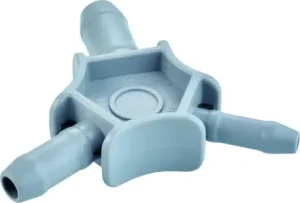
Modern plumbers prefer versatile tools. Advanced cutter handles now integrate fold-out inner/outer deburring reamers and pipe calibrator pins directly into the base handle to streamline multi-step fitting preparation.
Additional OEM Plumbing & Pipe Tool Solutions
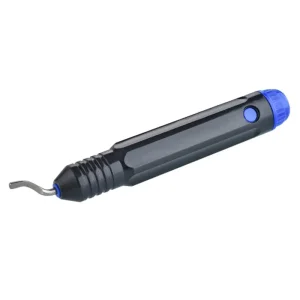
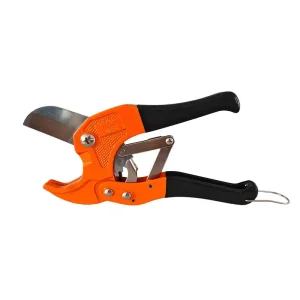
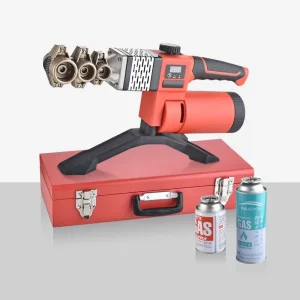
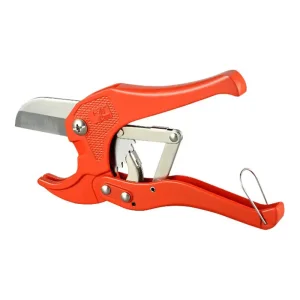
Browse our complete catalog of industrial pipe cutters, deburring tools, calibrators, and PPR socket fusion equipment.
Frequently Asked Questions (Technical & Procurement FAQ)
Clear, authoritative technical answers to common engineering, quality control, and OEM procurement inquiries.
For professional hand tools, we primarily utilize SK5 High-Carbon Steel or M2 High-Speed Steel (HSS). SK5 offers excellent sharpness retention and toughness when vacuum-hardened to HRC 54-58, making it ideal for PVC and PPR cutters. M2 HSS provides superior wear resistance and red-hardness for heavy-duty commercial cutters subjected to intensive continuous daily usage.
Pipe deformation (crushing or flattening into an oval shape) is prevented through specialized blade wedge angles (typically 14° to 18°) combined with incremental gear advances. Instead of applying continuous heavy crush force, the ratchet mechanism drives the sharp blade tip deeper into the polymer wall in controlled micro-steps, allowing the plastic to shear cleanly along its circumference.
Yes. However, at temperatures below 5°C (41°F), polymers like PVC and PPR become significantly more brittle. To prevent pipe shattering, our factory fits cold-weather rated cutters with ultra-thin V-edge SK5 blades that minimize wedge expansion stress during the initial penetration phase.
For standard OEM production runs with custom handle colors, laser logo etching, and custom retail blister cards, our standard MOQ starts at 1,000 units per model. For fully custom die-cast mold designs or proprietary tool shapes, MOQs are determined based on tooling amortization agreements.
Blade quality is controlled via automated CNC double-bevel grinding machinery. Every blade batch undergoes micro-optical edge inspection to verify bevel angles, hardness testing via Rockwell testers, and salt-spray testing to confirm anti-rust coating durability (PTFE or electro-plating) before final assembly.
Our manufacturing plant operates under the ISO 9001:2015 Quality Management System. Our specialized powered tools, such as our gas-powered PPR pipe fusion welders, carry SGS and CE certifications compliant with European Union safety directives and North American import standards.
Die-cast aluminum alloy (such as ADC12 grade) offers superior strength-to-weight ratios compared to stamped steel. It eliminates frame twisting under heavy leverage force, provides precise alignment for internal ratchet gears, and resists jobsite rust and chemical exposure infinitely better than raw steel frames.
We supply pre-production samples within 5 to 7 working days for standard catalog models, and 14 to 21 days for custom private-label requests. Samples are shipped via express courier (DHL/FedEx/UPS) along with material test reports for engineering team sign-off prior to contract execution.