Precision-engineered ratchet cutters, socket fusion preparation equipment, and heavy-duty pipe tools direct from our OEM manufacturing base.
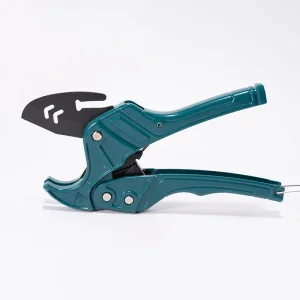
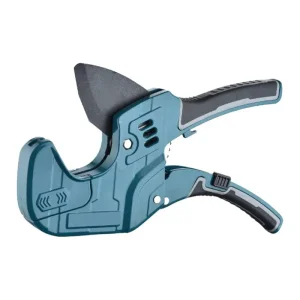
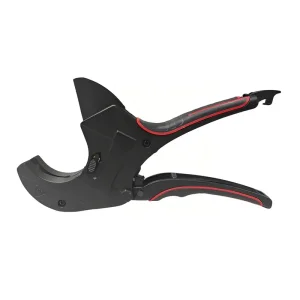
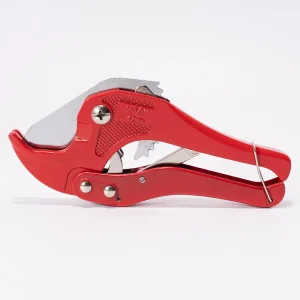
The global fluid transportation and building construction infrastructure is undergoing a radical material transformation. Traditional metallic distribution networks—predominantly galvanized iron, carbon steel, and copper—are systematically being phased out in favor of advanced thermoplastic piping systems. Polymers such as Polypropylene Random Copolymer (PPR), High-Density Polyethylene (HDPE), Polyvinyl Chloride (PVC), Polybutylene (PB), and Cross-linked Polyethylene with Aluminum composite (PEX-AL-PEX) have become the global standard for potable water supply, gas networks, industrial chemical transfer, and radiant heating infrastructure.
This material shift is driven by the total immunity of polyolefins to electrochemical corrosion, internal scaling, and bio-film build-up. However, the integrity of a plastic piping network depends strictly on the quality of its joints. Unlike threaded or press-fit metallic connections that rely on mechanical compression or rubber gaskets subject to degradation over time, plastic pipe welding creates a single, homogeneous molecular structure across the fitting interface. When executed correctly, the welded seam exhibits mechanical tensile strength, burst pressure ratings, and thermal fatigue resistance equal to or exceeding the original pipe wall.
Primarily utilized for PPR, PB, and PE pipes ranging from 16mm to 125mm. Socket fusion involves simultaneously heating the outer pipe wall and inner fitting socket using male and female PTFE-coated heating spigots mounted on a thermostatically controlled heating plate. The melted polymer chains intermingle under manual axial force, solidifying into a monolithic joint.
The dominant standard for large-diameter HDPE municipal water mains, sewer lines, and industrial gas conduits (63mm up to 1600mm+). The pipe ends are trimmed perfectly square using a planar facing tool, pressed against a dual-sided heating plate until an optimal melt bead forms, and then clamped together under hydraulically regulated pressure profiles compliant with ISO 12176 standards.
Utilizes specialized fittings embedded with internal electrical resistance wire coils. An automated electrofusion welding unit reads the barcode on the fitting, adjusts voltage and heating duration automatically based on ambient temperature sensors, and energizes the coils to melt the interface without external mechanical displacement.
As global infrastructure demands rise across North America, Europe, the Middle East, and Southeast Asia, the requirement for professional, error-free pipe joining tools has escalated. High-performance projects leave zero room for joint failure. Consequently, procurement officers, brand distributors, and engineering contractors are seeking top-tier OEM plastic pipe welding machine suppliers capable of manufacturing high-precision socket fusion welders, cordless/gas-powered portable fusion devices, precision ratchet pipe cutters, and multi-layer pipe calibrators.
The global tool market relies on Chinese hardware manufacturing hubs for high precision, scalability, and cost efficiency. The industrial cluster in Yuyao, Zhejiang Province, serves as a central hub for professional plumbing tools, plastic pipe welding machinery, and precision cutting implements.
Understanding why Chinese OEM factories excel in plastic pipe installation tooling requires examining five critical industrial factors:
Within a 30-kilometer radius in Zhejiang, raw aluminum die-casting foundries, SK5 high-carbon steel heat-treating facilities, PTFE fluoropolymer coating specialists, digital micro-controller PCB assembly lines, and custom blow-molded case manufacturers operate in tandem. This proximity eliminates logistics lag, slashes component lead times, and allows rapid prototyping cycles.
Modern pipe cutter manufacturing requires exact mechanical tolerances. Premier Chinese factories utilize automated multi-axis CNC machining centers to grind pipe cutter blades from SK5, M2 HSS, or 65Mn manganese steel. Blade geometry is optimized with double-bevel edges, achieving clean cuts across thin-wall PEX, schedule-80 PVC, and thick-wall PPR pipes without crushing or creating micro-fractures.
OEM plastic pipe welding machines manufactured in top-tier Yuyao factories feature die-cast aluminum heating matrixes wrapped in high-density mica or ceramic heating elements. Dual-element circuitry (e.g., 750W + 750W = 1500W switches) combined with microprocessor-driven PID temperature controllers guarantees surface thermal uniformity across matrix die faces within ±2°C, preventing localized polymer burning or under-heating.
Leading Chinese export suppliers implement 100% inline electrical safety testing (hi-pot test, earth bonding continuity test), hydrostatic pressure testing on cut samples, and automated surface roughness inspection on Teflon sockets. Premium suppliers maintain a factory defect rate under 0.5%, well below the industry standard.
From custom handle dipping finishes and color-matched aluminum alloy housings to private-label silk-screening, bespoke blow-mold toolcases, and customized die-socket dimensions (NPT/ANSI vs. Metric vs. BS standards), Chinese OEM partners offer turn-key brand manufacturing tailored to global retailers.
Tool performance is tested under harsh jobsite conditions. Professional plumbing installers encounter complex challenges that require specialized equipment engineering. Below are four key field scenarios where high-grade plastic pipe welding and cutting tools deliver measurable performance gains.
The Challenge: Installing agricultural irrigation lines, rural water distribution networks, or remote utility pipelines where 220V/110V grid electricity is completely unavailable, and hauling heavy diesel generators across rough terrain is impractical.
The OEM Solution: SGS/CE-certified Gas-Powered PPR/PE Socket Fusion Welders. Utilizing compact liquefied petroleum gas (LPG) or butane micro-burners with thermostatic heat pipes, these cordless machines reach stable fusion temperatures (260°C) within 3 minutes without electrical inputs, allowing seamless field jointing anywhere.
The Challenge: Cutting 42mm to 63mm thick-wall PPR/PVC pipes inside tight plumbing chases, wall cavities, or ceiling joists where standard two-handed pipe cutters or bulky electric saws cannot rotate or maneuver.
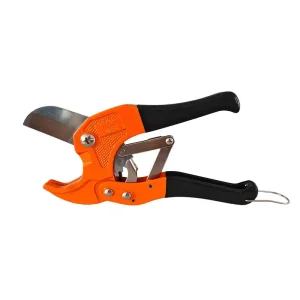
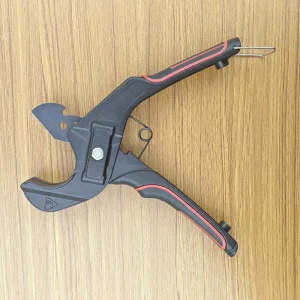
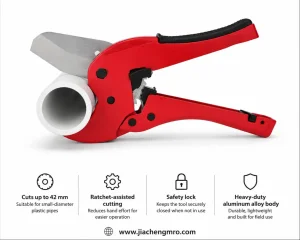
The OEM Solution: Compact One-Handed Ratchet Pipe Cutters featuring high-gear-ratio mechanical ratchets. Engineered with specialized arc geometry and compact handles (such as Model JC-PC-22), plumbers can execute square, burr-free cuts with single-handed ratcheting strokes in minimal clearance zones.
The Challenge: When cutting multi-layer aluminum-plastic composite pipe, standard shear cutters often flatten the pipe wall, delaminating the internal aluminum layer and resulting in press-fitting O-ring damage and immediate leak points.
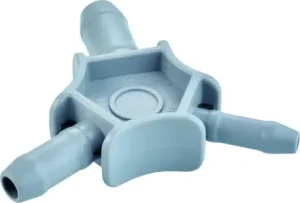
The OEM Solution: Precision Multi-Layer Pipe Cutters paired with 3-in-1 Pipe Calibrators (16-20-25mm / 16-20-26mm). The cutter holds the pipe profile true during shearing, while the hardened steel calibrator re-rounds the pipe orifice and chamfers the interior edge simultaneously, ensuring 100% sealing integrity for press fittings.
The Challenge: Industrial fluid lines conveying corrosive acids or high-temperature solvents require PVDF or heavy HDPE piping. Slight thermal fluctuations during socket welding can cause incomplete fusion or internal material bead overhang that obstructs flow.
The OEM Solution: Digital LCD Socket Fusion Welding Machines equipped with closed-loop microcontrollers, dual digital temperature displays, and Japanese Daikin PTFE coated sockets. This setup maintains exact melt temperatures to within ±1°C, preventing chemical erosion across joint seams.
The plastic pipe welding and tooling market is evolving rapidly driven by smart electronics, ergonomic material sciences, and cordless jobsite mobility. Forward-thinking OEM suppliers are actively incorporating three key innovations into their production lines:
Traditional bimetallic mechanical thermostats are being replaced by micro-electronic PID (Proportional-Integral-Derivative) controllers. Modern welding units feature OLED real-time displays showing setpoint vs. actual matrix temperature, ambient compensation indicators, and visual/audible timers for heating, changeover, and cooling phases compliant with DVS 2207-1 rules.
Jobsite mobility demands the elimination of extension cords. Advanced R&D is focused on high-draw 18V/20V Li-Ion battery platform integration for socket welders up to 32mm, alongside refined gas-powered internal heating circuits for heavy-duty field work. These advancements provide rapid heat-up times under 120 seconds while reducing jobsite hazard setups.
Blade durability has improved through physical vapor deposition (PVD) coatings, titanium nitride (TiN) plating, and multi-layer PTFE socket coatings. These surface treatments lower friction coefficients during cutting and prevent molten plastic residue from sticking to welding die heads, extending tool service life by over 300%.
Procurement departments and commercial buyers evaluating OEM suppliers must assess structural capabilities, quality compliance, and product performance specs. Below is a engineering selection matrix detailing core tool categories, material compatibility, and operational parameters.
| Tool / Machine Category | Target Pipe Materials | Working Range | Core Technical Feature | Global Compliance Standards |
|---|---|---|---|---|
| Socket Fusion Welder (Electric) | PPR, PE, PB, PVDF | 16mm – 125mm (1/2" - 4") | Dual-element 1500W heating matrix, PID electronic control, Teflon dies | CE, GS, EMC, RoHS, ISO9001 |
| Gas-Powered Socket Welder | PPR, PE, PP-H | 20mm – 32mm | Micro LPG burner ignition, 100% cordless, rapid 3-min preheat | SGS Certified, CE Gas Appliance Dir. |
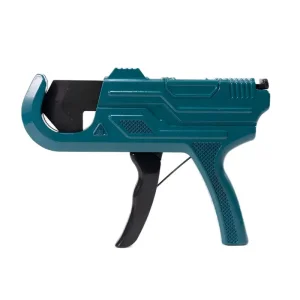
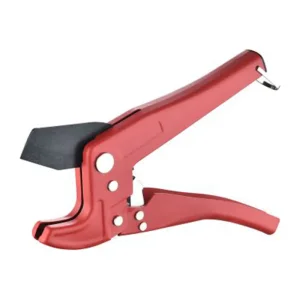
| Compact Ratchet Pipe Cutter | PVC, PPR, PEX, PE | Up to 42mm (1-5/8") | SK5 steel blade, progressive ratchet teeth, auto-open spring mechanism | REACH, PAH Surface Safety |
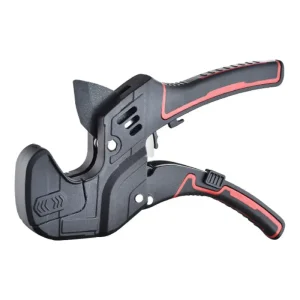
| Heavy-Duty Adjustable Cutter | Heavy PVC, HDPE, Conduit | 50mm – 63mm (2" - 2-1/2") | Die-cast aluminum alloy housing, adjustable guide rollers, dual-edge blade | GS Mechanical Safety Target |
| 3-in-1 Pipe Calibrator Tool | PEX-AL-PEX, Multilayer | 16 / 20 / 25 / 26mm | Triple hardened steel blades, ergonomic T-handle, internal chamfering | DIN 8077 / 8078 Fitting Match |
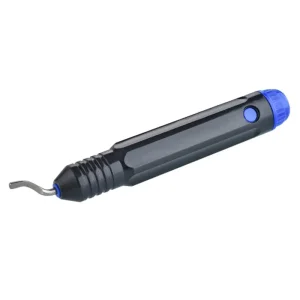
| HSS Rotational Deburring Tool | Copper, Steel, Hard PVC | Universal Internal/External | M2 High-Speed Steel 360° swivel blade, anti-slip dipping grip handle | Industrial Manufacturing Spec |
- Audit Quality Systems: Ensure the factory maintains verifiable ISO9001 certification with documented lot tracing for raw aluminum ingots and steel coils.
- Verify Blade Metallurgy: Demand material certificates (e.g., Spectro analysis) verifying SK5 or M2 grade steel on cutting edges to prevent premature dulling.
- Review Electrical & Thermal Testing Logs: Require 100% hi-pot dielectrical testing logs and matrix temperature uniformity maps for all welding machines.
- Assess OEM Packaging Flexibility: Verify options for customized double-blister packs, color gift boxes, heavy-duty blow-molded carrying cases, and private-label artwork execution.
In-depth answers to key technical questions from engineering contractors, wholesale buyers, and OEM private-label clients.
Explore our complete range of precision deburring tools, PEX calibrators, heavy-duty ratchet cutters, and professional plumbing tools.