
OEM Featured Pipe Preparation & Fusion Equipment
Industrial-grade cutting, calibrating, deburring, and socket fusion tools engineered for global MRO supply chains.
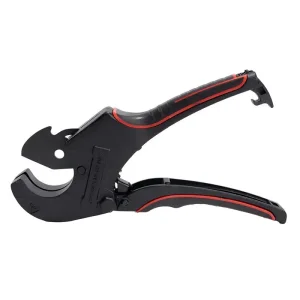
OEM High-Efficiency 42mm Ratchet PVC Pipe Cutter - Leading China Suppliers & Factory for Rapid Construction Manufacturers, Factory
View Details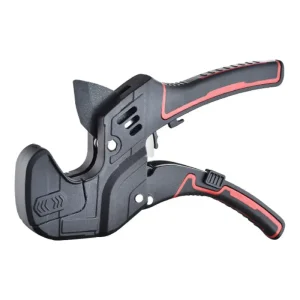
China Heavy-Duty Adjustable PVC Pipe Cutter for Professionals - China Suppliers and Factory Model JC-PC-22 Supplier, Manufacturers
View Details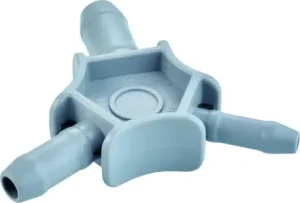
OEM China Suppliers 3-in-1 Pipe Calibrator for PEX-AL-PEX Systems - Factory Price, Precision Calibration Tool Factories, Factory
View Details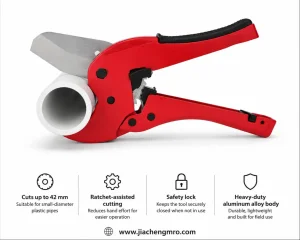
Wholesale Heavy-Duty Ratchet Pipe Cutter for Plastic Pipes - China Supplier & Factory for PP, PE, PVC, PPR Installation Suppliers, Manufacturer
View Details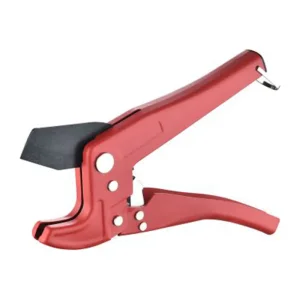
ODM 42mm Heavy-Duty Ratchet Plastic Pipe Cutter PC-25 – Durable Tool for China Suppliers and Factory Projects Suppliers, Manufacturer
View Details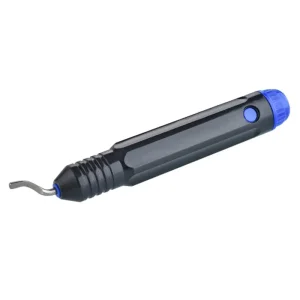
OEM M2 HSS Deburring Tool DT-001 for Metal & Plastic Pipes - China Factory Suppliers for Professional Finishing Suppliers, Factory
View Details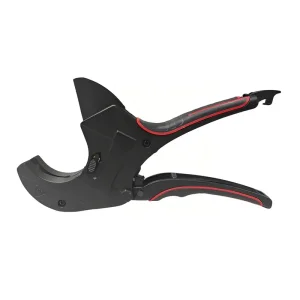
OEM China HDPE Pipe Cutter Suppliers - Professional 63mm One-Handed Tools from a Trusted Factory Supplier, Factories
View Details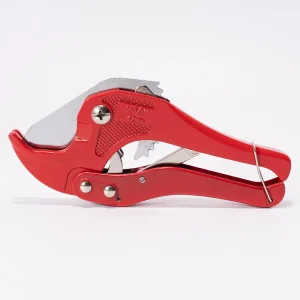
ODM Heavy-Duty 42mm Aluminum PVC Pipe Cutter from China Suppliers - Precision Factory Tool for Professionals Supplier, Factory
View DetailsGlobal Industrial & Commercial Status of Plastic Fusion Welding
An in-depth analysis of thermoplastic joining technology across modern civil plumbing, industrial chemical transport, municipal infrastructure, and off-grid utility sectors.
Executive Summary: The Thermoplastic Transition
The global infrastructure sector is undergoing a massive shift from traditional metallic piping systems (galvanized steel, copper, cast iron) toward high-performance thermoplastic networks, predominantly composed of Polypropylene Random Copolymer (PPR), High-Density Polyethylene (HDPE), and Polyvinylidene Fluoride (PVDF). Modern plastic fusion welders—encompassing socket fusion machinery, butt fusion equipment, and portable gas/cordless units—serve as the foundational hardware ensuring zero-leak joint integrity across pressure-rated fluid distribution systems.
Thermodynamic Mechanics of Socket & Butt Fusion
Unlike mechanical press fittings or solvent cement bonding, heat fusion joining creates a homogenous, monolithic joint where the molecular chains of the pipe and fitting intermingle. During socket fusion, specialized matrix dies coated with high-grade Teflon (PTFE) heat the external surface of the pipe end and the internal bore of the fitting socket simultaneously to their melting temperature (typically 260°C ± 5°C for PPR). Upon reaching the molten state, the components are pushed together, causing polymer chain cross-linking during the cooling cycle.
In high-volume commercial installations, the reliability of a thermal fusion connection depends directly on the structural accuracy of the heating element, microprocessor-driven micro-thermostats, and precise outer diameter preparation using specialized ratchet plastic pipe cutters and chamfering tools.
Why Leading Global Brands Source from China OEM Factories
Leveraging cluster manufacturing, advanced CNC tooling, and vertical integration in Yuyao, Zhejiang to deliver industrial precision at unbeatable scale.
Vertical Raw Material Supply Chain
Chinese manufacturing hubs integrate local aluminum die-casting foundries, Japanese Daikin PTFE coating lines, and high-tensile alloy blade machining under a single ecosystem. This proximity drastically reduces component transit delays, material procurement costs, and lead times for mass production orders.
Advanced Automation & CNC Accuracy
Premier OEM fusion welder factories deploy multi-axis CNC machining centers for socket die fabrication, ensuring dimensional tolerances within ±0.02mm. Automated surface polishing guarantees non-stick performance, preventing polyolefin polymer adhesion and carbon buildup during continuous field operation.
Rigorous Quality Assurance Standards
Leading factories operate under strict ISO 9001:2015 quality frameworks. Every batch undergoes 100% high-voltage insulation testing, thermal gradient stability checks over 2,000 continuous hours, and hydrostatic joint burst testing up to 40 bar to guarantee complete compliance with CE, SGS, and RoHS standards.
Localized Application Scenarios & Field Requirements
Tailored tooling solutions for diverse jobsite constraints—from high-density residential towers to remote off-grid mining projects.
Civil Plumbing & Hot/Cold PPR Water Systems
Residential high-rise developments require thousands of joint connections daily. Lightweight socket fusion machines combined with single-hand 42mm ratchet cutters enable plumbers to execute clean, rapid square cuts and socket joins inside tight wall chasings.
Commercial HVAC & Underfloor Radiant Heating
Multilayer PEX-AL-PEX and PERT piping require exact calibration before fitting insertion. Utilizing 3-in-1 pipe calibrators restores tube roundness and creates an internal bevel, eliminating O-ring displacement during press connections.
Off-Grid Utility & Gas Pipeline Maintenance
When working on rural municipal water supplies or trenchless utility repairs without generator access, specialized gas-powered PPR socket fusion welders provide cordless portability, operating on standard butane/isobutane canisters with precise heat output.
Industrial Chemical & Process Plant Piping
Corrosion-resistant PVDF and HDPE lines carrying aggressive acids demand absolute thermal control. Dual-element heating plates paired with high-grade M2 HSS deburring tools eliminate micro-burrs, preventing laminar turbulence and particle traps.
Thermoplastic Fusion & Tooling Technical Matrix
Standardized operational metrics for industrial pipeline joining and preparation equipment.
| Pipe Material | Outer Diameter Range | Fusion / Prep Tool Type | Operating Temperature Range | Heating Dwell Time | Critical Quality Factor |
|---|---|---|---|---|---|
| PPR (Polypropylene Random) | 20mm – 63mm (1/2" - 2") | Socket Fusion Welder + 42mm Ratchet Cutter | 260°C ± 5°C | 5 sec (20mm) – 24 sec (63mm) | Zero surface oxidation; exact socket insertion depth |
| HDPE (High-Density Polyethylene) | 50mm – 110mm | Butt / Socket Welder + 63mm One-Handed Cutter | 210°C – 230°C | 10 sec – 45 sec (varies by SDR wall) | Uniform bead formation; square, burr-free end face |
| PEX-AL-PEX Multilayer | 16mm – 32mm | 3-in-1 Calibrator + Heavy Duty Tube Cutter | N/A (Mechanical Press/Crimp) | N/A | Concentric reaming; internal seal ring protection |
| PVDF (Fluoropolymer) | 20mm – 90mm | Microprocessor Controlled Socket Fusion | 240°C – 250°C | Strict thermodynamic curve control | Non-contaminating Teflon coating; dust-free surface |
| PVC / Thin-wall Plastic | Up to 75mm (3") | Industrial Ratchet / Aluminum Alloy Cutter | N/A (Solvent Weld / Mechanical) | N/A | Zero pipe crushing/fracture; smooth bevel edge |
Industry Development Trends & Technological Innovations
How smart sensing, advanced metallurgies, and cordless energy systems are redefining pipe tools.
Microprocessor Temperature Stability
Modern OEM fusion welders integrate digital micro-controller chips that continuously sample plate temperatures 50 times per second. This prevents temperature drops when placing cold pipe sockets onto the heating dies, virtually eliminating cold-joint weld failures on job sites.
Hybrid Energy & Gas-Powered Portability
As remote infrastructure projects expand across Latin America, Southeast Asia, and Africa, demand for cord-free operation has surged. Gas-powered PPR fusion technology offers continuous thermal energy without heavy generators or short battery run-times.
Ultra-Hard Blade Coatings (SK5 & M2 HSS)
Plastic pipe cutter blades are evolving beyond standard carbon steel. Utilizing high-grade SK5 alloy steel with specialized Teflon surface treatment or M2 High-Speed Steel (HSS) ensures thousands of rapid, deformation-free cuts without blade edge chipping.
Global Enterprise Procurement & OEM Factory Audit Guide
Essential selection criteria for professional purchasing directors, MRO buyers, and private-label tool brand managers.
Sourcing plumbing tools and plastic fusion equipment directly from China manufacturers requires rigorous evaluation of factory capabilities, quality management protocols, and regulatory compliance. Enterprise buyers should audit suppliers based on the following key metrics:
1. Thermal Heating Plate Uniformity & Wattage Density
Ensure the fusion welding factory utilizes die-cast aluminum heating plates with embedded dual-heating elements. Single-element designs suffer from cold spots along the plate perimeter, leading to uneven plastic melt. Audit suppliers for maximum surface thermal variance of less than ±3°C across all active sockets.
2. Certification Compliance for Target Import Markets
To avoid customs impoundment and retail liability, verify that the manufacturer holds complete, verifiable documentation:
- ISO 9001:2015 Certification: Factory management and quality audit compliance.
- CE & LVD/EMC Directive Compliance: Required for all electrical socket welders entering the EU market.
- SGS Gas Safety Testing: Crucial for gas-powered fusion units to verify valve seal integrity and pressure relief compliance.
- RoHS & REACH Compliance: Ensuring handles, grips, and coatings are free from hazardous phthalates and heavy metals.
3. Private Label (OEM/ODM) Customization Scope
Premier OEM factories offer comprehensive private-labeling support, including custom handle dipping colors (anti-slip PVC dip or ergonomic TPR overmold), laser-etched brand logos, customized blow-molded carrying cases, multi-language instruction manuals, and retail-ready color box packaging tailored for big-box retailers such as Lowe's, Home Depot, or Leroy Merlin.
Wholesale & OEM Direct Pipeline Cutting Solutions
Complete your supply chain portfolio with our field-tested ratchet cutters, adjustable pipe shears, and precision deburring systems.
Wholesale Heavy-Duty Adjustable PVC Pipe Cutter from China Suppliers - Model JC-PC-22 for Professional Use Suppliers, Factory
View Details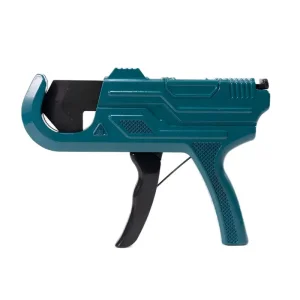
China 42mm Compact Ratchet Pipe Cutter for Narrow Spaces – Reliable Performance by China Suppliers and Factory Suppliers, Manufacturers
View Details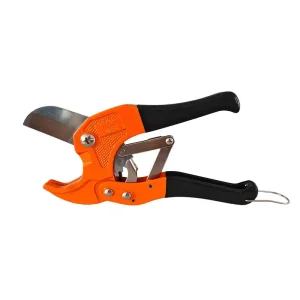
OEM Professional 42mm PVC Pipe Cutter with Anti-Slip Dipping Handle - China Suppliers and Factory Quality Tool Supplier, Factory
View Details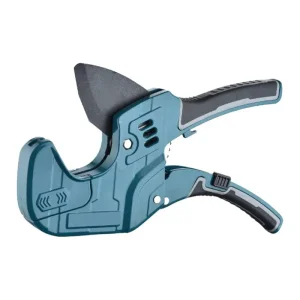
China Heavy-Duty Adjustable PVC Pipe Cutter 50mm/63mm - China Suppliers Factory Model JC-PC-22 Supplier, Manufacturers
View Details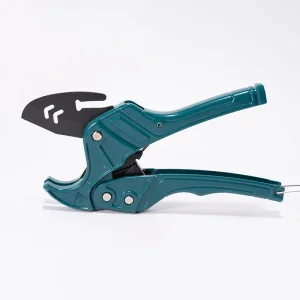
Wholesale 42mm Ratchet Plastic PPR Pipe Cutter - Model 42922 by China Suppliers and Factory for PVC, PPR, PEX Pipes Factories, Factory
View Details
Wholesale 42mm Ratchet Plastic PPR Pipe Cutter Model 42922 - Reliable China Suppliers & Factory for PVC, PPR, PEX Pipes Suppliers, Factory
View Details
OEM Professional 42mm PVC Pipe Cutter - China Suppliers Factory with Anti-Slip Dipping Handle for High-Frequency Use Manufacturers, Manufacturer
View Details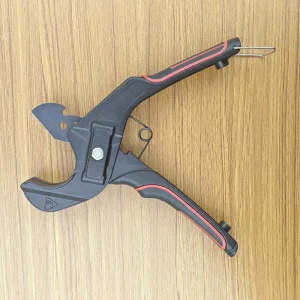
ODM China Suppliers: 36mm Precision PEX Pipe Cutter from Factory - Eliminate Installation Failures in Tight Spaces Supplier, Factories
View DetailsFrequently Asked Questions (Q&A)
Technical guidance and factory procurement insights for engineering teams, contractors, and sourcing professionals.
What is the key difference between Socket Fusion and Butt Fusion for plastic pipes?
Socket fusion involves inserting a pipe end into a molded socket fitting after both heating surfaces have been softened by male/female matrix dies. It is typically used for smaller pipe diameters (20mm to 63mm/110mm) in PPR, PE, and PB systems. Butt fusion heats the square-cut ends of two pipes directly against a flat heating plate and pushes them together under controlled pressure; it is ideal for larger HDPE pipes (75mm and above) where fittings would be cost-prohibitive.
Why is blade edge geometry critical when selecting a ratchet PVC pipe cutter?
Improper blade geometry or dull cutting edges crush plastic pipes into an oval shape during cutting, creating micro-cracks and burrs along the wall. Premium cutters feature a V-shaped or compound-angled blade machined from SK5 or M2 HSS alloy steel. This geometry pierces the outer pipe wall cleanly without flexing, resulting in a perfectly square 90° cut face necessary for optimal socket fusion depth.
How does an OEM factory ensure socket die coating durability?
High-quality OEM factories utilize double or triple-layer Daikin PTFE (Teflon) spray coatings applied over sand-blasted aluminum alloy die cores, cured at temperatures exceeding 380°C. This industrial process ensures the coating resists scratching, prevents molten polyolefin sticking, and withstands over 3,000 thermal cycles without peeling.
What are the standard Minimum Order Quantity (MOQ) and lead times for OEM private labeling?
Standard factory MOQs for private-label OEM orders (custom handle color, laser logo, custom steel stamp, and customized blow-mold case) typically range between 500 to 1,000 units per model. Pre-production sample lead time is usually 7 to 10 days, while mass container production requires 25 to 35 days following sample approval.
How does pipe deburring and calibration impact multilayer PEX-AL-PEX system reliability?
When cutting multilayer pipe, the internal aluminum layer can collapse inward while the outer plastic wall develops sharp burrs. If pushed directly onto press fittings, these burrs tear or displace the internal EPDM O-rings, leading to immediate or latent joint leaks under pressure. A 3-in-1 pipe calibrator re-rounds the tube bore and chamfers the inner edge to guarantee leak-free press seating.
What quality control tests should be requested prior to factory shipment?
Enterprise buyers should request a formal Factory Acceptance Test (FAT) report including: 1) High-voltage dielectric breakdown test for electrical safety; 2) Thermal equilibrium drift testing via infrared thermography; 3) Blade hardness test (HRC scale verification); and 4) Hydrostatic pressure failure testing of fused sample pipe joints to ensure the joint strength exceeds pipe material burst limits.