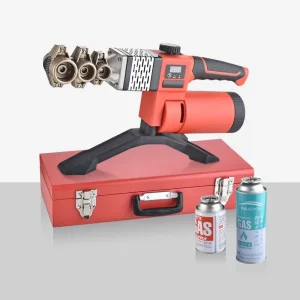
Featured Pipe Preparation & Fusion Machinery
Direct factory OEM manufacturing solutions for Polyethylene (PE), High-Density Polyethylene (HDPE), PPR, and PEX piping networks.
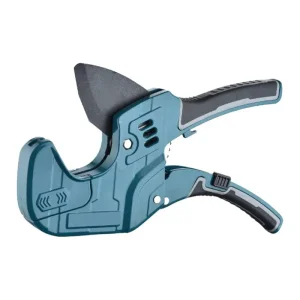
China Heavy-Duty Adjustable PVC Pipe Cutter 50mm/63mm - Model JC-PC-22
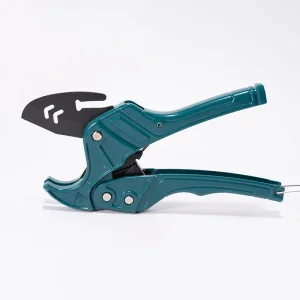
Wholesale 42mm Ratchet Plastic PPR Pipe Cutter - Model 42922 for PVC, PPR, PEX
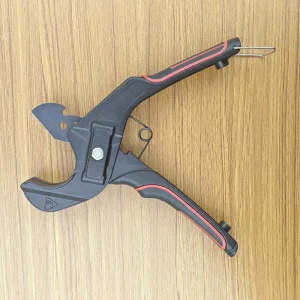
ODM China Professional 36mm Precision PEX Pipe Cutter - Factory Direct
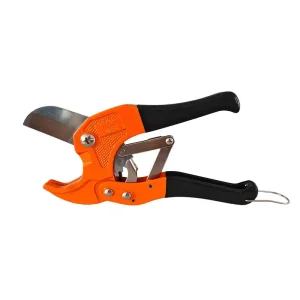
OEM Professional 42mm PVC Pipe Cutter with Anti-Slip Dipping Handle
ODM 36mm Precision PEX Pipe Cutter - Eliminate Installation Failures
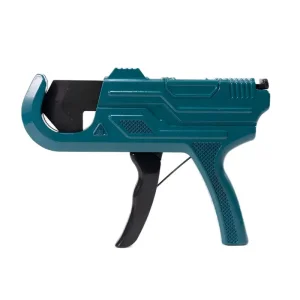
China 42mm Compact Ratchet Pipe Cutter for Narrow Spaces
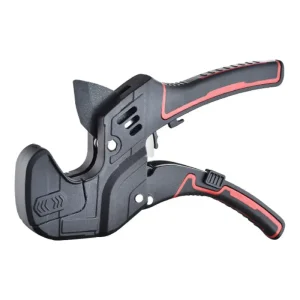
Wholesale Heavy-Duty Adjustable PVC Pipe Cutter - Model JC-PC-22
ODM Heavy-Duty Adjustable PVC Pipe Cutter 63mm for Large Plastic Pipes
1. The Global Shift Toward Polyethylene Infrastructure & Fusion Integrity
In modern municipal, industrial, and energy infrastructure, Polyethylene (PE) pipe systems—specifically high-density variants such as PE100, PE100-RC, and PE-RT—have rapidly displaced traditional iron, steel, and concrete piping networks. Renowned for their corrosion resistance, chemical inertness, flexibility, and seismic tolerance, PE pipelines guarantee operational lifespans exceeding 100 years. However, the operational reliability of any thermoplastic pipeline network relies entirely on a single critical factor: the structural integrity of its fused joints.
Unlike mechanical fittings or threaded connections that introduce potential leak points, butt fusion welding and electrofusion transform discrete pipe lengths into a continuous, monolithic pressure system. When executed via professional-grade OEM PE Pipe Fusion Welding Machines, the welded zone exhibits mechanical strength equal to or exceeding that of the parent pipe. As global municipal water management, natural gas distribution, mining slurry transport, and trenchless pipe rehabilitation expand, procurement directors and B2B buyers face increasing demand for high-precision, automated, and field-resilient fusion welding machinery.
Procurement Information Gain Insight
Failure in polyolefin pipelines rarely stems from raw material degradation; over 87% of premature field failures occur due to joint misalignment, improper temperature soak profiles, or contamination during the fusion phase. OEM welding machines with integrated hydraulic pressure control and digital temperature logging eliminate human error on the jobsite.
Engineering Architecture of Thermoplastic Fusion
How advanced OEM factories engineer heating plates, hydraulic units, and micro-controllers to ensure perfect interfacial polymer chain entanglement.
Hydraulic Pressure Precision
Butt fusion requires strict compliance with international standards such as DVS 2207-1 and ISO 12176-1. OEM hydraulic power units deliver proportional valve pressure regulation to control the drag pressure, bead-up phase, heat soak, and cooling cycle without causing wall thinning.
PTFE Thermostatic Control
High-grade aluminum heating plates coated with dual-layer DuPont PTFE prevent molten polymer adhesion. Microprocessor PID temperature sensors maintain uniform thermal dissipation across the entire surface within ±3°C tolerances under extreme ambient wind conditions.
Facing & Planing Accuracy
Electric planing tools equipped with reversible HSS (High-Speed Steel) or tungsten carbide blades execute micro-precision end-facing. This removes oxidized surface layers and guarantees absolute axial alignment prior to heating.
Standardized Butt Fusion Process Specifications (ISO 12176 / DVS 2207 Benchmark)
| Fusion Stage | Primary Target Parameter | Technical Objective | Automation Control Mechanism |
|---|---|---|---|
| 1. Initial Bead-Up | Pre-set Hydraulic Pressure ($P_1$) | Melts pipe ends until an initial circumferential bead height is established. | Closed-loop hydraulic sensor with digital pressure readouts. |
| 2. Heat Soak Phase | Heat Soak Pressure ($P_2 \approx 10\% \text{ of } P_1$) | Allows heat penetration into the wall depth without squeezing out molten material. | Automatic pressure relief valve with countdown timer. |
| 3. Heater Removal (Dwell) | Switchover Time ($T_5$) | Minimizes ambient oxidation exposure during plate extraction. | Auto-ejector springs or mechanical rapid slide carriage. |
| 4. Pressure Ramping | Joining Pressure Ramp ($T_6$) | Smoothly reaches full fusion pressure to avoid void formation. | Proportional hydraulic valve curve ramp. |
| 5. Controlled Cooling | Cooling Time ($T_5$) under Pressure ($P_1$) | Allows re-crystallization of polymer chains into a structural matrix. | Digital lockout timer preventing premature unclamping. |
Localized Application Scenarios & Engineering Adaptations
Tailoring machine specs, duty cycles, and power systems to meet regional climate and jobsite realities worldwide.
North America: Municipal Pipe Rehabilitation & Gas Distribution
In the United States and Canada, trenchless technology (pipe bursting and slip-lining) drives high demand for heavy-duty hydraulic butt fusion machines capable of pulling continuous SDR 11 HDPE pipes. Equipment deployed here requires NEMA-rated enclosure power boxes, UL/CSA electrical compliance, and dual 110V/220V generators. Fast-acting hydraulic clamps facilitate high-volume daily weld counts in tight urban cuts.
Middle East & North Africa: Extreme High-Ambient & Mining Environments
Operating in desert ambient temperatures surpassing +50°C presents severe challenges for hydraulic fluid viscosity and electronics cooling. OEM fusion welders exported to Saudi Arabia, UAE, and Chile’s mining sectors feature heavy-duty oil coolers, IP65 sand-proof electrical enclosures, and high-temp PTFE heating jackets to maintain accurate thermal profiles despite fierce crosswinds and airborne dust.
Europe: Eco-Conscious Urban Jobsites & Traceability Directives
European operators prioritize low emissions, minimal noise, and total data logging. Fully automatic CNC butt fusion machines equipped with RFID pipe scanners, GPS taggers, and PDF report exporters align with EN 12201 and DVS guidelines. Battery-assisted or gas-powered cordless PPR/PE fusion tools are popular for indoor plumbing renovations where grid power access is restricted.
Southeast Asia & Latin America: Rapid Urbanization & Irrigation
For agricultural irrigation networks, sub-sea discharge lines, and municipal clean water expansion in Colombia, Brazil, Indonesia, and Vietnam, cost efficiency and field repairability are paramount. Lightweight manual butt fusion frames and compact socket fusion kit boxes allow installation teams to traverse rugged terrain without heavy lifting equipment.
China Manufacturing Resilience & OEM Efficiency Advantages
How Yuyao and Ningbo hardware industrial clusters enable unmatched cost-performance, rapid prototyping, and vertical quality control.
Choosing an OEM factory partner in Yuyao, Zhejiang Province provides international brand owners and tool distributors with distinct strategic advantages. Located within China's primary hardware and plumbing tool manufacturing cluster, Yuyao combines advanced metallurgy, precision die-casting, plastic injection molding, and electronic PCB assembly within a 30-kilometer supply radius.
Vertical Integration & Rapid Tooling
From aluminum alloy frame casting to CNC jaw milling, surface powder coating, and final assembly, over 90% of sub-assembly processes occur under direct factory oversight. This reduces OEM lead times for custom mold adjustments from months to weeks.
Zero-Defect Quality Assurance
Every OEM fusion machine undergoes rigorous multi-stage QA: hydraulic seal pressure hold tests for 24 hours, dielectric breakdown isolation checks, thermal image calibration across heating plates, and stress-cycling under full load.
Cost Efficiency Without Quality Compromise
Direct proximity to Ningbo Port—one of the world's largest deep-water shipping hubs—reduces inland logistics costs. Automated CNC machining centers minimize manual assembly variables, delivering European-grade precision at competitive FOB price points.
Technological Roadmap & Future Outlook in Pipe Joining
How AI intelligence, cloud synchronization, and lightweight composite materials are transforming field fusion tools.
1. AI-Driven Smart Fusion & Real-Time Weld Validation
The next decade of fusion welding belongs to artificial intelligence and sensor integration. Future OEM fusion machinery will feature embedded optical sensors and infrared thermography to inspect the melt bead geometry during the heating cycle. Machine-learning algorithms analyze real-time heating profiles against material databases, automatically aborting welds if dust, moisture, or misalignment is detected.
2. Cloud Telematics & Fleet Remote Diagnostics
For large-scale utility contractors managing hundreds of welding stations across national infrastructure projects, IoT connectivity is vital. Future machines stream pressure data, ambient conditions, GPS coordinates, and operator IDs directly to cloud dashboards via 5G/LTE modules, enabling instantaneous quality certification for municipal inspectors.
3. Cordless Off-Grid Power Solutions & Gas-Driven Innovation
As remote pipeline construction expands away from electrical grids, reliance on heavy, noisy diesel generators creates bottlenecks. Development roadmaps focus on ultra-efficient lithium battery systems and portable gas-powered PPR/PE socket fusion tools (such as SGS/CE certified butane/propane heating welders), giving field crews complete mobility.
4. Composite Metallurgy & Ergonomic Frame Optimization
By transitioning machine chassis designs from solid cast aluminum to high-strength titanium-aluminum alloys and structural carbon fiber inserts, future fusion carriages achieve a 35% weight reduction while increasing torsional rigidity—drastically reducing operator strain in narrow trenches.
OEM / ODM Customization Architecture for Brand Partners
End-to-end bespoke manufacturing capabilities tailored to international tool brands, wholesalers, and retail chains.
Custom Branding
Laser-etched logos, custom chassis powder coating, custom rubber grip colors, and bespoke machine nameplates.
Electrical Specs
Tailored voltage inputs (110V, 220V, 400V), plug types (UK, EU, US, AU), and digital UI language settings.
Packaging & Kits
Heavy-duty steel transport boxes, blow-molded carrying cases, custom foam inserts, and color retail boxes.
Global Certificates
ISO9001 factory management compliance, CE low-voltage safety certification, and SGS test report validation.
Frequently Asked Questions & Procurement Guidance
Direct technical answers addressing engineering parameters, OEM minimum orders, quality guarantees, and operational standards.
What is the difference between Butt Fusion, Socket Fusion, and Electrofusion machinery?
Butt Fusion clamps two plain-ended PE pipes, faces their ends square, heats them directly against a thermostatic plate, and presses them together under controlled hydraulic pressure; it is typically used for pipe diameters from 63mm up to 1600mm+. Socket Fusion heats the outer wall of a pipe end and the inner wall of a fitting socket simultaneously using sized male/female mandrels before joining them manually or mechanically (common for smaller PPR/PE pipes from 20mm to 110mm). Electrofusion uses specialized fittings with embedded electrical heating coils; an electrofusion processor machine supplies precise voltage/current to melt the interface without external heating plates.
How do OEM factories ensure accurate heating plate temperature stability across large surface areas?
Professional OEM factories utilize high-density cast aluminum heating plates embedded with serpentine ceramic heating elements. Temperature regulation is managed by dual micro-processor PID controllers connected to PT100 platinum resistance sensors. This guarantees surface thermal variation does not exceed ±3°C across the entire heating plate zone, preventing localized polymer burning or incomplete melt penetration during field operations.
What international standards do your PE pipe fusion machines comply with?
Our fusion machinery is designed and manufactured to comply strictly with ISO 12176-1 (equipment for plastic pipes fusion), DVS 2207-1 (welding of thermoplastics - pipes and fittings), and CE / Low Voltage Directive standards. Complete compliance documentation, circuit schematics, and factory calibration certificates are supplied with every OEM shipment.
What is the typical lead time and MOQ for custom OEM orders?
Standard OEM production minimum order quantities (MOQs) start at 20 units for hydraulic butt fusion series and 100 units for portable pipe cutting and manual socket tools. Custom color requests, specific electrical wiring configurations, and private label packaging are typically completed within 25 to 35 days from sample approval.
Why is square pipe cutting critical before performing butt fusion welding?
If a pipe end is cut at an angle or has burrs, the facing blade must work significantly longer to create parallel ends, wasting pipe length and risking uneven hydraulic pressure distribution. Utilizing precision heavy-duty 42mm, 50mm, or 63mm pipe cutters ensures a clean 90-degree cut, protecting facing blades and guaranteeing uniform heat soak contact across the entire wall thickness.
Precision Pipe Chamfering, Deburring & Cutting Solutions
Complete your pipeline preparation toolkit with our professional-grade auxiliary cutting and deburring equipment.
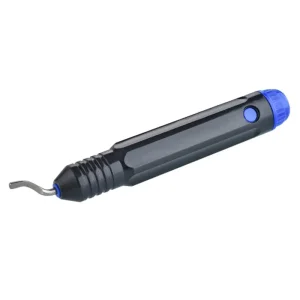
OEM M2 HSS Deburring Tool DT-001 for Metal & Plastic Pipes
OEM M2 HSS Deburring Tool DT-001 - Professional Finishing Factory Direct
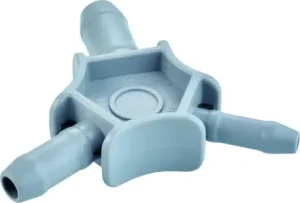
OEM China 3-in-1 Pipe Calibrator for PEX-AL-PEX Multilayer Systems
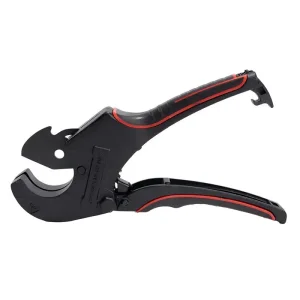
OEM High-Efficiency 42mm Ratchet PVC Pipe Cutter for Rapid Construction
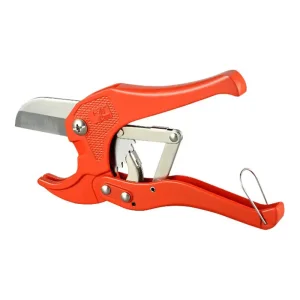
ODM 42mm Manual Plastic Pipe Cutter for PVC, PPR & PEX - Model JC-PC-001
Wholesale 42mm Ratchet Plastic PPR Pipe Cutter Model 42922
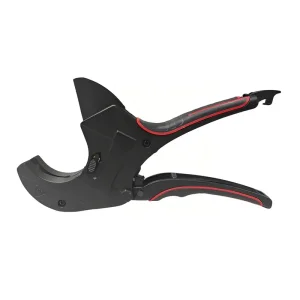
OEM China HDPE Pipe Cutter Suppliers - Professional 63mm One-Handed Tool