High-Performance Welding & Pipe Preparation Machinery
Engineered for rigorous industrial standards, zero-leak fusion integrity, and rapid field deployment.
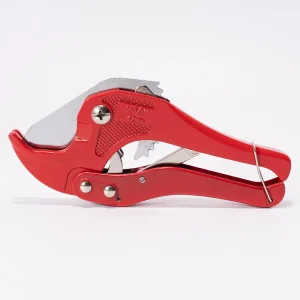
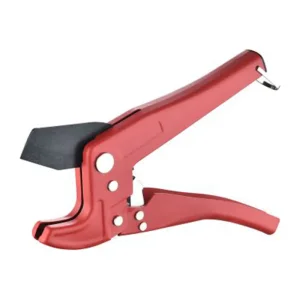
Executive Summary: The Strategic Evolution of OEM Fusion Welding Factories
In modern industrial fluid transport, municipal civil infrastructure, and commercial HVAC building management, the reliability of piping networks depends entirely on joint integrity. As global engineering standards shift from traditional mechanical threading and solvent cement bonding to advanced thermal socket and butt fusion welding, global procurement teams are re-evaluating their manufacturing partnerships. Partnering with a specialized OEM Fusion Welding Factory is no longer just about acquiring hardware—it is about integrating a comprehensive, end-to-end pipe preparation and thermodynamic joining infrastructure.
Thermoplastic piping materials—such as Polypropylene Random Copolymer (PPR), High-Density Polyethylene (HDPE), Polybutylene (PB), and Cross-linked Polyethylene (PEX-AL-PEX)—demand precise thermal input, controlled pressure cycles, and perfectly square, burr-free pipe geometry. A single micro-imperfection during the pipe cutting, deburring, or thermal heating phase can lead to stress concentration points, localized wall thinning, or catastrophic joint separation under high-pressure hydrostatic surge testing.
Information Gain Insights: The Molecular Bond of Fusion Welding
Unlike mechanical fittings that rely on compression elastomeric seals, socket fusion welding melted polymer chains across the pipe interface and fitting socket. When heated to the precise crystalline melting point (typically 260°C ± 10°C for PPR), the semi-crystalline polymer chains undergo interdiffusion. Upon cooling under controlled axial force, the joint forms a continuous homogeneous matrix with mechanical tensile strength exceeding that of the unjoined pipe itself.
Leading OEM manufacturing facilities must bridge the gap between high-volume manufacturing cost efficiency and ultra-precise mechanical tolerance control. From forging ergonomic aluminum cutter handles to machining PTFE-coated heating sockets and heat-treating SK5/M2 high-speed steel cutting blades, dedicated fusion welding factories provide the hardware foundation for global distribution brands, EPC contractors, and professional MRO channels.
Zero-Defect Quality Control
Implementing rigorous ISO9001 quality gates, 100% full-load electrical safety checks, and continuous dimensional validation for socket heating dies to eliminate field failures.
Cordless & Gas Innovations
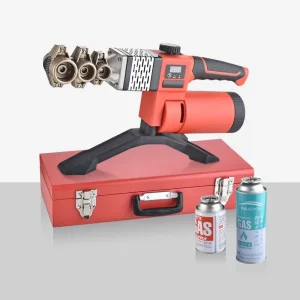
Pioneering off-grid fusion technologies, including 1.4KW gas-powered PPR welders, eliminating reliance on site generators and extension power cords in remote construction.
Turnkey OEM/ODM Capability
Full-spectrum private labeling, custom mold tooling, color matching, customized blade geometry, and retail-ready packaging designed for international hardware brands.
Global Sourcing Demands & Procurement Intelligence
Procurement directors and supply chain managers for global tool brands face a dynamic macro landscape. Market pressures demand shorter lead times, strict adherence to regional electrical safety directives (such as CE, RoHS, and REACH), and unyielding product longevity. When evaluating an OEM Fusion Welding Factory, technical sourcing audits focus on critical production indicators:
- Thermal Consistency & PID Controller Calibration: Electric fusion tools require micro-processor controlled proportional-integral-derivative (PID) thermo-regulators. Fluctuations greater than ±5°C cause localized polymer degradation or incomplete melt penetration.
- Non-Stick Coating Integrity: Die sockets must be coated with high-density, multi-layer PTFE (Polytetrafluoroethylene). Inferior coatings cause molten PPR sticking, leading to surface void formation during pipe insertion.
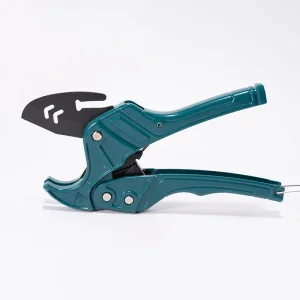
- Blade Geometry & Steel Metallurgy: Companion pipe cutting tools must yield clean, zero-burr, perpendicular cuts. High-carbon stainless steel or M2 HSS blades cut cleanly without crushing thin-wall PVC or deforming multilayer PEX-AL-PEX cores.
- Total Cost of Ownership (TCO) & Warranty RMA Rates: Leading OEMs guarantee defect rates under 0.5%, significantly lowering post-sale warranty claims and protecting distributor brand equity.
Comparative Analysis: Fusion Joining vs. Mechanical & Solvent Joining
| Parameters / Characteristics | Socket / Butt Fusion Welding | Solvent Cement Welding | Compression & Press Mechanical Fittings |
|---|---|---|---|
| Joint Structural Integrity | Homogeneous monolithic polymer bond (Equal to pipe strength) | Chemical softening & solvent evaporation bond | Mechanical friction lock relying on internal O-rings |
| Long-Term Pressure Rating | PN20 to PN25 (High sustained pressure) | PN10 to PN16 (Degrades with temperature) | PN12.5 to PN16 (Limited by gasket lifespan) |
| Temperature Resistance | Continuous load up to 95°C (PPR/PEX) | Restricted (Typically < 60°C for PVC) | Restricted by EPDM/HNBR O-ring limits (up to 110°C) |
| Site Operational Cost | Low cost per joint (Reusable dies & welders) | Medium (Ongoing consumable chemical cost) | High (Expensive single-use fitting components) |
| Environmental & Safety Compliance | Zero VOC emissions, non-toxic, eco-friendly | High VOC chemical fumes, flammable solvents | Eco-friendly, zero chemical emissions |
Next-Generation Fusion Welding Technological Roadmap
The global plumbing and pipeline installation landscape is rapidly modernizing. Driven by urbanization, large-scale industrial fluid infrastructure, and tight jobsite schedules, tool technology is evolving along four core vectors:
1. Gas-Powered & Cordless Mobility
Jobsite access to electricity is often delayed during rough-in plumbing stages. The introduction of 1.4KW gas-powered PPR fusion welders gives installers uninterrupted mobility in utility trenches, high-rise structural skeletons, and rural installations without portable fuel generators.
2. Digital Micro-Processor Intelligence
Next-gen welders incorporate digital LED displays and real-time thermistor feedback loop tracking. Audio-visual countdown timers assist technicians through precise heating, insertion, and cooling intervals defined by DVS 2207 and ISO 15874 standards.
3. Systemic Tool Ecosystem Interoperability
Clean fusion joints depend on flawless pre-weld pipe preparation. Factories must supply paired tool ecosystems: ratchet cutters, heavy-duty HDPE shear cutters, multi-diameter deburring reamers, and 3-in-1 pipe calibrators for PEX-AL-PEX systems.
Macro Industry Solutions: End-to-End System Integration
A leading OEM factory operates as a holistic engineering partner, delivering solutions tailored to specific commercial and residential application sectors:
1. Commercial Hot & Cold Water Potable Plumbing (PPR / PB Systems)
Potable water distribution requires non-toxic materials and leak-free reliability over a 50-year service life. OEM factories produce socket fusion welding machines featuring dual-element heating plates (e.g., 800W + 800W) with independent switches, enabling rapid heat-up for small residential repairs or high-wattage continuous duty on commercial construction sites.
2. Municipal & Industrial Fluid Transport (HDPE / Large Diameter)
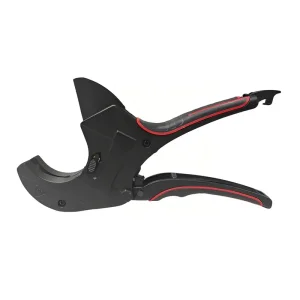
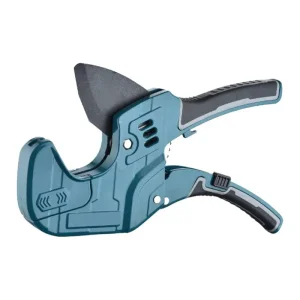
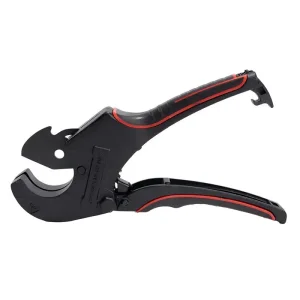
For municipal water mains and industrial chemical lines, pipe cutting requires heavy-duty one-handed or gear-driven cutters capable of shearing through thick SDR-rated HDPE up to 63mm and 75mm without cracking the pipe wall at low ambient temperatures.
3. HVAC, Radiant Floor Heating & Multilayer Piping (PEX-AL-PEX / Copper)
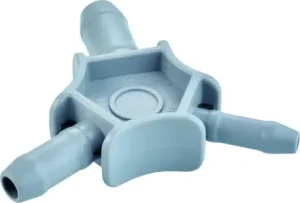
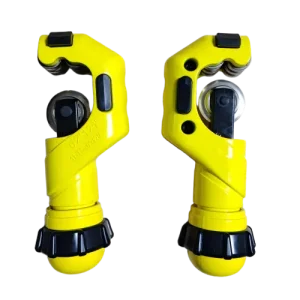
Installing multilayer aluminum-plastic composite pipes demands exact roundness restoration after cutting. 3-in-1 pipe calibrators reshape flattened pipe ends while chamfering internal layers to prevent torn EPDM O-rings during press fitting attachment. For copper lines, heavy-duty rotary tube cutters with hardened steel tracking rollers yield clean cuts ready for soldering or press crimping.
Standard Operating Procedure: DVS 2207 Compliant Fusion Workflow
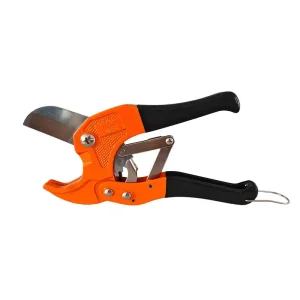
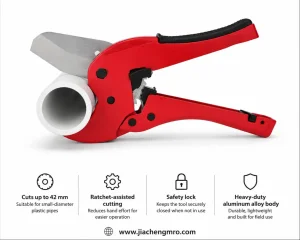
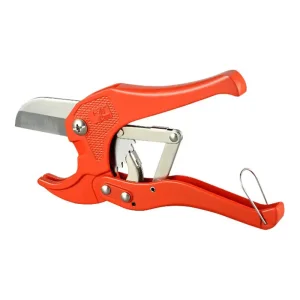
Step 1: Square Cutting: Cut pipe at 90° using a ratchet PVC/PPR cutter.
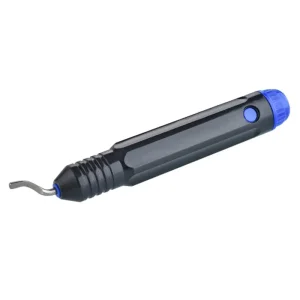
Step 2: Deburring & Calibrating: Remove internal and external burrs using an M2 HSS deburring tool.
Step 3: Depth Marking: Mark insertion depth according to pipe diameter specifications.
Step 4: Heat Soak: Insert pipe and fitting into PTFE sockets simultaneously without rotating.
Step 5: Joining & Cooling: Push pipe into fitting to marked depth and hold under pressure for specified cooling phase.
Quality Assurance, Compliance, & Global Enterprise Support
Exporting industrial tools to North American, European, and South American markets requires strict compliance with international regulatory frameworks. Top-tier OEM manufacturing facilities maintain comprehensive quality management systems:
ISO 9001 Management
Full traceability from raw material aluminum ingots, high-carbon blade steels, and electrical components through to final assembly and carton serialization.
SGS & CE Certification
Rigorous electrical safety, EMC compliance, and machinery directive testing for international market access and retailer onboarding requirements.
Localized B2B Support
Flexible MOQ structures, OEM color palette matching, custom blister pack or blow-mold case packaging, and rapid air/sea freight logistics support.
Frequently Asked Technical & Sourcing Questions
Detailed engineering insights for procurement managers, brand owners, and technical directors.
Complete OEM/ODM Pipe Preparation & Cutting Line
Explore our extended series of professional-grade cutters, calibrators, and deburring systems.