
Featured PPR Welding & Pipe Preparation Tools
Direct OEM/ODM Supply from Certified Manufacturing Facilities
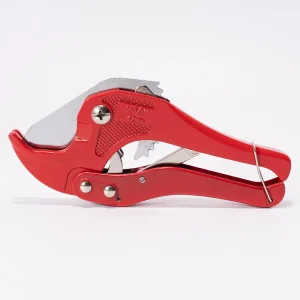
OEM Heavy-Duty 42mm Aluminum Pipe Cutter from China Suppliers
View Product Specs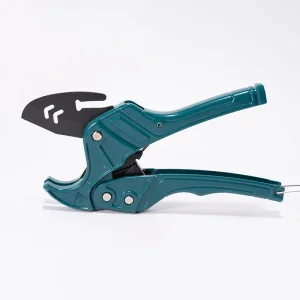
Wholesale 42mm Ratchet Plastic PPR Pipe Cutter - Model 42922
View Product Specs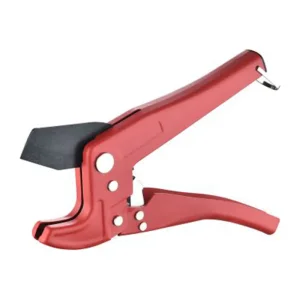
Wholesale 42mm Heavy-Duty Ratchet Pipe Cutter Model PC-25
View Product Specs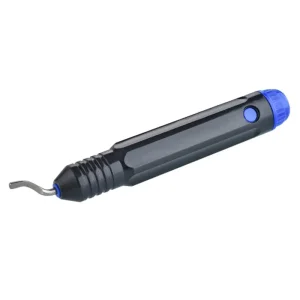
China M2 HSS Deburring Tool DT-001 for Metal & Plastic Pipes
View Product Specs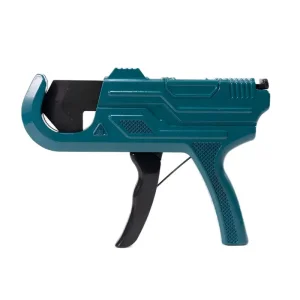
China 42mm Compact Ratchet Pipe Cutter for Narrow Spaces
View Product Specs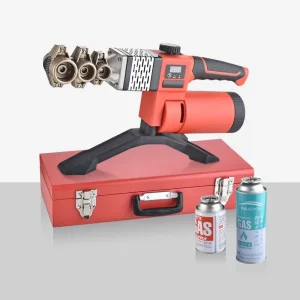
OEM 1.4KW Gas-Powered PPR Fusion Welder for 20-32mm Pipes
View Product Specs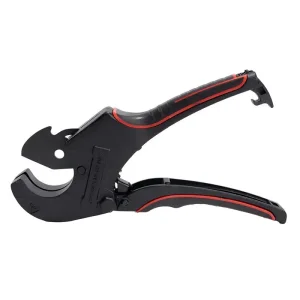
OEM High-Efficiency 42mm Ratchet PVC Pipe Cutter
View Product Specs
Factory Direct: 1.4KW Gas Powered PPR Fusion Welder (20-32mm)
View Product SpecsGlobal B2B Sourcing Landscape: Polypropylene Random Copolymer (PPR) Joining Systems
Analyzing Enterprise Procurement Demands, Infrastructure Growth, and ODM Manufacturing Standards
In the modern international fluid transport and HVAC infrastructure sectors, Polypropylene Random Copolymer (PPR / PP-R Type 3) has firmly established itself as the material of choice for hot and cold water distribution, municipal civil engineering, industrial chemical conveyance, and radiant floor heating networks. The global structural shift from metallic piping systems (copper, galvanized steel) to advanced polyolefin thermoplastics is driven by PPR’s superior resistance to galvanic corrosion, chemical inertness, anti-scaling attributes, and a operational lifespan exceeding 50 years under standard pressure and thermal ratings (DIN 8077/8078, EN ISO 15874).
However, the long-term structural integrity of a PPR pipeline network relies almost entirely on the quality of its thermofusion socket joints. Unlike mechanical compression fittings or solvent-cemented PVC joints, a properly executed socket fusion weld fuses the pipe wall and fitting socket into a single, homogeneous polymer mass. Achieving zero-defect, leak-free fusion at commercial scale requires high-precision heating tools, specialized socket dies, calibrated pipe cutters, and deburring/calibrating equipment. For global wholesalers, enterprise brand owners, and OEM procurement directors, sourcing from a qualified ODM Welding PPR supplier & factory is a strategic imperative to ensure field reliability and operational profitability.
"Information Gain Insight: The primary cause of field failure in PPR thermofusion networks is not material degradation, but uneven thermal penetration and socket deformation caused by out-of-spec heating plates or uncalibrated pipe cut-offs. Professional ODM suppliers integrate closed-loop micro-temperature controllers and SK5/65Mn ratchet cutters to eliminate installer error."
Engineering Specifications & Polymer Thermofusion Dynamics
Understanding the Mechanical and Thermal Parameters of High-Performance Socket Welding
Thermal Equilibrium & Heat Management
PPR thermofusion requires precise heating plate temperature stability at 260°C (500°F). Advanced ODM welders utilize cast-aluminum heating plates embedded with dual-pipe heating elements and PID microprocessor control, preventing cold spots that lead to joint separation under pressure testing.
Dual PTFE Socket Coating Technology
Matrix dies must be coated with high-grade Japanese or Swiss PTFE (Teflon) to prevent molten polypropylene adhesion. ODM factories enforce a minimum 30-micron double-layer PTFE application, guaranteeing smooth release and preventing polymer dragging during heating cycle retraction.
Ergonomic & Structural Metallurgy
Cutter handles engineered from die-cast ADC12 aluminum alloy provide maximum tensile strength while reducing hand fatigue. Coupled with high-carbon SK5 steel blades featuring Teflon anti-rust coatings, cuts remain 100% perpendicular without ovalizing the pipe end.
| Pipe External Dia. (D) | Heating Depth (mm) | Heating Time (Sec) | Welding / Joining Time (Sec) | Cooling Time (Min) | Recommended Tooling |
|---|---|---|---|---|---|
| 20 mm | 14.0 mm | 5 sec | 4 sec | 2 min | 20-32mm Gas/Electric Welder & 42mm Ratchet Cutter |
| 25 mm | 15.0 mm | 7 sec | 4 sec | 2 min | 20-32mm Matrix Welder & 42mm Ratchet Cutter |
| 32 mm | 16.5 mm | 8 sec | 6 sec | 4 min | 1.4KW High-Output Welder & 42mm/50mm Cutter |
| 40 mm | 18.0 mm | 12 sec | 6 sec | 4 min | Heavy-Duty Socket Welder & 50mm Adjustable Cutter |
| 50 mm / 63 mm | 20.0 - 24.0 mm | 18 - 24 sec | 8 sec | 6 min | Industrial Heavy-Duty Adjustable Cutter (Model JC-PC-22) |
Macro Industry Solutions: Overcoming Real-World Field Challenges
How ODM Manufacturing Innovations Solve Off-Grid and High-Frequency Installation Bottlenecks
Off-Grid & Remote Jobsite Welding
Challenge: New commercial job sites or remote agricultural pipeline repairs frequently lack reliable AC mains electricity, paralyzing traditional electric thermofusion machines.
ODM Solution: The 1.4KW Gas-Powered PPR Fusion Welder utilizes standard liquefied butane gas cartridges, heating to operating temperature (260°C) in under 3 minutes without generator dependency.
Rapid Construction & High-Frequency Cutting
Challenge: Mechanical plumbing contractors on multi-story residential towers waste hundreds of labor hours per job due to manual cutter binding and blade chipping.
ODM Solution: High-efficiency ratchet cutters featuring multi-stage gear transmission mechanisms reduce manual cutting effort by 40%, delivering burr-free square cuts in seconds.
Multi-Layer & PEX Pipe Calibration
Challenge: Shearing multi-layer PEX-AL-PEX or thick-walled PPR pipe flattens the pipe end, leading to cut-O-ring leaks inside press fittings.
ODM Solution: Integrating 3-in-1 calibrators and M2 HSS deburring tools restores absolute roundness and chamfers internal/external edges simultaneously.
Technology Roadmap: Next-Generation Thermofusion Equipment (2025–2030)
Pioneering Smart IoT Welding, Lightweight Metallurgy, and Carbon-Neutral Manufacturing
1. IoT Data Logging
Smart socket fusion welders integrated with Bluetooth sensors record heating duration, ambient temperature, and heating plate surface equilibrium for municipal audit compliance.
2. Magnesium Alloy Frames
Transitioning from traditional aluminum castings to magnesium-lithium structural frames reduces handheld tool weight by 35% without sacrificing mechanical yield strength.
3. Nano-Ceramic Coatings
Replacing conventional PTFE socket coatings with nano-ceramic anti-stick matrices extends matrix die operational lifespans up to 5000 fusion cycles under extreme thermal cycles.
4. Automated QC Machining
Deploying fully automated 5-axis CNC grinding centers for SK5 steel cutter blades ensures cutting edge tolerances within ±0.02mm across batch manufacturing.
Professional ODM Tooling Catalog & Component Systems
High-Precision Pipe Preparation Tools Engineered for Global Wholesale & Private Label Distributors
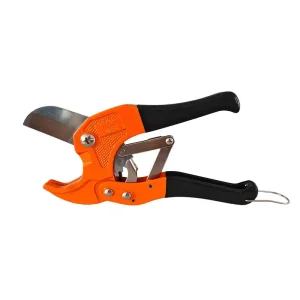
OEM Professional 42mm PVC Pipe Cutter with Anti-Slip Dipping Handle
View Product Specs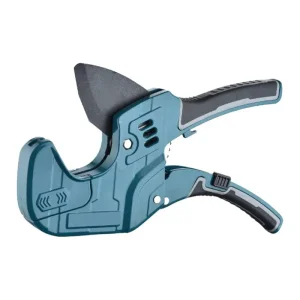
China Heavy-Duty Adjustable PVC Pipe Cutter 50mm/63mm Model JC-PC-22
View Product Specs
ODM Heavy-Duty Adjustable PVC Pipe Cutter 63mm Model JC-PC-22
View Product Specs
ODM Heavy-Duty Adjustable PVC Pipe Cutter 63mm for Large Plastic Pipes
View Product Specs
ODM Heavy-Duty 42mm Aluminum PVC Pipe Cutter Precision Tool
View Product Specs
Wholesale 42mm Ratchet PPR Pipe Cutter Model 42922
View Product Specs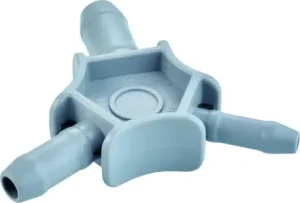
OEM 3-in-1 Pipe Calibrator for PEX-AL-PEX Multilayer Systems
View Product Specs
OEM M2 HSS Deburring Tool for Metal & Plastic Pipes Model DT-001
View Product SpecsGlobal Compliance, Factory Audits & Localized OEM Logistics
Ensuring Regulatory Alignment across European, North American, and Emerging Markets
International Certification Standards
Our direct manufacturing operations adhere strictly to ISO 9001:2015 Quality Management Systems. Fusion welders and electrical components carry full SGS / CE certifications, compliance documentation, and RoHS test reports required for seamless European and North American customs entry.
OEM Private Label & Custom Packaging
We provide full white-label customization: custom handle color matching (RAL/Pantone), laser-etched brand logos, specialized blow-mold carrying cases, localized multilingual instruction manuals, and retail-ready barcode packaging tailored to big-box hardware chains.
Quality Assurance & Defect Guarantee
Every batch of PPR fusion welders undergoes 100% thermal burn-in testing and die dimensional tolerance checks prior to packaging. We guarantee an overall product defect rate under 0.5%, backed by localized spare parts supply and structural product warranties.
Frequently Asked Questions (Technical & Procurement Q&A)
Expert Answers for Engineering Teams, Category Managers, and Enterprise Buyers
What is the standard heating temperature for PPR socket thermofusion welding?
The standard operating temperature for Polypropylene Random Copolymer (PPR) fusion welding is 260°C (±5°C). Temperatures below 255°C cause incomplete polymer chain melting leading to cold-weld seam failure, while temperatures exceeding 270°C degrade the polypropylene polymer structure, causing thermal degradation and inner pipe bore blockage.
How does a Gas-Powered PPR Fusion Welder compare to Electric Models on remote sites?
A gas-powered PPR fusion welder (such as our 1.4KW cordless model) utilizes liquefied butane gas to reach working temperatures quickly without electric power cords. It provides complete portability on construction sites, rooftops, or underground utility trenches where AC power generators are inaccessible or impractical to deploy.
Why is an M2 HSS Deburring Tool critical prior to PPR or PEX joining?
Cutting plastic or multi-layer pipe can leave micro-burrs and uneven bevels. An M2 High-Speed Steel (HSS) deburring tool removes internal and external flash. This prevents cut damage to elastomeric O-rings in press fittings and ensures uniform socket depth insertion during thermofusion heating.
What steel alloys are utilized in professional-grade ratchet pipe cutters?
Professional ODM cutters utilize high-carbon SK5 or 65Mn spring steel blades subjected to precision vacuum heat treatment (HRC 52-56). This provides an ultra-sharp cutting edge that maintains square cuts through thick-walled PPR, PVC, and PE pipes without cracking or edge chipping.
What are the minimum order quantities (MOQ) and lead times for ODM branding?
Standard OEM private label orders (custom colors, laser logo, custom blow-mold case) generally start at 500 to 1,000 units depending on the model. Production lead time is typically 25 to 35 days post sample approval, supported by expedited sea freight or air freight container logistics.
How do Teflon (PTFE) socket die coatings maintain fusion quality over time?
High-grade PTFE coatings prevent molten polypropylene from adhering to the heating matrix. When PTFE degrades, sticking occurs, causing severe surface pitting and structural voids in the joint. Our factories apply dual-layer, extra-thick PTFE matrix coatings tested up to 3,000 continuous fusion cycles.