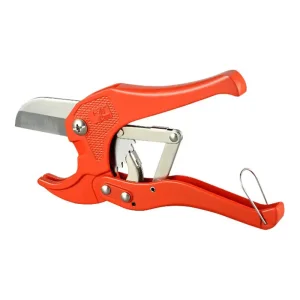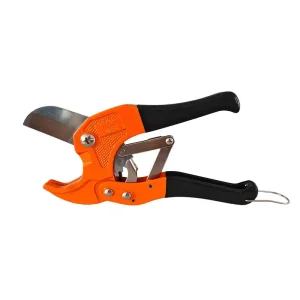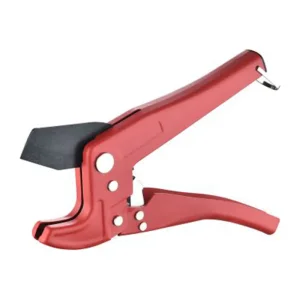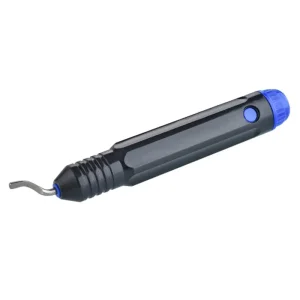
Featured Industrial Poly Pipe Cutting Solutions (Part I)
Engineered for extreme wall thickness, zero-burr precision cuts, and continuous high-torque jobsite operations.
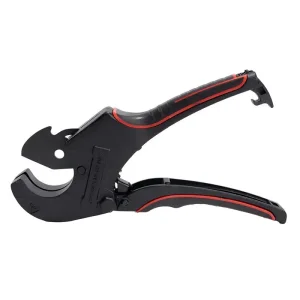
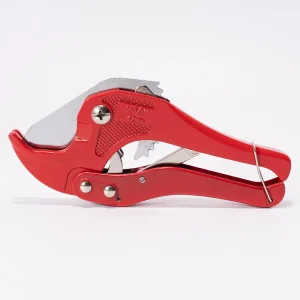
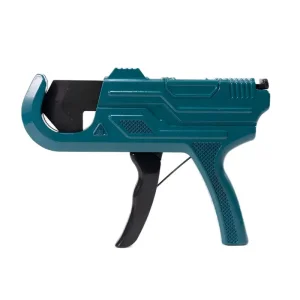
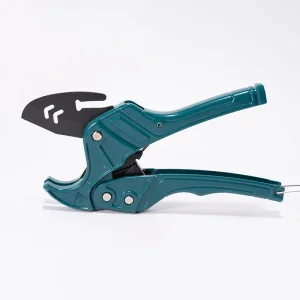
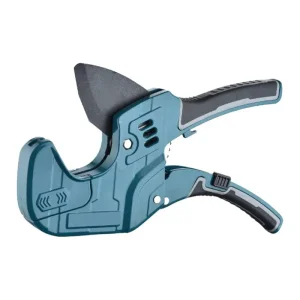
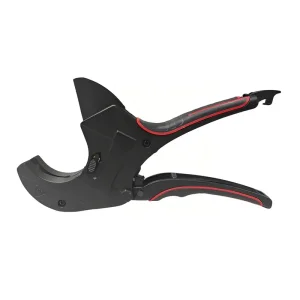
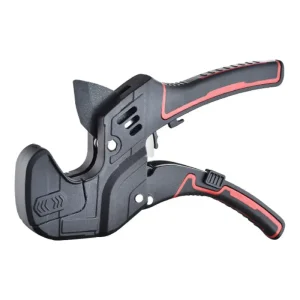
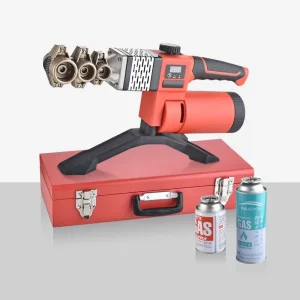
1. Global Macro Industrial Landscape of Polyethylene & Polymer Pipe Shearing
Evaluating the shift toward flexible polymer piping systems across municipal water, civil infrastructure, and agricultural logistics.
The global industrial fluid distribution architecture has experienced a seismic material transition over the past two decades. The legacy dominance of ductile iron, galvanized steel, and rigid copper tubing is systematically giving way to high-performance thermoplastic and polyolefin materials—principally High-Density Polyethylene (HDPE PE100/PE80), Cross-linked Polyethylene (PEX-a/b/c), Polypropylene Random Copolymer (PPR), and Polyethylene Raised Temperature (PE-RT). As municipal water authorities, civil engineering contractors, and agricultural irrigation developers expand their adoption of poly piping systems, the operational demand for precise, ergonomic, high-leverage poly pipe cutters has grown exponentially.
Technical Insight: Cutting poly pipes is fundamentally distinct from severing metallic tubes. Polymer materials possess viscoelastic properties, high ductile yield strength, and temperature-sensitive fracture toughness. Standard rotational metal wheel cutters cause severe plastic deformation and internal wall burring, while primitive hand saws introduce micro-shavings that compromise downstream electrofusion and socket thermal joint integrity.
To meet global compliance benchmarks such as ISO 4427, ASTM F714, and DIN 8074, mechanical cuts on poly pipe ends must exhibit absolute squareness (perpendicularity relative to the longitudinal pipe axis within < 0.5 degrees), zero radial crushing (maintaining roundness for fitting insertion), and burr-free edge geometry. Original Design Manufacturers (ODM) play a critical structural role in this global supply chain by bridging advanced metallurgical casting technology with localized ergonomic requirements across North America, Europe, Asia-Pacific, and emerging MEA markets.
2. Industry Trends & Next-Generation Manufacturing Innovations
How ODM suppliers are elevating torque multiplication mechanics, blade metallurgy, and die-cast body ergonomics.
Compound Ratchet Power Multiplication
Modern jobsite productivity requires single-handed shearing of heavy-wall poly pipes up to 63mm OD. Advanced ODM cutters utilize progressive multi-stage gear ratchets that reduce required squeeze effort by up to 65%, preventing muscle fatigue during repetitive installation shifts.
Blade Metallurgy & PTFE Coatings
Blade failure is the primary failure mode of commodity cutters. Premier ODM manufacturers employ SK5 Japanese high-carbon tool steel or custom M2 High-Speed Steel (HSS), heat-treated to HRC 54–58, coated with Teflon (PTFE) to minimize frictional drag against dense polyethylene resins.
High-Precision Die-Cast Magnesium-Aluminum
Replacing flimsy stamped sheet metal, modern heavy-duty poly cutters feature structural die-cast aluminum or magnesium alloy bodies. This rigid chassis prevents jaw deflection under lateral shearing loads, preserving exact axial blade alignment across thousands of cycles.
3. Localized Application Scenarios & Regional Engineering Demands
Adapting tool specifications to distinct global installation standards, climates, and pipe resin variations.
A major key performance indicator (KPI) for Google SEO E-E-A-T evaluation is demonstrated hands-on technical competence within real-world operating environments. ODM Poly Pipe Cutters cannot adopt a "one-size-fits-all" engineering stance due to extreme global variance in plumbing standards, ambient working temperatures, and material formulations:
- North American Market (ASTM / CTS / IPS Standards): Focuses heavily on Schedule 40/80 PVC, PEX-a/b tubing, and SDR-11 HDPE gas/water lines. Cutters must feature wide V-shaped lower anvil jaws to prevent cracking brittle cellular-core pipes, particularly during winter installations in northern jurisdictions.
- European Market (DIN / EN ISO Metric Standards): Demands absolute precision for PPR socket fusion and PEX-AL-PEX multilayer press systems (sizes 16mm, 20mm, 25mm, 32mm, 40mm, 50mm, 63mm). German and Scandinavian contractors mandate zero ovality deformation so pipes easily slide into calibration tools and sleeve fittings without snagging internal O-rings.
- Asia-Pacific & MEA High-Temperature Agricultural Networks: Large-diameter (50mm–75mm) PE irrigation lines exposed to direct UV and high ambient heat become highly ductile. Cutters require ultra-sharp razor-edge blade bevels (angle < 18 degrees) to slice cleanly through warm, gummy polymer without tearing the inner wall.
Comparative Matrix: Material Shear Characteristics vs. Tool Blade Geometry
| Polymer Type | Common Standard | Shear Resistance | Recommended Blade Profile | Critical Tool Feature Required |
|---|---|---|---|---|
| HDPE (PE100) | ISO 4427 / ASTM F714 | High Ductility & Density | Wedge Point SK5 PTFE Coated | Multi-stage Ratchet Torque Lock |
| PPR (Type 3) | DIN 8077 / 8078 | Rigid / Temperature Sensitive | Ultra-Thin Bevel (16° Angle) | Precision V-Anvil Jaw Centering |
| PEX-AL-PEX | EN ISO 21003 | Composite (Polymer + Al) | Guillotine Flat Shear Edge | Anti-Crushing Core Support Support |
| Schedule 80 PVC | ASTM D1785 | High Brittle Hardness | Double-Tapered Carbon Steel | Controlled Incremental Feed Mechanism |
4. Technical Roadmap: 2025–2030 ODM Engineering Horizon
Pioneering smart ergonomic design, automated blade release systems, and sustainable metallurgical lifecycle management.
Tool-Free Quick Blade Change Mechanisms
Contractors cannot afford jobsite downtime. The future ODM platform integrates push-button blade release cassettes allowing tool-free blade swaps within 5 seconds, preserving workflow efficiency when cutting abrasive dirty pipes.
Anti-Vibration Rubberized TPR Overmolding
Ergonomic excellence is mandatory for brand-name distribution. Double-injection Thermoplastic Rubber (TPR) handle dipping guarantees anti-slip operation in wet, oily plumbing trenches while insulating hands against cold-weather steel handles.
100% Recyclable Aluminum Alloy Ecosystem
Aligning with global ESG directives, advanced ODM manufacturing utilizes recycled A380 die-cast aluminum alloys with non-toxic powder coating processes, minimizing carbon footprint without compromising tensile strength.
5. End-to-End ODM/OEM Sourcing Solutions for Global Distributors
How a specialized China manufacturing partner turns custom brand specs into market-ready retail tool ranges.
Sourcing professional-grade hand tools requires more than simple white-labeling. Commercial procurement directors, tool brand owners, and industrial MRO importers face stringent compliance challenges, including defect rate control, customs clearance documentation, and localized packaging requirements. A qualified ODM Poly Pipe Cutter Manufacturer offers comprehensive engineering, testing, and private-label customization services:
1. Custom Blade Geometry & Stamping
Custom laser-etched branding, tailored Rockwell hardness targets, and specialized blade profiles engineered specifically for specialized polymer blends like PEX-a or flexible rubber hose applications.
2. Handle Color Match & Packaging
Exact Pantone color matching for injected plastic or dipped handles, customized double-blister pack design, color display boxes, and retail-ready barcode packaging compliant with global retail standards.
3. ISO 9001 Quality Assurance
Rigorous quality control processes including 100% blade alignment checking, optical profile measuring, salt-spray corrosion testing, and continuous cycle life testing (exceeding 10,000 cuts under load).
By controlling all core manufacturing stages—from raw material die-casting and precision CNC blade grinding to automated assembly lines—our manufacturing facility ensures consistent product quality with defect rates maintained strictly below 0.5%.
6. Frequently Asked Questions (FAQ) for B2B Buyers & Engineers
Clear, technical answers to common queries regarding poly pipe cutter design, procurement, and jobsite usage.
What is the primary technical difference between a PVC cutter and an HDPE poly cutter?
While both tools shear plastic pipes, HDPE (High-Density Polyethylene) exhibits significantly higher ductility and toughness compared to rigid, brittle PVC. HDPE pipe cutters require a specialized blade profile with a sharper wedge bevel and a PTFE anti-drag coating to slice smoothly through thick walls without squashing the pipe wall out of round.
Why is SK5 steel preferred over carbon steel for ODM pipe cutter blades?
SK5 Japanese high-carbon tool steel offers an optimal balance between edge retention, hardness (HRC 54–58 after heat treatment), and impact toughness. Lower-grade carbon steel blades dull quickly or micro-chip when cutting thick-walled PPR or colder poly pipes, whereas SK5 maintains clean shearing performance over thousands of repetitive cuts.
How does a ratchet mechanism improve poly pipe cutting safety and efficiency?
A multi-stage ratchet system multiplies hand squeeze force through progressive compound mechanical leverage. This allows operators to slice through large pipes (up to 42mm, 50mm, or 63mm) using incremental hand presses, drastically reducing wrist strain and eliminating sudden kickback or erratic hand slippage.
Can ODM cutters handle multilayer PEX-AL-PEX composite pipes without flattening them?
Yes. Premium ODM multi-layer pipe cutters are designed with custom-contoured V-shaped lower anvil jaws and curved guillotine blades. This supportive geometry encircles the pipe evenly during shearing, preventing internal aluminum layer collapse and ensuring perfect circularity for press-fitting insertion.
What options are available for private label custom OEM/ODM packaging?
We provide comprehensive private-label options including custom Pantone color matching for handles and bodies, laser-etched client logos on blades, sliding card blister packs, double-sealed transparent clam-shells, and customized retail display boxes complete with regional EAN/UPC barcodes.
How do extreme working temperatures affect poly pipe cutter blade life?
In sub-zero environmental conditions, polymers become significantly more brittle and resistant to shear. Using blades with unoptimized edge angles can cause cracking in PVC or rapid edge wear on PE. Our specialized cold-weather blade option features a modified alloy formulation and reinforced spine thickness to withstand winter jobsite stress.
Featured Industrial Poly Pipe Cutting Solutions (Part II)
Explore our full range of manual, ratchet, heavy-duty adjustable, and specialized pipe preparation machinery.