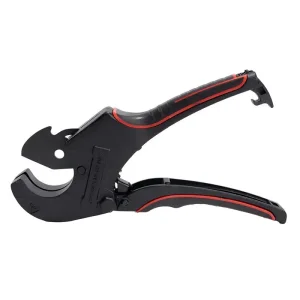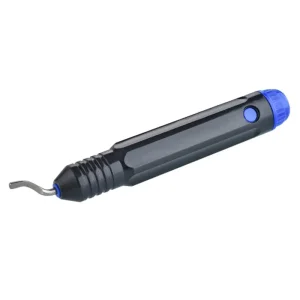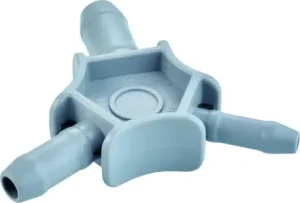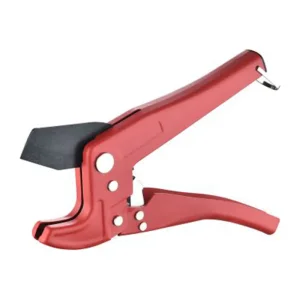
Featured Industrial Pipe Cutters & Fusion Equipment
Direct factory supply of heavy-duty PPR, PVC, PEX, and Copper cutting systems engineered for maximum mechanical yield and clean shear geometry.
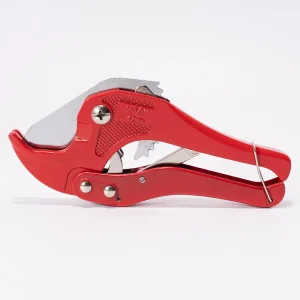
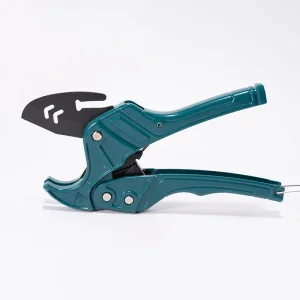
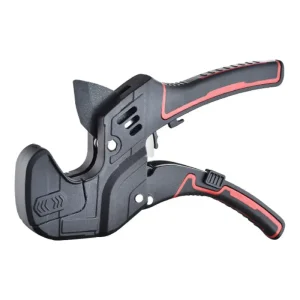
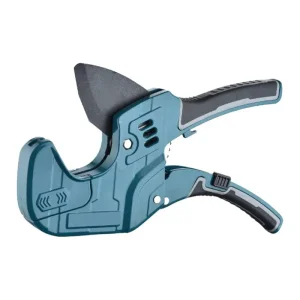
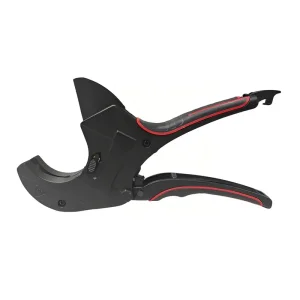
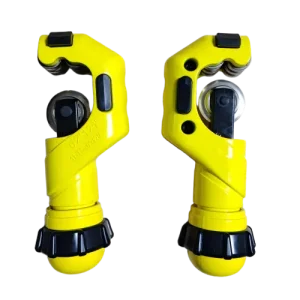
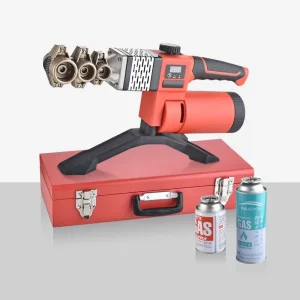
The Engineering Physics of PPR Cutting Mechanics & Blade Metallurgy
Deconstructing shear stress dynamics, blade bevel geometry, and ratchet gear reduction in modern thermoplastic pipe installation.
In high-performance plumbing installations, the integrity of a socket fusion joint or press connection is fundamentally determined by the quality of the preliminary cut. Polypropylene Random Copolymer (PPR) exhibits unique mechanical properties, including high toughness, semi-crystalline ductility, and moderate thermal expansion coefficients. When executing a manual cut, conventional blades frequently induce structural deformation, micro-fracturing along the pipe wall, or severe burr formation. As an established ODM Pipe Cutter PPR supplier and factory, our engineering methodology focuses on neutralizing these failure modes through precision blade geometry and optimized force multiplication.
The shearing process of PPR pipe differs significantly from rigid Polyvinyl Chloride (PVC) or cross-linked Polyethylene (PEX). PPR requires a keen edge angle to penetrate the polymer matrix without generating lateral compressive collapse. Standard cutting tools utilizing a 30° single-bevel edge exert excess radial pressure, causing the pipe to deform into an elliptical profile prior to shear completion. This distortion compromises socket insertion depth and disrupts uniform heat transfer during socket fusion welding.
SK5 High-Carbon Steel Metallurgy
Our blades utilize premium Japanese SK5 carbon steel, heat-treated through precise induction quenching to reach a Rockwell hardness of HRC 54–58. This maintains a razor-sharp cutting bevel through over 10,000 continuous shear cycles on PPR-PN20 heavy-wall pipes.
Dual-Bevel 18°/24° Cutting Geometry
Featuring a proprietary two-stage blade bevel angle. The primary 18° tip pierces the PPR pipe wall with minimal penetration resistance, while the secondary 24° wedge smoothly splits the material wall to prevent cracking under sub-zero ambient temperatures.
Multi-Stage Ratchet Drive Systems
Incorporating a high-torque progressive ratchet drive mechanism with a 6.5:1 leverage ratio. This mechanical advantage reduces operator hand fatigue by over 40%, allowing effortless single-handed operation on PPR pipes up to 42mm and 63mm OD.
Pipe Cutter PPR Industry Trends & Global Procurement Shifts
Analyzing modern plumbing tool requirements across European, North American, and Emerging Construction Markets.
The global professional plumbing tools market is undergoing a structural transition driven by strict municipal water quality standards, green building regulations (LEED, BREEAM), and the rapid expansion of plastic piping networks (PPR, PE-RT, PEX-AL-PEX). Procurement managers and tier-1 brand buyers no longer source plumbing tools solely based on unit price; total cost of ownership (TCO), tool longevity, and zero-defect compliance dominate sourcing decisions.
1. Integration of Multi-Layer Pipe Compatibility
Modern HVAC and potable water installations increasingly deploy multi-layer composite pipes (PEX-AL-PEX, PPR-AL-PPR). These composite structures require cutters that can slice through polymer and aluminum layers simultaneously without separating the bonding adhesive or crushing the internal core. Advanced ODM suppliers engineer specialized blade curvature profiles specifically calibrated for composite shear resistance.
2. Shift Toward Lightweight Aluminum Die-Cast Bodies
Traditional heavy cast-iron cutter frames are rapidly being phased out in favor of high-tensile ADC12 die-cast aluminum alloys. Aluminum frames offer superior strength-to-weight ratios, high impact resistance against drops on concrete jobsites, and total resistance to corrosion in high-humidity plumbing environments.
3. Quick-Release Mechanism & Tool-Free Blade Swaps
Jobsite downtime directly impacts contractor profitability. Commercial buyers prioritize PPR cutters featuring automatic blade spring-back mechanisms and one-touch blade replacement systems. This eliminates the need for external hex keys or tedious disassembly when replacing worn cutting edges in the field.
4. Anti-Slip Ergonomics & Surface Coatings
Professional plumbing work frequently takes place in wet, cramped, or greasy environments. Tool manufacturers now incorporate double-molded TPR (Thermoplastic Rubber) ergonomic grips and Teflon (PTFE) blade coatings to minimize surface friction and maintain secure operator control under extreme working conditions.
Specification Matrix: PPR & Plastic Pipe Cutters Comparison
Engineering parameters for international tool importers, retail brands, and OEM/ODM private-label programs.
| Tool Model Series | Pipe Diameter Capacity | Target Pipe Materials | Blade Material & Hardness | Mechanism Type | Primary Industrial Application |
|---|---|---|---|---|---|
| JC-PC-42 Series | 0 – 42 mm (1-5/8") | PPR, PVC, PEX, PE-RT | SK5 / HRC 56±2 / Teflon Coated | Progressive Ratchet | Residential Potable Water Systems |
| JC-PC-50 Series | 0 – 50 mm (2") | PPR-AL-PPR, Multilayer PEX | High-Carbon SK2 / HRC 58 | Multi-Gear Ratchet Drive | Commercial HVAC & Radiant Heating |
| JC-PC-63 Heavy-Duty | 20 – 63 mm (2-1/2") | HDPE, Heavy-Wall PPR, PVC | Manganese 65Mn Steel / HRC 55 | Dual-Pivot Power Lever | Municipal Water & Industrial Drainage |
| JC-TC-125 Tube Cutter | 3 – 32 mm (1.25") | Copper, Brass, Thin Metal | GCr15 Bearing Steel Wheel | T-Handle Thread Feed | Refrigeration & Gas Piping Systems |
| JC-WEL-1.4K Welder | 20 – 32 mm Sockets | PPR, PE, PB Pipes | PTFE Coated Die Sockets | Gas-Powered Cordless Fusion | Off-Grid Field Repair & Emergency Jobs |
Macro-Industry Plumbing Solutions & Application Scenarios
How specialized pipe prep tools deliver leak-free security across critical infrastructure sectors.
Residential Potable Water Networks
Ensuring 100% square cuts on PPR cold and hot water lines. Clean, burr-free cuts prevent debris accumulation inside pipe walls and ensure precise insertion depth during socket fusion, complying with strict hygienic standards (DIN 1988 / EN ISO 15874).
District Heating & Commercial HVAC
Large-diameter PPR PN25 and composite pipes in commercial installations demand reliable cutting force without oval distortion. Our heavy-duty adjustable cutters preserve circularity, enabling instant press-fitting or butt-fusion without re-rounding steps.
Industrial Chemical Piping Systems
Industrial lines conveying aggressive media require perfect weld joints to eliminate risk of chemical leakage. Utilizing precision-machined ODM cutters eliminates micro-cracks along cut surfaces that could propagate under thermal shock or hydraulic stress.
Comprehensive OEM/ODM Service & Factory Quality Control
From initial CAD modeling and alloy selection to robotic assembly and rigorous export compliance testing.
As a premier China ODM Pipe Cutter PPR factory, Yuyao Jiacheng Tools operates an integrated manufacturing plant equipped with over 40 sets of advanced CNC machining centers, automated blade grinding lines, and automated drop-forging presses. We partner with global brand owners, hardware wholesalers, and home improvement chains to provide turnkey private-label manufacturing.
1. Custom Branding & Packaging
We provide comprehensive branding customization including laser-etched logos, custom handle color injection (Pantone matched), blister card packing, color display boxes, and customized heavy-duty blow-molded storage cases.
2. Strict Quality Control Protocols
Every production batch undergoes 100% optical alignment testing, Rockwell hardness verification, blade bevel sharpness inspection, and destructive shear testing on PN20 thick-wall PPR pipes to ensure failure rates below 0.5%.
3. International Compliance
Our facility operates under an ISO9001 certified Quality Management System. Our electro-fusion and gas-powered welding products hold full SGS CE certifications, meeting European Union directives and North American market entry standards.
Future Technology Roadmap: Next-Gen Pipe Prep Equipment (2025–2030)
Pioneering advancements in smart cutting mechanics, ultra-light alloys, and automated fusion alignment.
Titanium-Nitride (TiN) Nanocoatings
Integrating PVD titanium-nitride multi-layer coatings on SK5 cutting blades. TiN coatings increase surface hardness to over 80 HRC, reduce surface friction coefficients to 0.15, and extend blade operational lifespan by 300% when cutting abrasive fiberglass-reinforced PPR pipes.
Magnesium-Aluminum Die Casting
Replacing standard aluminum frames with next-generation AZ91D magnesium alloys for cutters above 63mm capacity. Magnesium alloy bodies achieve a 33% weight reduction while increasing frame torsional rigidity, vastly improving overhead pipe cutting usability.
Integrated Laser-Guided Alignment
Incorporating micro-laser line projection within ratchet tool handles to guarantee perpendicular cut alignment (90° ± 0.2°). Perfect right-angle alignment eliminates socket fusion gaps and uneven stress distribution in high-pressure piping manifolds.
Frequently Asked Questions (FAQ) for Enterprise Importers & Procurement
Comprehensive answers regarding tool selection, ODM manufacturing, blade metallurgy, and international trade compliance.
Additional High-Precision Pipe Tools & Accessories
Explore our full range of deburring, calibration, tube cutting, and heavy-duty plastic cutting tools for global distribution.