Standard & Custom Pipe Tooling Solutions
Explore our top-tier catalog of precision pipe cutters, calibrators, and heavy-duty tubing instruments engineered for zero-defect field installation.
Global Procurement Architecture & Manual Bending Demand
Analyzing fluid power transition, cross-border OEM contract manufacturing, and the total-cost-of-ownership (TCO) advantage of precision manual tube benders.
Global Infrastructure & Fluid Transfer Demand
In the modern industrial ecosystem, non-destructive, cold-form tubing manipulation represents a fundamental cornerstone across HVAC/R, aerospace hydraulics, automotive braking systems, sanitary piping, and offshore oil & gas modules. As engineering tolerances tighten, international engineering procurement managers face unprecedented demands to eliminate joint leakage, reduce fluid flow resistance, and lower assembly cycle times.
While automated CNC rotary-draw bending centers dominate mass production floors, high-precision manual tube benders remain irreplaceable for on-site fabrication, localized repair, custom retrofit projects, and low-to-medium batch manufacturing where capital expenditure, mobility, and setup agility dictate overall profitability.
The Strategic Value of ODM/OEM Partnerships
Sourcing manual tube bending equipment from an experienced Original Design Manufacturer (ODM) and factory in Yuyao, China allows global brand owners, hardware distributors, and tool OEMs to bridge the gap between cost efficiency and aerospace-grade mechanical precision. Custom tooling dies, specialized bend radii ($R/D$ ratios), custom handle leverages, and proprietary surface coatings allow brands to deliver tailored solutions for copper, aluminum, stainless steel, and titanium tubing.
By shifting from generic white-label catalog buying to deep ODM co-development, procurement executives secure exclusive IP rights, customized ergonomic profiles, and verifiable metallurgical consistency that directly lowers warranty claims and boosts global market share.
Engineering Blueprint: Physics, Leverage & Die Metallurgy
Deep dive into mechanical force multiplication, neutral axis displacement, springback compensation algorithms, and anti-flattening geometry.
Mechanical Advantage & Force Ratios
Manual tube bending relies on precise mechanical advantage principles. Our dual-hinge compound lever arms generate mechanical leverage ratios from 15:1 up to 35:1. This enables a field technician applying only 250 N of hand input force to produce over 8,000 N of uniform tangential bending force.
Offset linkage geometry ensures peak force delivery right at the critical plastic deformation phase (60° to 180° bend angles), minimizing operator fatigue during high-frequency installations.
Die Metallurgy & Surface Tribology
Bending dies and slide blocks are forged from premium Chromium-Molybdenum Alloy Steel (4140 Cr-Mo) or high-tensile 6061-T6 Aircraft Aluminum.
Vacuum heat treatment yields a core hardness of 58-62 HRC. Furthermore, multi-layer Titanium Nitride (TiN) or Hard Chrome electroplating reduces friction coefficients down to $\mu < 0.12$, preventing galling, scoring, and material transfer when bending soft copper or rigid 316L stainless steel tubes.
Wall Thinning & Ovality Control
Uncontrolled bending causes cross-sectional collapse, tube flattening, and wall thinning on the extrados (outer radius). Our precision-machined CNC die grooves feature an optimized ovality-compensation profile that maintains tube roundness within < 5% deviation.
By supporting the intrados and extrados simultaneously, wall thinning is capped below 10%, meeting ASME B31.3 structural integrity requirements for high-pressure hydraulic circuits.
| Tube Material Grade | Typical Outer Diameter (OD) | Wall Thickness Range | Max Bend Angle | Springback Factor ($\Delta\theta$) | Forming Die Hardness |
|---|---|---|---|---|---|
| C12200 Soft Copper (ACR) | 1/4" to 7/8" (6mm - 22mm) | 0.71mm - 1.25mm | 180° Continuous | 1° - 2° | 45 - 50 HRC (Anodized Al) |
| 304 / 316L Stainless Steel | 6mm to 16mm (1/4" - 5/8") | 1.00mm - 2.00mm | 180° Continuous | 4° - 6.5° | 60 - 62 HRC (Forged Cr-Mo) |
| Aluminum 6061-T4 / T6 | 8mm to 20mm | 1.00mm - 1.80mm | 180° Continuous | 2.5° - 4° | 55 - 58 HRC (Tool Steel) |
| PEX-AL-PEX Multilayer Pipe | 16mm to 32mm | 2.00mm - 3.00mm | 90° - 180° | 0.5° - 1° | Composite Polymer / Al Die |
5-Stage ODM/OEM Engineering Customization Workflow
From preliminary 3D FEA simulation to mass production quality assurance, discover how we build custom manual benders for international partners.
Stage 1: Intent Mining, CAD Modeling & FEA Simulation
We start with user intent analysis and application-specific parameters (tube yield strength, outer diameter, minimum center-line bend radius $CLR$). Our R&D team generates parametric 3D CAD models in SolidWorks and conducts Finite Element Analysis (FEA) to verify stress distribution across lever arms and pivot pins under max load conditions.
Stage 2: Precision Tooling Die Fabrication & CNC Machining
Using 5-axis CNC machining centers, high-precision EDM, and automated lathe turning, custom bending dies, grooved sheaves, and shoe formers are crafted. Tolerances are held tightly within $\pm 0.015\text{ mm}$ to guarantee exact radius alignment and smooth tube engagement.
Stage 3: Advanced Metallurgical Heat Treatment & Surface Finishing
Components undergo controlled atmosphere vacuum quenching, gas carburizing, and tempering cycles to achieve maximum yield strength and fatigue resistance. Surface options include electrostatic powder coating, chrome plating, zinc-nickel passivation, or laser-etched degree scales (0° to 180° markings).
Stage 4: CMM Metrology Verification & Rapid Prototyping Validation
Prototypes are measured on Zeiss Coordinate Measuring Machines (CMM) and subjected to destructive load testing, tube wall thinning analysis, and springback evaluation. Physical samples are shipped via air express to OEM partners for hands-on jobsite validation.
Stage 5: High-Velocity Assembly & Six Sigma Quality Assurance
Upon final sign-off, mass production launches on automated assembly lines. Every manual tube bender is 100% batch-tested for hinge torque, pin alignment, and scale accuracy. Packaging options include blow-molded heavy-duty cases, retail blister cards, or branded color boxes.
Industrial Application Scenarios & Engineering Solutions
Providing critical mechanical bending capability across diverse global industries where zero-leak performance is non-negotiable.
HVAC & Refrigeration (ACR) Systems
Refrigerant lines (R32, R410A, CO2 systems) demand flawless soft and hard copper bending without micro-fractures. Our two-stage manual tube benders deliver precise offset bends, 90° return bends, and 180° hairpins with zero risk of internal restriction or kinking.
Automotive & Hydraulic Control Tubing
Hydraulic fluid power systems operating under pressures > 400 bar require rigid 316L stainless steel and seamless Bundy tubing. Our high-leverage manual benders guarantee uniform wall thickness, preserving burst pressure safety margins.
Shipbuilding, Offshore & Aerospace
Naval defense and commercial maritime platforms utilize corrosive-resistant CuNi (Copper-Nickel) and Titanium alloy tubing. Portable hand-operated manual benders allow technicians to work within confined engine compartments and cramped submarine hulls.
Supply Chain Resilience & Regulatory Compliance
Ensuring full international compliance, tariff transparency, and certified manufacturing standards for cross-border importers.
International Certification Frameworks
Operating from our state-of-the-art facility in Yuyao, Zhejiang, our production matrix adheres strictly to ISO 9001:2015 Quality Management Systems.
All exported manual tube benders and plumbing tools comply with European Union Directives, REACH chemical safety standards for ergonomic rubber handles, and RoHS environmental mandates. Factory audit reports, material test certificates (MTC according to EN 10204 3.1), and CE documentation are provided for seamless customs clearance.
Logistics Optimization & Localized Support
Situated adjacent to Ningbo Port and Shanghai Port, we offer optimized container loading, DDP/FOB shipping flexibilities, and custom palletizing designed to withstand ocean transit moisture and rough freight handling.
For major OEM accounts, we offer consignment spare parts (replacement shoe formers, latch pins, roller guides) and dedicated technical account managers to handle engineering change notices (ECNs) within 24 hours.
Frequently Asked Questions (FAQ) for OEM Sourcing
In-depth technical answers addressing common procurement, metallurgical, and design questions.
Complete System Fabrication Tooling
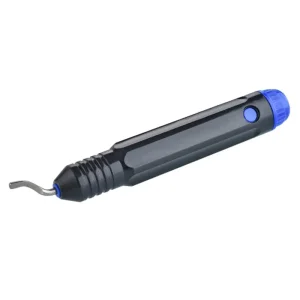
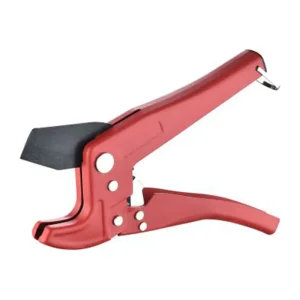
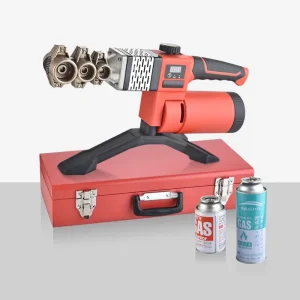
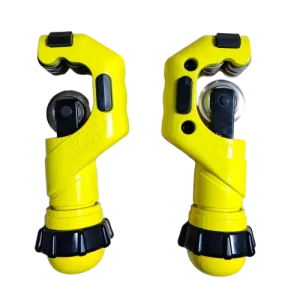
Explore related high-precision deburring, cutting, and welding solutions manufactured under strict ISO 9001 guidelines.