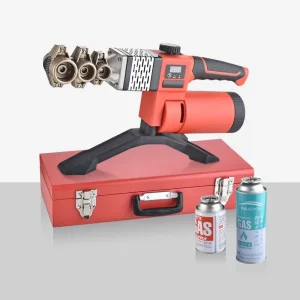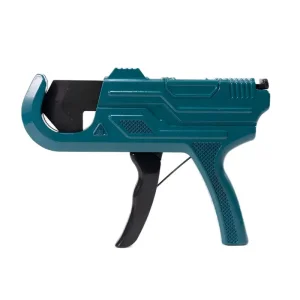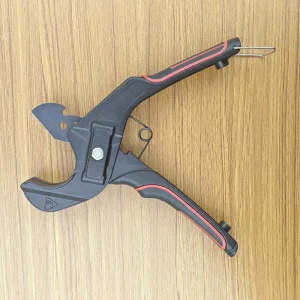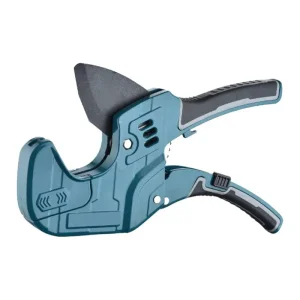
Featured Precision Ratchet Cutters & Plumbing Tools (Top Selection)
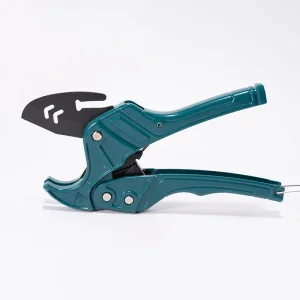
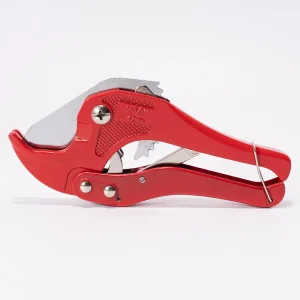
Explore our top-tier industrial ratchet cutters, engineered with high-carbon SK5 steel blades, ergonomic aluminum die-cast handles, and high-gear ratio leverage mechanisms designed for heavy-duty plastic and composite pipe cutting.
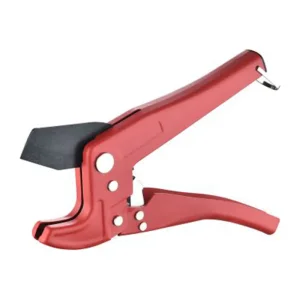
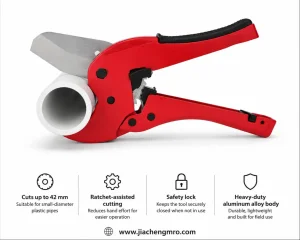
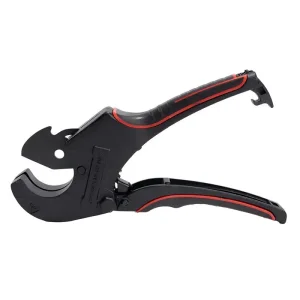
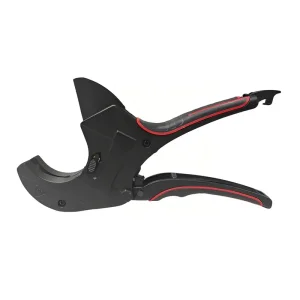
1. Executive Market Intelligence: Sourcing PVC Pipe Ratchet Cutters from China
In the rapidly evolving global construction, plumbing, and municipal infrastructure sectors, selecting a high-tier China PVC pipe ratchet cutter supplier & factory has evolved from a simple cost-reduction strategy into a strategic operational advantage. Modern piping materials—ranging from traditional Polyvinyl Chloride (PVC) and Chlorinated Polyvinyl Chloride (CPVC) to cross-linked Polyethylene (PEX), Polypropylene Random Copolymer (PPR), and High-Density Polyethylene (HDPE)—require specialized cutting tool geometry. A substandard cut creates microscopic radial cracks, burrs, and ovalization that compromise solvent welding or socket fusion integrity, ultimately leading to catastrophic pressure testing failures on job sites.
China’s hardware manufacturing ecosystem, anchored in key industrial hubs such as Yuyao, Ningbo, and Yongkang (Zhejiang Province), controls over 70% of the world’s hand tool production volume. However, international B2B buyers—including OEM brand owners, hardware wholesale distributors, commercial plumbing contractors, and MRO procurement managers—face a fragmented supplier landscape. Differentiating between low-tier assembly shops utilizing recycled zinc alloys and Tier-1 precision factories equipped with automated CNC grinding lines, vacuum heat treatment, and robotized assembly is vital for maintaining brand reputation and minimizing warranty claim liabilities.
Mechanical Efficiency
Multi-stage ratchet gear mechanics reduce hand actuation force by up to 60%, preventing operator fatigue during repetitive high-diameter (42mm–63mm) cutting cycles.
Joint Integrity Protection
V-shaped and curved blade wedge profiles prevent pipe wall collapse or deformation, ensuring a 90-degree square cut necessary for leak-free push-fit and solvent weld joints.
TCO Optimization
Direct OEM factory sourcing achieves up to 35-45% cost savings while providing customizable blade metallurgy, custom powder coatings, and blister packaging solutions.
2. Metallurgical Engineering & Mechanical Architecture of Industrial Cutters
The performance of a ratchet pipe cutter is primarily determined by two core engineering disciplines: Blade Metallurgy & Heat Treatment Precision and Mechanical Advantage Gear Geometry. Premier Chinese manufacturers leverage advanced carbon steel and alloy formulations to achieve an optimal balance between blade hardness (HRC rating) and impact toughness, preventing premature edge chipping when cutting brittle thin-wall PVC in cold environments.
A. Blade Material Comparison Matrix
| Steel Grade / Alloy | Hardness Range | Chemical Composition Key Elements | Primary Application Suitability | Wear Resistance & Longevity |
|---|---|---|---|---|
| SK5 High Carbon Steel | HRC 54 - 58 | C: 0.80-0.90%, Cr: 0.35%, Mn: 0.50% | Standard PVC, PPR, PEX, PE Pipes (≤ 42mm) | High sharpness retention; industry standard choice. |
| 8Cr13MoV Stainless Alloy | HRC 56 - 59 | C: 0.80%, Cr: 13.0%, Mo: 0.15%, V: 0.10% | Wet environments, chemical lines, professional HVAC | Superior corrosion resistance; zero rust under humidity. |
| 5Cr13MoV Martensitic | HRC 52 - 55 | C: 0.50%, Cr: 13.0%, Mo: 0.10% | Budget DIY retail lines, light plumbing tools | Moderate wear; cost-effective mass-market option. |
| SKS7 / Chrome Vanadium | HRC 58 - 61 | C: 1.05%, Cr: 0.40%, V: 0.20% | Heavy-Duty HDPE (> 50mm), thick-wall CPVC, ABS | Ultra-tough edge stability under extreme shear stress. |
B. Ratchet Mechanism Dynamics & Force Multiplication
The fundamental engineering goal of a ratchet cutter is to translate incremental hand compression force into linear shear force along the pipe surface. A professional ratchet drive utilizes a spring-loaded pawl system that engages with progressive gear teeth along the blade spine.
- Step-Down Gear Ratios: Professional cutters (e.g., PC-25 and Model 42922) feature a 5-step to 8-step progressive ratchet mechanism. Each squeeze advances the blade 3-5mm into the pipe wall while maintaining the maximum mechanical leverage angle.
- Pointed vs. V-Shaped Edge Profiles: Standard straight blades squeeze round pipes into an elliptical shape before cutting begins, causing cracking in aged or low-temperature PVC. Advanced China factory designs utilize a compound V-shaped geometry that penetrates the outer pipe wall immediately, stabilizing the tube and ensuring a perpendicular, zero-burr slice.
- Blade Surface Coatings: High-end OEM suppliers apply Teflon (PTFE) or Electroless Nickel Plating to the blade surface. PTFE coatings drop friction coefficients below 0.1, preventing soft plastic (like PEX or PE) from binding against the blade flanks during deep penetrations.
3. Strategic Supply Chain Ecosystem: Why Source from Zhejiang Factories?
Global hardware buyers repeatedly choose Chinese manufacturing clusters due to unmatchable supply chain integration. In regions like Yuyao (Zhejiang Province), the entire tool production ecosystem is localized within a 30-kilometer radius:
Aluminum Die-Casting
High-tonnage cold-chamber die-casting machines form lightweight ADC12 aluminum handles with structural rib reinforcement, offering high tensile strength without adding excess tool weight.
Automated CNC Grinding
Multi-axis robotic CNC edge-grinding ensures consistent primary and secondary bevel angles (±0.5 degrees), delivering razor-sharp consistency across thousands of production units.
In-House QA & Testing
Factories conduct optical shadowgraph inspections, Rockwell hardness testing, and automated pneumatic cut-cycle testing to guarantee less than 0.5% field defect rates.
4. Field Application Scenarios & Global Localized Sourcing Contexts
Different geographic markets present distinct plumbing regulations, piping materials, and jobsite climate challenges. Leading Chinese suppliers provide tailored product variations to match these regional operational environments:
- North American Market (ANSI/ASTM Standards): High demand for 42mm (1-5/8" OD) and 63mm (2-3/8" OD) cutters capable of handling Schedule 40 and Schedule 80 PVC, CPVC conduit, and ABS drain-waste-vent (DWV) pipes. Requires ergonomic rubberized dipping handles for cold-weather utility work in Northern US/Canada.
- European Market (DIN/EN Pipe Specifications): Strict focus on PPR, PEX, and Multilayer (PEX-AL-PEX) pipes (16mm to 32mm PN20). Demands zero deformation to preserve press-fitting O-ring seal seats, combined with REACH and RoHS compliant non-toxic handle grips.
- Middle East & Tropical Regions (High Temperature Utility): Focus on thick-walled PPR hot-water piping systems. Cutting tools require UV-resistant powder coat finishes and heat-treated pivot pins that resist thermal expansion binding under 45°C+ ambient site temperatures.
- Narrow-Space Municipal & Residential Retrofit: Compact ratchet cutters (e.g., China 42mm Compact Ratchet models) feature a tight swing radius, allowing plumbers to operate within joists, behind drywall, or inside tight trenching without requiring full 180-degree handle extensions.
5. Global Compliance, Quality Standards & Certification Benchmarks
When importing plumbing hand tools into North America, Europe, or Australia, regulatory compliance is non-negotiable. Qualified Chinese manufacturing partners adhere to international standards and hold valid third-party accreditations:
ISO 9001:2015 QA Systems
Factory-wide quality management protocols covering raw material incoming inspection (IQC), in-process production checks (IPQC), and final pre-shipment sampling (FQC) per AQL 1.5/4.0 standards.
ASME B107.8 & DIN EN ISO
Compliance with international hand tool performance standards for handle load deflection, ratchet gear shear strength, and edge blade retention under maximum load conditions.
SGS / CE Compliance
Comprehensive testing for chemical safety in rubber grips (PAHs, Phthalates) and heavy metal compliance in surface treatments, essential for European DIY retail channels.
6. Strategic B2B Vendor Evaluation & Factory Audit Checklist
Prior to issuing a Purchase Order (PO) to a China PVC pipe cutter manufacturer, procurement teams should evaluate potential partners across key technical and operational parameters:
| Audit Dimension | Evaluation Criteria | Red Flags to Avoid |
|---|---|---|
| Raw Material Traceability | Mill Test Certificates (MTC) for SK5 steel bars & ADC12 aluminum ingots. | Supplier unable to verify steel source; inconsistent batch hardness. |
| Tooling & Molding | In-house CNC mold-making capabilities for fast OEM customization. | Outsourced tooling leading to high NRE costs and long prototype lead times. |
| Quality Control Automation | Pneumatic endurance test rigs performing 10,000 continuous cut cycles. | Manual visual-only inspection without recorded torque/hardness metrics. |
| OEM Private Labeling | Laser-engraving logos, custom handle colors (Pantone matched), retail blister card packaging. | High minimum order quantities (MOQs) for simple packaging modifications (> 5,000 pcs). |
7. Future Trends in Plastic Pipe Cutting Technology (2026-2030)
The hand tool industry is undergoing rapid innovation driven by ergonomic research, advanced materials, and hybrid cutting mechanisms. Key developments shaping the future of plastic pipe cutters include:
- Ultra-Lightweight Alloy Bodies: Transitioning from standard aluminum alloys to high-strength Magnesium Alloys (AZ91D), reducing overall tool weight by 30% while retaining structural rigidity under high clamping torque.
- Quick-Release Blade Systems: Tool-free blade exchange mechanisms that allow contractors to swap worn SK5 blades in under 10 seconds directly on the job site without disassembling the main pivot bolt assembly.
- Integrated Multifunctionality: Next-generation ratchet cutters incorporating integrated outer chamfering blades and pipe calibration pins in the handle base, eliminating the need to carry separate deburring tools.
8. Comprehensive Procurement & Engineering FAQ (Q&A)
Q1: What is the primary difference between a scissor-type pipe cutter and a ratchet-type pipe cutter?
Scissor-type cutters rely on direct single-squeeze force, limiting their effective cutting capacity to thin-wall pipes under 32mm (1-1/4"). Ratchet-type cutters utilize a multi-step gear mechanism that compounds hand pressure, allowing a single operator to cut heavy-wall Schedule 80 PVC, PPR, and HDPE pipes up to 63mm or 75mm with minimal physical effort and zero pipe distortion.
Q2: How do Chinese factories prevent plastic pipe cracking when cutting in sub-zero winter temperatures?
Cold weather renders plastics like PVC brittle. Premium Chinese suppliers solve this by optimizing blade geometry: using an ultra-thin 15-degree primary bevel combined with a acute V-point tip profile that pierces the wall cleanly rather than crushing it. Additionally, utilizing heat-treated SK5 steel hardened to HRC 56-58 ensures the blade edge stays sharp enough to slice cleanly without creating stress-fracture points.
Q3: What are the standard lead times and MOQs for private label OEM ratchet cutter projects?
For standard factory models with custom laser logo engraving and color box packaging, typical Minimum Order Quantities (MOQs) range from 1,000 to 2,000 pieces per batch, with production lead times of 25 to 35 days. For custom tool development requiring new aluminum die-casting molds, prototype approval takes 30 days, followed by 35 days for mass production.
Q4: Why is deburring necessary after cutting PVC or PPR pipes with a ratchet cutter?
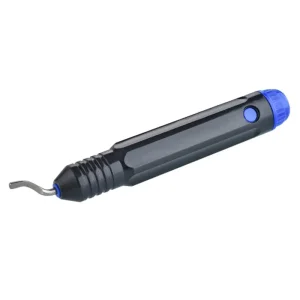
Even the cleanest ratchet cut can leave a slight raised ridge or tiny burr on the inner and outer pipe margins. An outer chamfer allows smooth insertion into fitting sockets without pushing away solvent cement or damaging elastomeric rubber O-rings in press-fit systems. Using complementary deburring tools (e.g., Model DT-001) guarantees system pressure ratings remain intact.
Q5: Can ratchet plastic pipe cutters be used to cut metal or copper pipes?
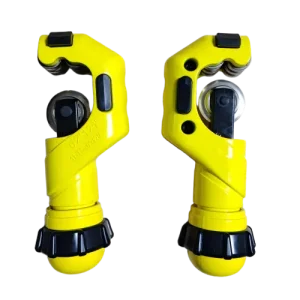
No. Squeezing a ratchet plastic pipe cutter onto metallic tubing (copper, brass, iron, or stainless steel) will immediately chip or destroy the sharp SK5 steel edge. Metal pipes require rotary wheel tube cutters (e.g., Heavy-Duty 1.25-inch Copper Tube Cutter) equipped with alloy steel cutting wheels designed specifically to shear metal under rotational force.
Q6: How do global buyers verify the quality of a China supplier before placing bulk orders?
Procurement professionals should request: 1) ISO 9001 audit documentation; 2) Pre-production samples for destructive load testing and blade hardness verification; 3) Video audits of automated testing equipment; and 4) Third-party inspection reports (e.g., SGS, TÜV, or Intertek) prior to container loading.
Complete Pipe Installation Tool System & Accessories (Bottom Selection)
Browse our extended product catalog featuring gas-powered PPR fusion welders, compact narrow-space cutters, precision PEX trimmers, adjustable large-diameter tools, and deburring systems manufactured in Yuyao, China.