Industrial Grade Pipe Cutters & Fusion Welding Systems
Engineered to ISO9001 and CE compliance standards, providing zero-leak joint reliability across municipal, commercial, and residential piping installations.
The Global PPR Piping Landscape: Engineering Shift Toward Socket Thermal Fusion
Polypropylene Random Copolymer (PPR / PP-R Type 3) has emerged as the premier piping material across global domestic hot and cold water distribution, HVAC hydronic heating, compressed air systems, and aggressive chemical processing facilities. Unlike traditional metallic piping systems—which suffer from electrochemical corrosion, scale build-up, and mechanical joint degradation over time—PPR systems rely on homogeneous molecular thermal fusion. When joined via precision socket fusion machinery, the pipe and fitting wall melt into a unified structural mass, effectively eliminating the mechanical joint interface entirely.
As infrastructure modernization accelerates across Europe, the Middle East, Southeast Asia, and Latin America, the operational performance of PPR installations hinges directly on the quality, thermal stability, and geometric precision of the welding machinery employed. Chinese manufacturing clusters—led by specialized tool builders in Yuyao, Zhejiang—have evolved from high-volume assembly lines into high-precision, research-driven engineering centers. Today, leading Chinese PPR pipe welding machine suppliers produce microprocessor-controlled, dual-element heating devices and portable cordless gas-powered fusion units that conform strictly to DIN 8077/8078 and ISO 15874 international standards.
Thermal Homogeneity
Socket fusion creates a seamless molecular bond between pipe outer diameter and fitting inner diameter, delivering burst pressures exceeding 100 bar at 20°C and guaranteeing a 50+ year design service life.
Corrosion & Scale Immunity
PPR materials resist chemical erosion across a pH spectrum from 1 to 14. Precision welding equipment prevents internal bead over-expansion, safeguarding full hydraulic flow capacity.
Off-Grid Versatility
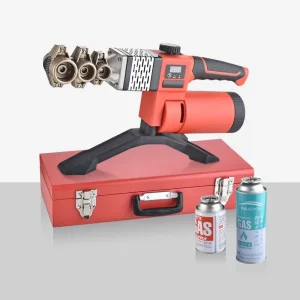
Modern jobsite demands require welding solutions independent of local utility power lines. Specialized gas-powered socket fusion machinery offers continuous 1.4KW thermal output for remote trenching.
Engineering Architecture of High-Performance PPR Welders
An analysis of thermal dynamics, die coating metallurgy, and electronic control circuits that separate industrial-grade tools from consumer products.
Microprocessor PID Temperature Control
Thermal fluctuation during socket insertion leads to structural defects: under-heating creates cold joint boundaries, while overheating causes polymer chain degradation and pipe inner diameter narrowing. Advanced Chinese suppliers utilize PID digital microprocessors that maintain heating plate temperature within a strict 260°C ± 5°C envelope regardless of ambient wind speed or cold pipe thermal mass absorptance.
Triple-Layer Japanese PTFE Coating Matrix
The heating sockets (matrices) must exhibit zero adhesion to molten polymer during the heating sequence. Premier manufacturers apply a triple-layer PTFE fluoropolymer matrix coating (D-series sockets). This non-stick layer withstands operating temperatures above 300°C continuously, prevents polymer residue carbonization on die surfaces, and guarantees smooth axial extraction without joint distortion.
Dual-Element Heating Subsystems
Industrial PPR fusion plates integrate dual independent electrical heating elements (e.g., 800W + 700W for a total 1500W rating). Dual switches permit quick thermal ramp-up from ambient cold start in under 5 minutes, allowing operators to deactivate one circuit once optimal thermal equilibrium is reached, saving power while preserving thermal stability during continuous high-frequency operations.
PPR Pipe Welding Machine Technology Matrix
Evaluating heating technologies across jobsite constraints, thermal efficiency, and capital investment requirements.
| Fusion System Category | Power Source / Input | Temperature Precision | Pipe Diameter Range | Ideal Jobsite Environment | Core Advantage |
|---|---|---|---|---|---|
| Digital Microprocessor Welder | 110V / 220V Electric Grid | ±2°C Digital LCD PID | 20mm – 160mm | High-rise residential, indoor plumbing, pre-fab shop | Extreme temperature accuracy & zero drift |
| Gas-Powered Fusion Machine | Liquefied Butane / Propane Gas | ±5°C Mechanical Regulator | 20mm – 32mm | Remote civil works, unpowered sites, emergency repair | 100% cordless, zero dependency on electric generators |
| Dual-Element Analog Welder | 220V Electric Grid | ±7°C Thermostatic Switch | 20mm – 63mm | General residential construction, utility rental fleets | Low maintenance, high reliability, economic cost |
| Heavy Hydraulic Butt Fusion Machine | 380V 3-Phase Electric System | ±3°C Electronic Sensor | 90mm – 315mm+ | Municipal water mains, industrial fluid trunk lines | Joins large wall thickness pipes without fittings |
Where Engineering Precision Meets Real-World Piping Infrastructure
Residential & Commercial Sanitary Plumbing
In high-density apartment complexes and commercial towers, concealed PPR hot water lines are embedded within concrete slabs. A single leaking fusion joint can cause massive structural water damage. Utilizing calibrated 20-32mm socket fusion welders with square-cut preparation ensures leak-free lifetime performance.
HVAC Hydronic Radiant Floor Heating
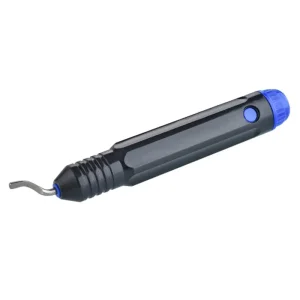
Hydronic heating networks utilize continuous circuits of PEX-AL-PEX or PPR pipe under high thermal cycles (up to 95°C). Multi-layer pipe cutters and precise 3-in-1 calibrators chamfer the inner foil layer cleanly, enabling perfect socket fusion transitions to manifold distribution headers.
Off-Grid Agricultural & Remote Repair
Infrastructure repairs in rural agriculture or underground mining often lack stable grid power. Bringing heavy diesel generators into muddy trenches is unsafe and inefficient. Lightweight 1.4KW gas-powered fusion welders provide instant operation for field engineers without requiring electrical lines.
Technology Roadmap & Future Outlook (2026–2030)
How next-generation smart diagnostics, advanced materials science, and automation are reshaping thermal pipe welding.
IoT Data-Logging Welders
Integration of Bluetooth modules and internal storage into digital fusion plates. Automatically logs operator ID, ambient temperature, melt time, and heating curve for third-party engineering audit compliance.
Nano-Composite PTFE Dies
Next-gen matrix die coating infused with ceramic nanoparticles, increasing abrasion resistance against glass-reinforced PPR pipes by 300% and extending die head life beyond 10,000 fusion cycles.
Laser Pipe Alignment & Depth Markers
Welding machines equipped with cross-line micro-laser guides that project exact insertion depths directly onto pipe walls, preventing operator over-insertion failures during rapid install sequences.
Smart Induction Thermal Fusion
Transition from resistive wire heating to high-frequency electromagnetic induction plates, reducing warm-up time from 5 minutes down to 45 seconds while cutting electrical consumption by 40%.
Turnkey OEM/ODM Manufacturing Capabilities for Global Brands
Empowering multinational tool brands, plumbing wholesalers, and private-label distributors with end-to-end manufacturing precision.
Custom Ergonomics & Industrial Design
Custom mold development for handle grips, dual-color injection molding, custom metal carry cases, and customized brand color palettes (RAL / Pantone matching).
Export Compliance & Certification
Full support for market authorization, including CE EMC/LVD reports, SGS laboratory testing, RoHS chemical safety compliance, and ISO9001 factory audit documentation.
Containerized Logistic Packaging
High-density corrugated retail gift boxes, blow-molded heavy-duty plastic toolcases, barcoded master shipping cartons, and drop-test verified palletization.
Frequently Asked Questions (Procurement & Engineering)
Expert answers addressing critical questions regarding PPR fusion technology, equipment selection, maintenance, and factory sourcing.
What is the standard heating temperature for PPR socket fusion welding?
The internationally recognized target fusion temperature for PPR (Polypropylene Random Copolymer) piping systems is 260°C (500°F), with an allowable tolerance of ±5°C. At temperatures below 255°C, the polymer does not reach sufficient melt viscosity, resulting in incomplete molecular interdiffusion (cold joints). At temperatures above 270°C, the PPR material undergoes thermal degradation, weakening the structural integrity of the joint and causing internal bore constriction.
How do gas-powered PPR welders compare to standard electric models?
Gas-powered PPR welders use catalytic gas combustion (butane/propane) to heat the matrix plate directly without requiring electrical input. They deliver up to 1.4KW equivalent heat output, reaching operational temperatures within 3 minutes. While digital electric welders offer precise LCD temperature control for indoor high-rise work, gas-powered welders provide complete mobility for remote trenching, utility repairs, and unpowered construction sites where electrical lines or generators are unavailable.
Why is clean pipe cutting essential prior to PPR fusion welding?
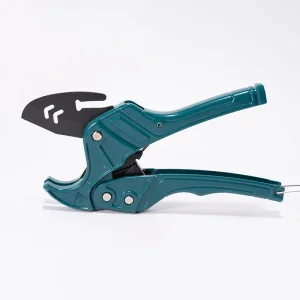
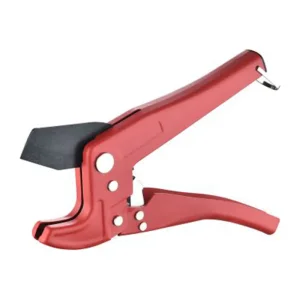
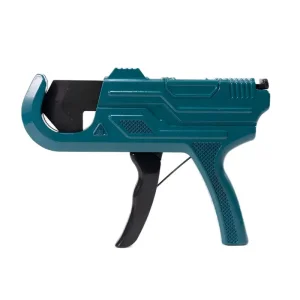
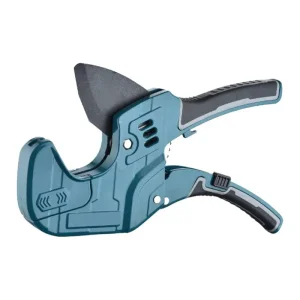
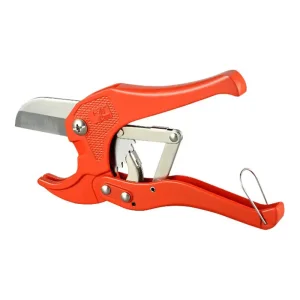
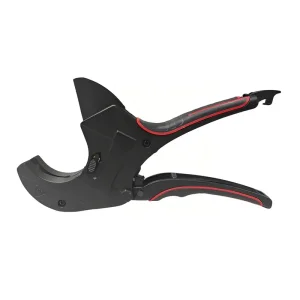
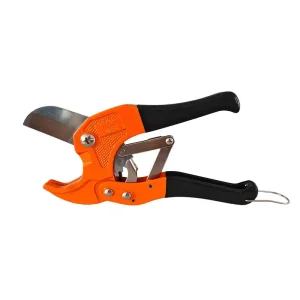
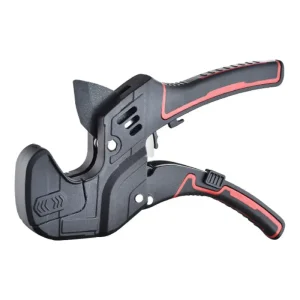
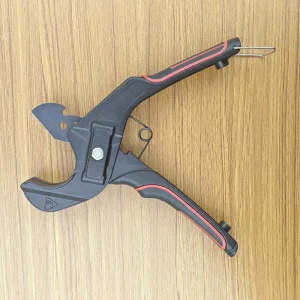
An uneven or angled cut alters the insertion depth along the circumference of the socket fitting. This creates localized under-heating gaps or plastic stress concentrations, leading to pinhole leaks under hydro-testing. Using dedicated ratchet plastic pipe cutters (like the 42mm or 63mm ratchet series with SK5 high-carbon steel blades) ensures a clean 90-degree perpendicular square cut with zero burrs, preserving fitting geometry and socket depth alignment.
What maintenance is required for PTFE Teflon-coated heating sockets?
Socket matrices should be cleaned while warm immediately after every welding cycle using a clean, lint-free cotton cloth. Never use abrasive metal wire brushes, sandpaper, or sharp metal scrapers, as scratching the PTFE Teflon surface exposes raw aluminum, leading to molten plastic adhesion and degraded heat transfer. If the PTFE coating wears down or peels, the die socket must be replaced to maintain code-compliant fusion quality.
What OEM/ODM customization options are available for wholesale orders?
We provide full OEM/ODM brand manufacturing for global tool buyers. Customization options include custom handle colors, laser-engraved brand logos on heating plates, personalized silk-screened metal storage boxes, customized plug types (EU, US, UK, AU standards), and tailored socket matrix combinations (e.g., metric 20-63mm or inch-sized NPT sockets).
Explore Professional Plumbing Tools & Fusion Equipment
Factory-direct OEM solutions with tested reliability, ergonomic designs, and robust export packaging.