
Featured Plumbing & PPR Joining Tools
Direct factory solutions for thermal socket fusion, precision pipe preparation, calibration, and heavy-duty cutting operations.
Engineering Standards in Polypropylene Joint Machines
Why thermal joint integrity defines municipal, industrial, and residential fluid conveyance performance over a 50-year design lifecycle.
Zero-Leak Homogeneous Fusion
PPR (Polypropylene Random Copolymer) jointing relies on thermal socket fusion to turn separate pipes and fittings into a single monolithic structural material. Chinese manufacturing clusters in Yuyao leverage advanced heating matrix geometries to eliminate cold-joint boundaries and microscopic boundary defects.
Microprocessor PID Regulation
Modern PPR socket fusion equipment requires strict temperature stability at 260°C ± 5°C. Advanced Chinese factories integrate solid-state PID control chips that actively compensate for ambient wind conditions, voltage drops, and rapid thermal absorption during pipe insertion.
Severe Jobsite Adaptability
From gas-powered off-grid fusion welders (utilizing butane/propane mixtures) to high-duty dual-element electronic units, China's manufacturer ecosystem provides specialized machinery optimized for remote infrastructure, tight utility risers, and heavy industrial plant installations.
Information Gain Insight: The Physics of Thermal Polymer Interdiffusion
Unlike mechanical pressing or solvent welding, PPR jointing requires the polymer chains across the pipe interface and fitting socket to melt, disentangle, and re-crystallize across the joint interface. If the joint machine underheats below 250°C, interdiffusion is incomplete, causing joint shear failure under pressure spikes. If it overheats above 275°C, thermal degradation weakens the polypropylene molecular weight. Top-tier Chinese manufacturers solve this via dual-sensor micro-thermostats and Japanese Daikin PTFE socket coatings.
Future Innovations in PPR Fusion & Pipe Preparation Equipment
Emerging technology trends driving the transition from basic manual tools to smart, data-logged, high-efficiency joining systems.
1. Intelligent Micro-Controllers & Wireless Logging
The next decade of PPR joint machines will see mandatory integration of Bluetooth and RFID tracking into commercial fusion tools. Smart controllers automatically read barcode parameters on specialized fittings, adjust dwell times based on real-time ambient temperature sensors, and record temperature profiles to cloud compliance dashboards for municipal auditing.
2. Gas-Powered Off-Grid Autonomy
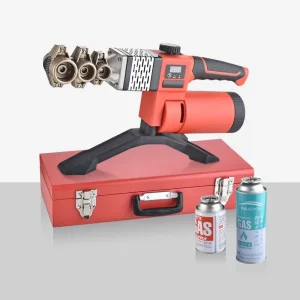
Electricity supply delays on rough construction sites remain a major cause of project bottlenecks. Gas-powered PPR fusion welders (such as the 1.4KW models pioneered by OEM leaders like Yuyao Jiacheng) bypass generator requirements entirely. Utilizing micro-combustion heat exchangers, these units achieve full thermal readiness in under 3 minutes with zero dependence on site power grid availability.
3. Multi-Layer PTFE Die Matrix Metallurgy
Socket sticking degrades joint quality and slows down installation crews. Next-generation Chinese OEM factories are upgrading from single-layer spray coatings to multi-stage electrostatically sintered Japanese PTFE matrices (30+ microns thick). This extends die socket lifespans beyond 3,000 thermal cycles while resisting abrasive site dust.
4. Ergonomic Blade Kinematics & Zero-Burr Geometry
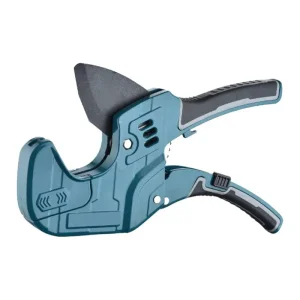
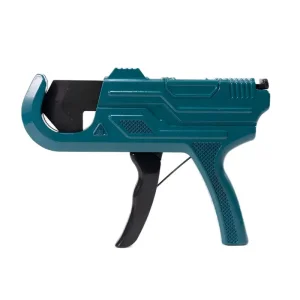
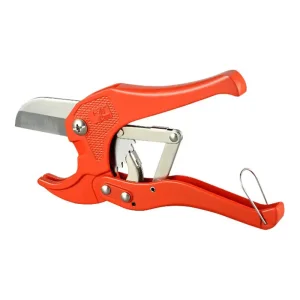
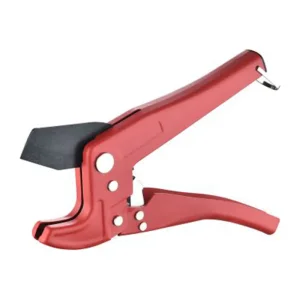
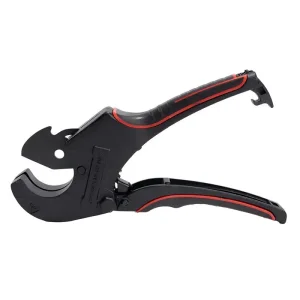
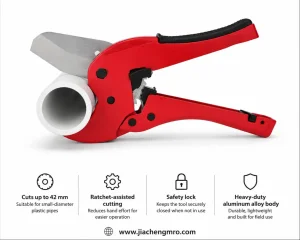
Pipe preparation directly impacts thermal fusion success. Advanced ratchet cutters utilize M2 High-Speed Steel (HSS) and SK5 high-carbon alloy blades crafted via CNC profile grinding. Coupled with multi-stage gear ratio mechanisms, installers require 40% less manual effort to achieve clean 90-degree square cuts without internal pipe wall collapse.
Comprehensive Infrastructure & Commercial Solutions
How specialized PPR joint machines and preparatory tools serve mission-critical global utility networks.
| Application Sector | Primary Pipe Materials | Tool & Machine Equipment Required | Critical Engineering Parameter |
|---|---|---|---|
| Municipal Potable Water Networks | PPR, PE-RT, HDPE (DN20 - DN110) | Digital Socket Fusion Welders, Heavy-Duty Ratchet Cutters | Homogeneous joint crystallization without internal lumen bead restriction. |
| Commercial HVAC Hydronics & Chillers | PEX-AL-PEX, Multilayer Composite | 3-in-1 Calibrators, Rotary Tube Cutters, Chamfer Tools | Precise core roundness restoration & internal O-ring seal protection. |
| Industrial Chemical Transport | PVDF, PP-H, Specialized PPR-Glass Fiber | High-Wattage PID Fusion Machines, Precision Deburring Tools | Strict thermal stability (±2°C) to prevent polymer degradation from chemical attack. |
| Off-Grid & Emergency Repair | PPR, PEX, PVC Pipe (20mm - 32mm) | Gas-Powered Cordless Welder, Compact Narrow-Space Cutters | Instant operation without electrical power generators or trailing cords. |
China Factory 4.0: Supply Chain Resilience & Precision
Inside the Yuyao hardware manufacturing cluster: Why global brands trust Zhejiang suppliers for scale, speed, and strict quality compliance.
Vertical Integration Advantage
In manufacturing centers like Yuyao, Zhejiang, factories operate complete in-house ecosystems—from die-casting aluminum handles and CNC machining steel blades to surface PTFE coating and electronic board assembly. This reduces procurement lead times by up to 35% compared to fragmented supply chains.
Sub-0.5% Defect Rate QA Protocols
Tier-1 Chinese factories enforce strict ISO9001 procedures. Every PPR welder undergoes full thermal cycling, high-voltage insulation breakdown testing, and continuous temperature logging before packing. Blade hardness is verified via Rockwell (HRC 54-58) testing on raw material batches.
Global Logistics Resilience
Proximity to Ningbo-Zhoushan Port (the world's largest container port by cargo tonnage) enables efficient container consolidation, rapid customs export declarations, and direct ocean freight access to major international trade hubs in Europe, North America, and Southeast Asia.
Evaluation Framework for Overseas Tool Buyers & Distributors
A systematic checklist used by professional procurement teams when auditing Chinese PPR tool suppliers.
1. Technical & Operational Capability Audit
- Thermal Heating Matrix: Is the aluminum heating plate cast with dual-pipe heating elements to eliminate cold corners?
- Socket Tolerances: Are socket dies machined within DVS 2208-1 tolerances to ensure exact interference fit during insertion?
- Blade Metallurgy: Does the factory utilize SK5 or M2 HSS steel with induction hardening on cutting edges?
- Tool Ergonomics: Are handles rubber-dipped or TPR-molded to prevent operator slippage in wet plumbing environments?
2. OEM/ODM Customization & Brand Integration
- Private Labeling: Laser etching on metal blades, custom color injection for plastic housings, and branded steel carrying cases.
- Packaging Solutions: Retail-ready blister cards, color display boxes, or heavy-duty blow-molded suits built for retail shelf appeal (Lowe's, Kingfisher standards).
- Modular Electrical Configurations: Custom voltage/frequency (110V/60Hz, 220V/50Hz) and plug standards (EU, US, UK, AU) for target regional markets.
- Compliance Bundling: Support with custom User Manuals, barcode integration, and batch traceability codes.
Regulatory Compliance & Global Standard Alignment
Ensuring seamless market entry and reducing liability through international certification benchmarks.
DVS 2207-11 Standard
German Welding Society guidelines dictate strict heating times, changeover intervals, and cooling durations based on pipe wall thickness (SDR ratings). Leading Chinese joint machines are calibrated to conform to these cycle specs.
CE & SGS Certifications
Electrical safety compliance under Low Voltage Directive (LVD 2014/35/EU) and Electromagnetic Compatibility (EMC 2014/30/EU). Gas-powered models require specialized SGS certification for transport and operator gas safety.
RoHS & REACH Compliance
Environmental regulations require tool handles, coatings, and internal electronics to be free from heavy metals, phthalates, and restricted chemical substances, ensuring safety for drinking water installers.
Frequently Asked Questions by Global Engineering Buyers
Direct answers from our engineering team on PPR joint machine selection, operation, maintenance, and factory sourcing.
What is the optimal operating temperature for PPR socket fusion jointing, and how do machines control it?
The standard welding temperature for Polypropylene Random Copolymer (PPR) is 260°C (500°F). Premium PPR joint machines utilize micro-controller PID circuits that sample heating plate temperature multiple times per second, maintaining thermal accuracy within ±5°C. Lower-quality mechanical thermostat machines can fluctuate by up to ±20°C, risking severe joint under-fusion or thermal resin scorching.
How does a gas-powered PPR fusion welder operate without grid power?
Gas-powered fusion welders utilize direct micro-combustion powered by standard butane/propane canisters. The flame heats a high-conductivity internal ceramic matrix, which transfers uniform heat to the PTFE-coated sockets. Temperature is regulated via an adjustable gas flow valve and integrated analog/digital temperature gauge, delivering 1.4KW heating capacity anywhere without portable generators.
Why is pipe calibration necessary before joining PEX-AL-PEX multilayer pipes?
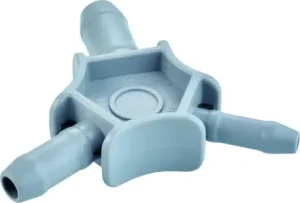
When multilayer pipes are cut, the shear pressure slightly ovalizes the pipe end and deforms the internal aluminum core. A 3-in-1 pipe calibrator re-rounds the tube diameter, chamfers the internal plastic layer to prevent damaging the fitting's rubber O-rings upon insertion, and deburrs sharp aluminum edges to ensure a leak-free 10-bar working pressure connection.
What blade material provides the best balance of edge retention and toughness for plastic pipe cutters?
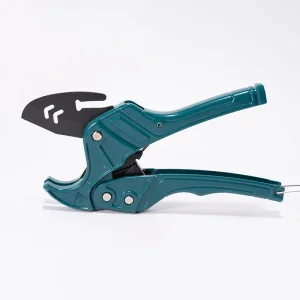
SK5 high-carbon alloy steel is the industry standard for general PVC/PPR cutting up to 42mm, offering excellent sharpness and low cost. For heavy-duty industrial applications (63mm to 75mm cutters), M2 High-Speed Steel (HSS) with Teflon or chrome plating is preferred. M2 HSS maintains its edge integrity through tens of thousands of cuts without chipping when slicing through thick SDR6 pipe walls.
How do cold environmental temperatures affect PPR joint welding cycle times?
In ambient conditions below 5°C (41°F), heat dissipation from the pipe and heating plate increases significantly. According to DVS 2207-11 guidelines, heating time must be increased by approximately 50% in cold weather environments, and the changeover time (the period between pulling components off the sockets and pushing them together) must be minimized to under 3 seconds to prevent surface skin cooling.
What is the standard OEM lead time and Minimum Order Quantity (MOQ) for custom tool branding in China?
For standard private-label branding (custom handle color, laser-etched logo, customized blister packaging), typical minimum order quantities start at 500 to 1,000 units per model. Factory production cycles generally run 25 to 35 days from sample approval. Direct manufacturers like Yuyao Jiacheng support rapid prototype tooling for custom ODM mechanical developments within 45 days.
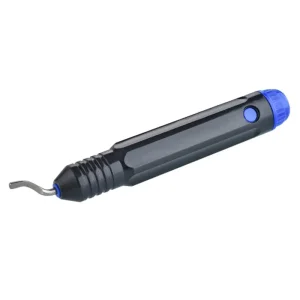
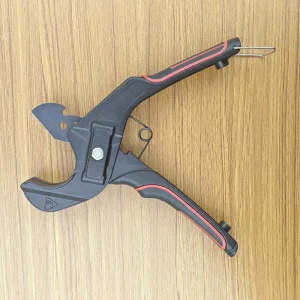
Precision Pipe Cutters, Deburring & Finishing Tools
High-durability accessories essential for preparing square, burr-free surfaces required for structural PPR and metal pipe joining.
Partner with China's Premier PPR Joint Tool Manufacturer
Whether expanding your distributor catalog, establishing OEM private labeling, or sourcing high-spec gas-powered PPR fusion welders for large-scale engineering contracts, our technical export team provides engineering drawings, pricing samples, and factory audit documentation within 24 hours.