
Industrial PPR Welding & Precision Pipe Preparation Systems
Engineered for absolute thermal stability, zero-leak joint fusion, and high-durability field performance across global plumbing infrastructure projects.
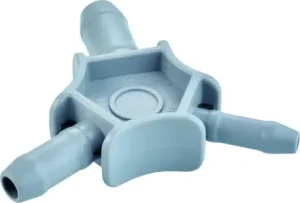
OEM China Suppliers 3-in-1 Pipe Calibrator for PEX-AL-PEX Systems - Factory Price, Precision Calibration Tool
View Details & Specs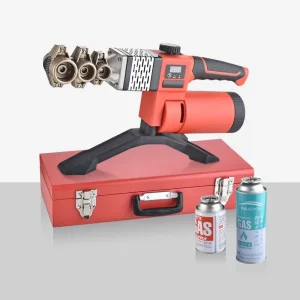
OEM 1.4KW Gas-Powered PPR Fusion Welder for 20-32mm Pipes - China Suppliers & Factory - Cordless Solution
View Details & Specs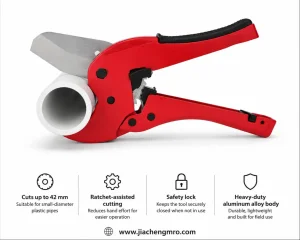
Wholesale Heavy-Duty Ratchet Pipe Cutter for Plastic Pipes - China Supplier & Factory for PP, PE, PVC, PPR
View Details & Specs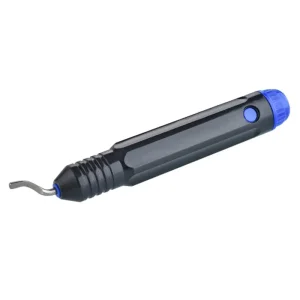
OEM M2 HSS Deburring Tool for Metal & Plastic Pipes - DT-001 from China Suppliers & Factory Supplier
View Details & Specs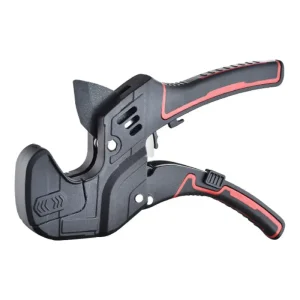
Wholesale Heavy-Duty Adjustable PVC Pipe Cutter from China Suppliers - Model JC-PC-22 for Professional Use
View Details & Specs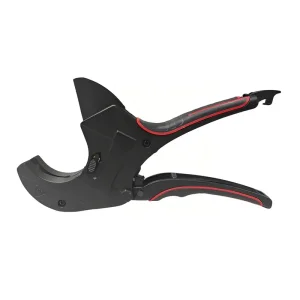
OEM China HDPE Pipe Cutter Suppliers - Professional 63mm One-Handed Tools from a Trusted Factory Supplier
View Details & Specs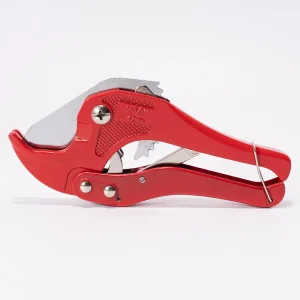
ODM Heavy-Duty 42mm Aluminum PVC Pipe Cutter from China Suppliers - Precision Factory Tool for Professionals
View Details & Specs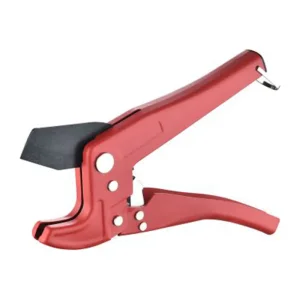
Wholesale 42mm Heavy-Duty Ratchet Plastic Pipe Cutter Model PC-25 - China Suppliers Factory Tool
View Details & SpecsEvolution of PPR Polyolefin Thermal Fusion Technology
Analyzing the material dynamics, thermodynamic heat transfer mechanisms, and engineering advancements defining modern socket fusion welding machines.
The global thermoplastic piping industry has undergone a radical paradigm shift over the past two decades. Polypropylene Random Copolymer (PPR Type 3) and Polypropylene Beta--Crystalline (PPR-RCT) have solidified their dominance as the primary materials for high-pressure hot and cold water distribution, HVAC hydronic heating, and aggressive industrial fluid conveyance. The operational integrity of these piping networks relies almost entirely on the homogeneous molecular bond created during the heat fusion welding process.
Thermal socket fusion welding operates on the principle of polymer interdiffusion. When PPR pipe ends and fitting sockets are heated to their specific crystalline melting point (typically 260°C ± 5°C), the semi-crystalline polymer chains detach from their ordered state. Upon insertion under controlled axial force, the molten polymer chains interlock, creating a single continuous polymer matrix upon cooling. Unlike mechanical press fittings or solvent welding, a properly executed thermal fusion joint exhibits zero seam boundary, rendering the joint as strong—or stronger—than the parent pipe itself.
Microprocessor PTC Heating
Modern PPR fusion welders utilize Positive Temperature Coefficient (PTC) heating matrix elements backed by PID microprocessor controllers. This eliminates thermal lag, maintaining continuous heating plate tolerance within ±2°C even during rapid high-frequency ambient field operations.
Multi-Layer PTFE Die Matrix
High-grade socket dies feature dual-layer Daishin / DuPont Teflon coatings (>40μm thickness). Premium non-stick properties prevent thermal polymer degradation, carbonization buildup, and wall shearing during pipe insertion and extraction phases.
Off-Grid Gas & Cordless Innovations
Addressing remote construction site challenges without stable AC mains, leading Chinese manufacturers have pioneered ultra-portable 1.4KW gas-powered PPR fusion devices alongside high-discharge Li-ion cordless battery fusion units.
Global Enterprise Procurement & OEM Factory Qualifications
Key performance metrics, compliance benchmarks, and supply chain standards demanded by tier-1 global tool distributors and engineering contractors.
Technical Specification Matrix: PPR Fusion Welder Sourcing
B2B procurement teams evaluating Chinese manufacturing partners must inspect precise mechanical and thermodynamic tolerances. The table below outlines international standard requirements (DVS 2207-11, DIN 16962) against OEM enterprise production benchmarks.
| Parameter Metric | Standard Industry Baseline | High-Spec Factory OEM Target | Impact on Field Operations |
|---|---|---|---|
| Temperature Precision | ± 10°C (Analog Bimetal) | ± 2°C (Microprocessor PID) | Prevents material degradation or weak cold-welds. |
| Heating Plate Coating | Single-layer Teflon (< 20μm) | Double-layer PTFE Matrix (> 40μm) | Ensures zero molten plastic sticking and extended die life. |
| Die Mold Concentricity | Tolerance ± 0.3mm | Tolerance ± 0.05mm (Precision CNC) | Guarantees uniform wall pressure and zero gap formation. |
| Cold Environment Heating Time | 12–15 Minutes to reach 260°C | < 5 Minutes High-Efficiency PTC | Drastically reduces labor downtime on cold job sites. |
| Insulation Resistance | > 5 MΩ | > 50 MΩ (Double Insulated) | Protects operator safety during wet site environments. |
Rigorous QA & Hydrostatic Burst Testing
To meet ISO9001 and CE standards, top-tier factories enforce 100% batch testing. Welded pipe joints undergo accelerated hydrostatic burst pressure testing (exceeding 60 bar at 20°C for 1 hour) and tensile shear pull testing to ensure fused joint homogenization before container dispatch.
Private Label OEM/ODM Engineering
Factory-level customization extends beyond mere branding logos. Global buyers access customized aluminum die-cast housings, bespoke metal carrying cases, ergonomic dual-dipped handle grips, and localized plug wiring (EU VDE, US NEMA, UK BS 1363, AU AS/NZS).
Macro-Level Industrial Solutions & Application Ecosystems
Deploying precision thermal fusion and pipe cutting systems across civil engineering, municipal infrastructure, and specialized industrial facilities.
Civil Residential & Commercial Plumbing
High-speed 20-32mm socket fusion welders coupled with ratchet cutters enable rapid, repeatable installation of domestic hot and cold potable water lines. Zero chemical additives ensure compliance with strict drinking water hygiene directives (NSF/ANSI 61, WRAS).
HVAC Hydronic & Radiant Heating Networks
Equipping installers with 3-in-1 pipe calibrators, deburring tools, and heavy-duty 42-63mm cutters guarantees burr-free, perfectly round ends on multi-layer PEX-AL-PEX and PERT-AL-PERT pipes, preventing inner O-ring shearing inside press fittings.
Industrial Chemical & Infrastructure Pipelines
Large-diameter HDPE and PPR pipe systems (up to 75mm and above) demand heavy-duty socket fusion units and guided rotational tube cutters to manage thick wall tolerances and ensure square cuts, maintaining structural performance under acidic or alkaline fluid flow.
Localization, Certification & Supply Chain Resilience
Overcoming tariff barriers, ensuring regional electrical compliance, and guaranteeing fast spare parts fulfillment for global distributors.
Navigating cross-border procurement requires a manufacturing partner with deep regulatory expertise and flexible supply chain infrastructure. China's leading plumbing tool hubs, notably located in Yuyao, Zhejiang, offer unmatchable industrial clustering advantages—from raw aluminum alloy die-casting to specialized Teflon coating facilities and automated packaging lines.
Regulatory Certification Coverage
Export-ready equipment must comply with destination market standards. High-tier Chinese manufacturers carry complete CE, SGS, RoHS, and EMC compliance certifications. Gas-powered fusion units carry specialized portable fuel container safety clearances, enabling seamless customs passage across EU, North American, LATAM, and Middle Eastern ports.
Localized Spare Parts & Technical Support
To safeguard distributor reputation, suppliers maintain replacement component kits—including PTC heating elements, digital temperature sensors, replacement Teflon socket pairs (20-110mm), and high-carbon alloy cutter blades (SK5 / M2 HSS)—backed by 24-hour technical response SLAs.
Technology Roadmap: The Next Generation of PPR Welding
Anticipating smart IoT integration, automated weld parameter recognition, and eco-efficient induction heating technologies.
IoT-Enabled Welding Data Logging
Next-gen fusion machines feature onboard Bluetooth / Wi-Fi modules that record fusion temperature profiles, heating duration, and ambient humidity. Field operators upload weld logs directly to cloud QA dashboards for municipal audit compliance.
RFID Automatic Pipe Recognition
Smart socket dies equipped with RFID scanners automatically detect pipe material (PPR, PPR-RCT, PE, PB) and wall thickness, auto-adjusting the PTC heating plate temperature and countdown timer to prevent operator error.
Rapid Electromagnetic Induction Heating
Transitioning from resistive heating coils to localized electromagnetic induction matrixes reduces pre-heating times from 5 minutes down to 45 seconds, reducing overall power consumption by up to 40% on battery units.
Specialized Cutting & Preparation Tools Range
Explore our full line of professional ratchet cutters, deburring systems, and precision calibration tools for all plastic and multi-layer pipe specifications.
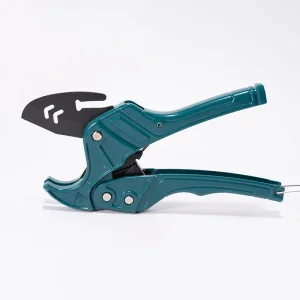
Wholesale 42mm Ratchet Plastic Pipe Cutter - Model 42922 | China Suppliers & Factory for PVC, PPR, PEX
View Details & Specs
Wholesale 42mm Ratchet Plastic PPR Pipe Cutter - Model 42922 by China Suppliers and Factory for PVC, PPR, PEX
View Details & Specs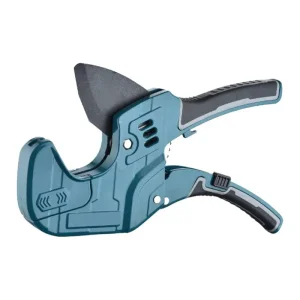
ODM Heavy-Duty Adjustable PVC Pipe Cutter 63mm - China Suppliers Factory Model JC-PC-22 for Large Plastic Pipes
View Details & Specs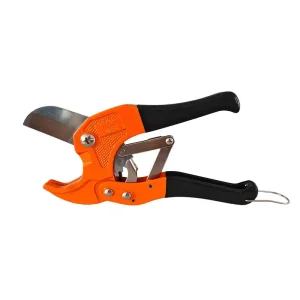
OEM Professional 42mm PVC Pipe Cutter with Anti-Slip Dipping Handle - China Suppliers and Factory Quality Tool
View Details & Specs
ODM Heavy-Duty Adjustable PVC Pipe Cutter 63mm – High-Performance China Suppliers & Factory Model JC-PC-22
View Details & Specs
China Heavy-Duty Adjustable PVC Pipe Cutter for Professionals - China Suppliers and Factory Model JC-PC-22
View Details & Specs
ODM 42mm Heavy-Duty Ratchet Plastic Pipe Cutter PC-25 – Durable Tool for China Suppliers and Factory Projects
View Details & Specs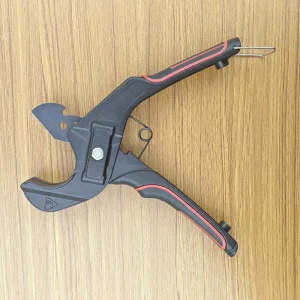
ODM China's Professional 36mm Precision PEX Pipe Cutter – Reliable Suppliers from a Leading Factory
View Details & SpecsFrequently Asked Commercial & Technical Questions
Direct answers to common OEM inquiry topics, quality assurance protocols, lead times, and factory customization options.
What heating technology is used to maintain accurate 260°C socket fusion?
Our industrial PPR welding machines utilize microprocessor-controlled PTC heating plates with built-in PID feedback loops. This technology continuously monitors temperature directly at the matrix plate, holding tolerances within ±2°C, preventing dangerous thermal spikes that degrade polymer bonds.
What standard certifications are available for international customs clearance?
All export equipment is produced under ISO9001 quality management procedures and carries CE, SGS, and RoHS certifications. Gas-powered models also comply with international portable pressurized vessel standards for safe global transport.
What are the typical OEM minimum order quantities (MOQ) and lead times?
Standard factory production orders carry a flexible MOQ starting at 500 units for customized logo/color configurations. Standard lead time is 20-30 days upon sample approval and artwork sign-off, with expedited batch options for established partners.
How does the gas-powered PPR fusion welder perform compared to electric models?
The 1.4KW gas-powered PPR welder matches the thermodynamic heating rate of standard AC electric units, reaching operational temperature in under 3 minutes without generator power or cords—making it ideal for remote trench work and utility retrofits.
Can the factory supply customized socket sizes and blade materials?
Yes. We supply socket die sets spanning 20mm up to 160mm with specialized dual-layer Teflon coatings. Pipe cutter blades can be tailored using high-carbon SK5 steel, Manganese steel, or M2 High-Speed Steel (HSS) depending on target price positioning.
What quality control measures prevent field return issues?
Our factory maintains a documented defect rate under 0.5% through 100% electrical insulation testing, 24-hour continuous burn-in temperature testing on heating elements, and automated dimensional laser checks on all cutter blade edges.