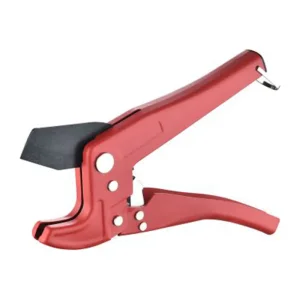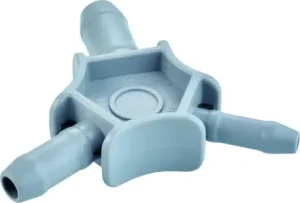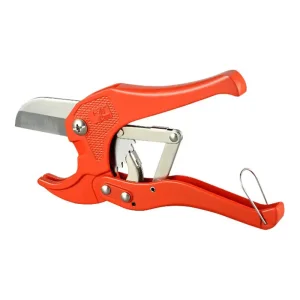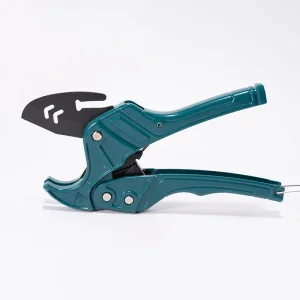
Featured Industrial Pipe Cutters & Fusion Equipment
Engineered for high-volume contractor use, zero-burr pipe preparation, and long-term durability under harsh jobsite conditions.
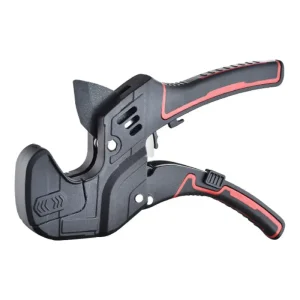
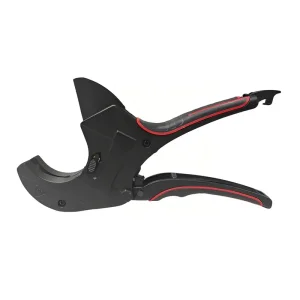
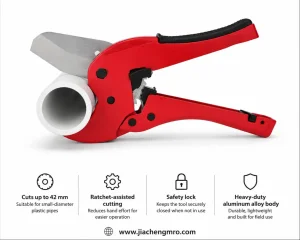
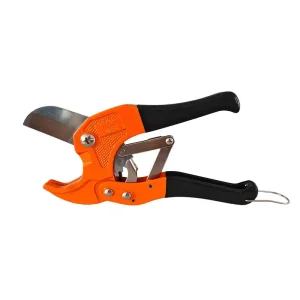
Macro Industry Solutions: Modernizing Fluid Handling Systems
Analyzing global shifts from rigid metallic piping to advanced thermopolymer networks (PPR, PEX, HDPE) and the imperative for high-precision cutting technology.
Zero-Deformation Shear Mechanics
Polypropylene Random Copolymer (PPR) requires clean, perpendicular cuts to maintain structural integrity during socket fusion. Traditional saws cause plastic micro-fracturing and ragged edges, leading to premature joint failures. Precision ratchet cutters eliminate deformation by distributing cutting torque uniformly around the pipe wall circumference.
Multilayer Pipe Compatibility
Modern HVAC and radiant heating projects rely on aluminum-composite PEX-AL-PEX and PPR-AL-PPR piping. Achieving a leak-free press fitting demands an exact square cut without delaminating the internal aluminum core. China’s leading factories now utilize V-wedge blade profiles engineered specifically to slice metallic and polymer layers simultaneously without burrs.
Labor Productivity Optimization
On large commercial jobsites, mechanical leverage ratios directly impact installer fatigue and job speed. Advanced ratchet gear drive systems multiply hand pressure up to 12-to-1, reducing manual effort by over 45% compared to standard single-stroke shears, resulting in faster turnarounds and reduced contractor labor costs.
China PPR Cutter Technology Roadmap & Material Science
Understanding the transition from carbon tool steels to advanced HSS alloys, vacuum heat treatment, and anti-friction blade coatings.
SK5 High-Carbon Steel vs. M2 HSS
Standard PPR cutters utilize SK5 high-carbon steel, offering excellent initial sharpness and cost efficiency for residential plumbing. For heavy-duty industrial applications involving glass-fiber reinforced PPR (PPR-GF) or thick-walled HDPE, Tier-1 Chinese manufacturers utilize M2 High-Speed Steel (HSS), maintaining edge retention even under abrasive cutting friction.
PTFE & Titanium Nitride (TiN) Coatings
Friction between the cutter blade flanks and the plastic pipe wall can lead to binding or uneven cuts. Modern Chinese factories implement electro-plated PTFE (Teflon) or PVD Titanium Nitride coatings. These surface treatments lower the friction coefficient to under 0.1, preventing polymer adhesion and ensuring smooth, effortless slicing through SDR6 to SDR11 pipes.
Progressive Gear Tooth Geometry
The ratchet mechanical advantage depends on precise gear pitch design. Modern multi-stage progressive ratchets feature fine-tooth step-down gear drives that balance rapid initial blade advancement with maximum force multiplication at the critical pipe wall penetration phase, preventing sudden pipe crushing in cold environment installations.
China Factory 4.0: Supply Chain Resilience & Manufacturing Precision
How Eastern China’s specialized hardware manufacturing clusters deliver uncompromised quality control and scale efficiencies to international buyers.
Automated CNC Grinding
Computer-controlled 5-axis CNC grinding centers execute blade bevel edge profiling with tolerances within ±0.01mm, guaranteeing identical cutting geometry across million-unit production runs.
Vacuum Heat Treatment
Atmosphere-controlled vacuum quenching furnaces prevent blade decarburization, yielding uniform HRC hardness from blade tip to core, preventing brittleness chips or edge rolling under load.
Die-Cast Aluminum Bodies
High-pressure die-cast aluminum alloy bodies provide high strength-to-weight ratios. Ergonomic handles are finished with anti-slip PVC dipping or TPU overmolding for secure all-weather grip.
Strict Quality Gateways
100% optical projector blade measurement, full-cycle endurance testing on thick-wall PPR samples, and automated torque wrench force calibrations before final packaging.
Global Procurement Needs & Total Cost of Ownership (TCO)
A comprehensive framework for procurement managers, distributors, and brand owners evaluating Chinese hand tool suppliers.
OEM & ODM Private Label Capabilities
Leading Chinese factories provide custom branding options including laser-etched logos, pantone-matched handle dipping colors, customized blister or color box packaging, and tailor-made blade angles optimized for regional pipe standards (e.g., DIN 8077/8078 vs. ASTM F2389).
MOQ Flexibility & Tiered Pricing
Unlocking factory-direct economics requires balancing batch runs with inventory velocity. Standard catalog models often feature low MOQs (500–1,000 units), while fully customized tooling projects scale smoothly from prototype batches to multi-container shipments with structured volume discounts.
Supply Chain Transparency & Lead Times
Top-tier suppliers in Ningbo/Yuyao leverage local raw material supply chains (aluminum ingot smelters, steel mills, plastic molders within a 50km radius), cutting production lead times down to 25–35 days while buffering against global logistics shocks.
PPR Cutter Performance Matrix & Selection Criteria
Compare blade materials, mechanical drives, and pipe size capacities across popular industrial cutter configurations.
| Tool Model Category | Pipe Outer Dia. (OD) | Blade Metallurgy | Surface Coating | Drive Mechanism | Target Applications |
|---|---|---|---|---|---|
| Compact Single-Stroke Shears | 16mm – 32mm (1/2" - 1-1/4") | SK5 High Carbon Steel | Electrophoretic Black / Chrome | Direct Hand Squeeze | Quick residential maintenance, tight space PEX/PPR installations |
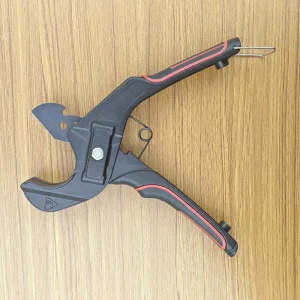
| Heavy-Duty Ratchet Cutters | 20mm – 42mm (1-5/8") | SK5 / High Alloy Tool Steel | PTFE Teflon Non-Stick | Multi-Gear Ratchet Drive | Commercial plumbing, thick-wall PPR SDR6, high-frequency contractor use |
| Large Diameter One-Handed Shears | 20mm – 63mm (2-1/2") | M2 High-Speed Steel (HSS) | Titanium Nitride (TiN) PVD | Heavy Lever Ratchet System | HDPE water supply mains, industrial PPR-GF municipal piping |
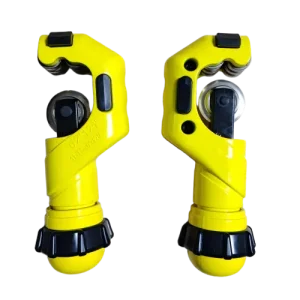
| Adjustable Rotary Pipe Cutters | 50mm – 110mm (4") | Cr12MoV Alloy Steel Wheel | Black Oxide Treated | Threaded Screw Feed Wheel | Large diameter drainage PVC, thin-wall & thick-wall plastic pipes |
| Multilayer PEX-AL Calibrator/Cutter | 16mm – 26mm 3-in-1 | HSS Cutting Edge / ABS Body | Polished Metal Finish | Rotary Chamfer Drive | Radiant floor heating manifolds, press fitting end preparation |
Localization Support & Compliance Assurance
Ensuring seamlessly aligned regulatory documentation for European, North American, and Asia-Pacific market entries.
ISO9001 Quality System Compliance
Reputable China suppliers maintain certified ISO9001 Quality Management Systems. Comprehensive audits verify full raw material batch traceability, calibrate measuring equipment regularly, and mandate standardized statistical process control (SPC) across machining centers.
CE, SGS & EU REACH Compliance
Hand tools destined for the European market require strict adherence to EU REACH standards regarding PAHs and Heavy Metals in rubberized handle grips. Gas-powered PPR fusion devices hold full SGS and CE electrical/gas safety certifications.
Ergonomic & Safety Testing
Drop-testing from 2-meter heights onto solid concrete guarantees handle frame impact resistance. Spring fatigue testing validates handle recoil springs over 20,000 continuous compression cycles, ensuring field reliability in cold temperatures.
PPR Hand Tool Technology Roadmap (2026–2030)
Anticipating next-generation advancements in smart hand tools, light-weight composites, and cordless fusion synergy.
Magnesium Alloy Die-Casting
Transitioning tool bodies from traditional aluminum to ultra-lightweight magnesium alloys, reducing overall cutter weight by 30% without compromising structural frame rigidity under heavy load.
Quick-Release Auto Blade Ejection
Tool-free blade replacement mechanisms enabling plumbers to switch worn blades on jobsites in under 10 seconds, eliminating manual screw disassembly and lost component risks.
Laser Guided Square Alignments
Integration of micro-solar powered alignment lasers into high-end cutter jaws to project a 360-degree cut ring, guaranteeing 100% perpendicular cuts on large diameter pipes.
Off-Grid Gas & Hybrid Socket Fusion
Advanced dual-source gas-electric socket fusion machines allowing uninterrupted welding in remote locations without portable generators or heavy battery packs.
Frequently Asked Questions by Global Importers & Contractors
In-depth engineering and purchasing answers addressing common inquiries regarding PPR cutter manufacturing in China.
What is the primary difference between PVC cutters and PPR pipe cutters?
While both tools cut plastic pipes, PPR (Polypropylene Random Copolymer) is significantly tougher and more ductile than brittle PVC. PPR pipe cutters require a sharper wedge angle (typically 18°–22°) and higher blade hardness (HRC 58+) to shear cleanly through thick SDR6 walls without deforming the pipe diameter. PVC cutters often use a wider blade profile that could crack cold PPR pipe during winter installations.
How do China PPR cutter factories ensure zero-burr cutting quality?
Top China factories achieve burr-free cuts by combining 5-axis CNC blade grinding, secondary electro-polishing, and tight tolerance control on the cutter body pivot pin (±0.02mm). This prevents blade wobble or side-play during the ratchet stroke, ensuring the upper blade lands squarely into the lower anvil groove every time.
Can Chinese hand tool suppliers provide custom OEM branding and color packaging?
Yes. Chinese OEM manufacturers routinely support private labels for leading global tool brands. Customization includes laser engraving brand logos on steel blades, custom powder coating or plastic dipping for handle colors, customized molded storage cases, and full retail-ready blister card or color box packaging artwork integration.
What is the standard production lead time and Minimum Order Quantity (MOQ)?
Standard catalog models usually carry an MOQ of 500 to 1,000 units with a production lead time of 20 to 30 days. For custom OEM projects involving specialized handle molds or unique alloy formulations, sample prototypes are delivered within 7 to 14 days, followed by full mass production in 35 days post-approval.
How does a gas-powered PPR fusion welder compare to conventional electric sockets?
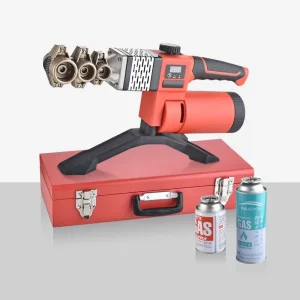
Gas-powered PPR fusion welders operate using liquefied petroleum gas (LPG) canisters, eliminating reliance on electric power grid access or heavy gasoline generators. They reach optimal socket fusion temperatures (260°C ± 5°C) within minutes, making them ideal for remote infrastructure projects, rural plumbing maintenance, and off-grid construction sites.
Complete Pipe Installation Tool Product Range
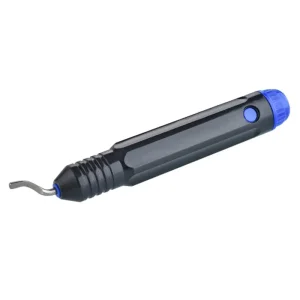
Explore our full catalog of ratchet plastic pipe cutters, deburring tools, calibrators, and socket fusion machines.