Precision Pipe Preparation & Fusion Systems
Direct factory supply featuring ISO9001 quality control, CE compliance, and anti-leak fusion reliability for international infrastructure projects.
1. The Technical Architecture of Poly Welding Machines in Modern Infrastructure
In contemporary civil engineering, industrial fluid handling, and municipal water logistics, poly welding machines (commonly encompassing Polyethylene [PE/HDPE], Polypropylene Random Copolymer [PPR], and Polyvinylidene Fluoride [PVDF] thermal fusion systems) represent the foundation of zero-leak, pressure-resistant fluid infrastructure. Thermoplastic joining relies on molecular interdiffusion across polymer interfaces under controlled thermal dynamics and interface pressures. China's manufacturing ecosystem has evolved into the world's leading hub for advanced poly welding equipment, delivering micro-processor-controlled socket fusion tools, portable off-grid gas-powered welders, and heavy-duty hydraulic butt-fusion equipment.
When selecting a qualified China Poly Welding Machine Manufacturer, engineering buyers must evaluate the machine's ability to maintain thermodynamic equilibrium during the fusion matrix cycle. Thermoplastic pipes do not rely on chemical adhesives or mechanical threads; instead, they undergo a phase transition where semicrystalline polymer chains untangle and recrystallize across the fusion zone. Achieving a homogeneous joint with joint factors ($f_j \ge 1.0$) requires precise thermal stability ($\pm 3^\circ\text{C}$ across socket faces), uniform radial heating, and standardized cooling protocols governed by international directives such as DVS 2207-1 and ISO 12176-1.
2. Technology Roadmap & Future Outlook (2025–2035)
How Chinese original equipment manufacturers are integrating smart electronics, off-grid power systems, and real-time telemetry into poly fusion equipment.
Smart PID & IoT Data Logging
Integration of closed-loop Microcontroller Units (MCU) with Digital PID temperature regulation guarantees instantaneous heat compensation when welding large-diameter PPR/HDPE pipes in cold ambient conditions. Smart loggers capture pressure profiles, heating durations, and ambient thermal curves for cloud audit compliance.
Off-Grid Gas Powered Innovation
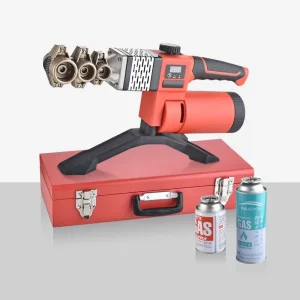
Pioneering gas-powered PPR fusion welders (such as 1.4KW portable butane/propane models) overcome site limitations where municipal AC power is absent. High-energy internal burners deliver rapid heating cycles (0–300°C in under 3 minutes), delivering unprecedented mobility for field utility repairs.
Nano-Composite Coating Die-Heads
Advanced PTFE ceramic matrix coatings applied via automated electrostatic spraying boost anti-stick performance across 5,000+ fusion cycles. This eliminates resin buildup, prevents smoke emissions, and maintains uniform socket wall wall profiles.
3. Macro Industry Solutions & Systemic Engineering Applications
Polyethylene and polypropylene piping systems are utilized across distinct macro-industrial landscapes, each presenting specific technical demands on poly fusion equipment and preparation tooling:
A. Municipal Water Supply & Wastewater Networks
Municipal infrastructure relies on High-Density Polyethylene (HDPE PE100-RC) for trenchless and open-cut pipeline networks. Chinese poly welding machine manufacturers provide automated butt-fusion machines and electrofusion control units capable of handling pipe diameters from 20mm up to 1200mm. Precise hydraulic pressure control prevents excessive bead formation, maintaining internal flow coefficients (Hazens-Williams $C=150$) and safeguarding public health against external chemical infiltration.
B. Commercial & Residential HVAC & Domestic Plumbing
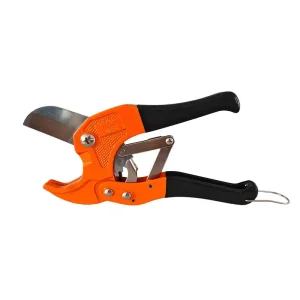
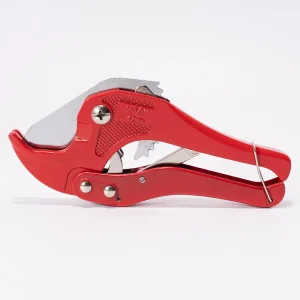
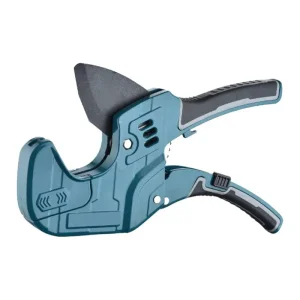
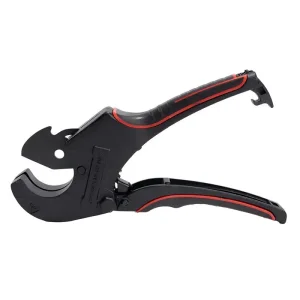
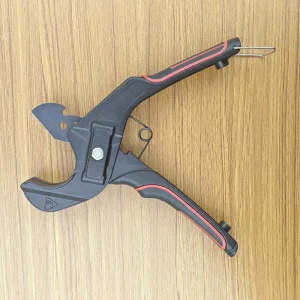
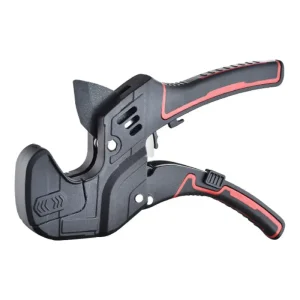
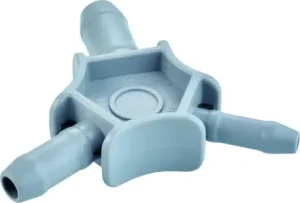
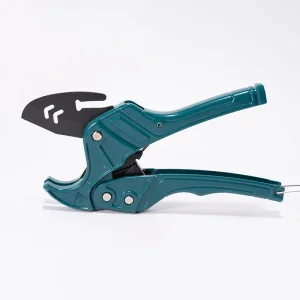
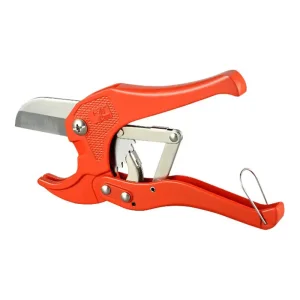
In hot and cold potable water networks built with PPR and PEX-AL-PEX multilayer pipes, failure frequently occurs at the connection fittings due to poor calibration or uneven heating. OEM suppliers integrate specialized 3-in-1 calibrators, precision ratchet cutters (such as 42mm models JC-PC-001 & 42922), and socket fusion welders to create leak-proof connections. Proper deburring and chamfering prevent rubber O-ring displacement in press-fit connections.
C. Industrial Chemical & High-Purity Process Piping
Chemical processing plants handling aggressive acids, alkalis, and deionized water utilize PVDF and PP-H piping systems. Poly welding machinery designed for these high-purity applications features non-contact IR (infrared) heating elements and automated alignment frames, ensuring zero metallic contamination and strict adhesion to cleanroom manufacturing protocols.
4. China Industry 4.0: Supply Chain Resilience & Manufacturing Efficiency
China's dominance as a premier exporter of poly welding machines and plumbing hand tools stems from concentrated manufacturing hubs, notably in Zhejiang province (e.g., Yuyao, Ningbo, Taizhou). These industrial clusters integrate raw material forging, precision CNC machining, heating element coil winding, surface treatment, and automated assembly within tight geographic radiuses.
Key structural advantages provided by leading Chinese poly welding tool manufacturers include:
- Vertical Machining Integration: Direct control over aluminum die-casting (using high-density ADC12/A380 alloys), CNC precision turning, and in-house SMT (Surface Mount Technology) assembly for electronic circuit boards ensures rapid engineering iterations.
- Rigorous ISO9001 Quality Inspection: Automated thermal imaging cameras inspect 100% of heating plates to verify heat uniformity across the die surface before final blow-mold case packaging.
- Defect Rate Mitigation (< 0.5% Target): Multi-stage testing—including 24-hour continuous burn-in tests for electrical elements and dynamic force testing for ratchet pipe cutters—guarantees field durability under harsh construction site environments.
- Raw Material Cost Optimization: Supply chain scale enables wholesale sourcing of high-grade M2 High-Speed Steel (HSS) for deburring blades and 65Mn/SK5 carbon steel for pipe cutter blades, delivering maximum durability at competitive price points.
5. Global Enterprise Procurement & OEM/ODM Sourcing Matrix
Essential evaluation criteria for international importers, hardware tool brands, and professional distributors establishing direct supply partnerships with Chinese factories.
Private Labeling & OEM Customization
Factory support for custom handle color dipping (anti-slip ergonomics), customized laser logo engraving on blade bodies, localized voltage configurations (110V US vs. 230V EU), and customized blow-molded carrying cases.
International Compliance Packaging
Carton drop testing (ISTA 1A standard), multilingual instruction manuals, barcode/GS1 integration, and plastic-free recyclable internal packaging aligned with European retail distribution requirements.
Logistics & Supply Security
Buffer inventory management for fast-moving models (e.g., 42mm ratchet cutters & 20-32mm PPR welders), FOB/CIF flexible shipping terms, and rapid export clearance from Ningbo/Shanghai ports.
6. Localized Support, Technical Compliance & Regulatory Safety
Exporting electrical machinery and precision hand tools requires adherence to target market technical standards. A leading Poly Welding Machine Supplier in China maintains full regulatory compliance, including:
- CE Mark Directives: Full conformity with Low Voltage Directive (LVD 2014/35/EU) and Electromagnetic Compatibility (EMC 2014/30/EU), certified by accredited third parties such as SGS and TÜV.
- Gas Safety Standards: For portable gas-powered PPR welders, compliance with international portable gas appliance safety standards prevents gas leakage, flashback, or irregular pressure regulation.
- RoHS & REACH Compliance: Non-toxic surface treatments and hazardous substance restrictions across all rubber handles, plastic housings, and metal platings.
- Comprehensive Warranty & Spare Parts Support: Provision of replacement heating elements, thermostats, Teflon sockets, and cutter replacement blades to maintain distributor network uptime.
Frequently Asked Questions (FAQ) for Engineering Procurement
Expert answers regarding technical parameters, factory sourcing, operation safety, and quality assurance.
What is the standard heating temperature for PPR socket fusion welding?
The standard temperature for PPR (Polypropylene Random Copolymer) socket fusion welding is 260°C ± 5°C (500°F). Heating the tool below 255°C results in insufficient polymer melt and cold joints, while exceeding 270°C degrades the polymer structure, creating excessive internal beads and potential pipe blockages.
How does a gas-powered PPR fusion welder compare to electric models in the field?
Gas-powered PPR fusion welders (such as 1.4KW models) operate using butane or propane cartridges, making them completely cordless and independent of jobsite electrical generators. They reach working temperatures in under 3 minutes and are ideal for emergency utility repairs, high-rise trenching, and rural off-grid plumbing where electrical power is unavailable.
Why is pipe calibration and deburring critical before thermal fusion or press fitting?
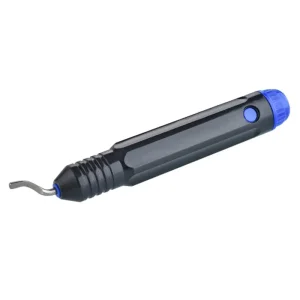
Cutting plastic or multilayer pipe (PEX-AL-PEX) often causes oval deformation and leaves sharp edge burrs. Using a 3-in-1 pipe calibrator restores roundness and adds an internal chamfer. This ensures uniform socket depth during fusion and prevents tearing of internal rubber O-rings in press-fit systems.
What blade materials are used in professional PVC/PPR pipe cutters?
Industrial pipe cutters use high-carbon steel blades (SK5 or 65Mn) or M2 High-Speed Steel (HSS). Precision heat treatment produces a hardness of HRC 54–58, allowing clean, deformation-free cuts through PVC, PPR, PE, and PEX pipes up to 75mm in diameter.
Can Chinese manufacturers customize voltage, plug types, and branding for OEM orders?
Yes. Qualified OEM/ODM manufacturers provide complete customization including 110V/120V (North America), 220V/240V (EU/UK/Australia), custom plug configurations, branded blow-mold cases, custom handle color dipping, and laser-etched branding on minimum order quantity (MOQ) terms.
What is the typical lifespan of Teflon-coated fusion socket die-heads?
High-grade PTFE (Teflon) coated socket dies typically endure 3,000 to 5,000 fusion cycles when operated properly. Lifespan is maximized by cleaning dies with a soft cotton cloth while warm and avoiding metal scrapers or abrasive tools that scratch the non-stick surface.
Heavy-Duty Machinery & Cutting Systems
Industrial-grade tools designed for plumbing contractors, municipal pipeline installers, and global hardware brand distributors.