
Direct Factory Catalog
High-Performance OEM/ODM Plumbing Tool Series
Industrial-grade plastic pipe cutters, cordless fusion welders, and deburring systems engineered for global distributors, OEM brands, and infrastructure contractors.
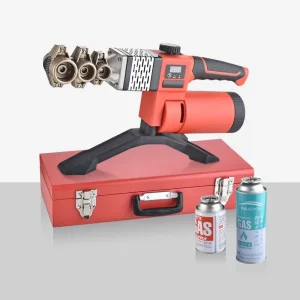
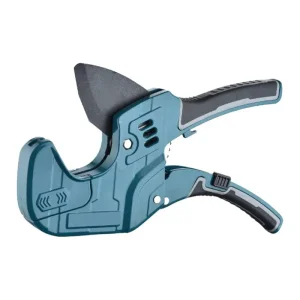
OEM 1.4KW Gas-Powered PPR Fusion Welder for 20-32mm Pipes - China Suppliers & Factory - Cordless Solution Manufacturer, Factories
View Specifications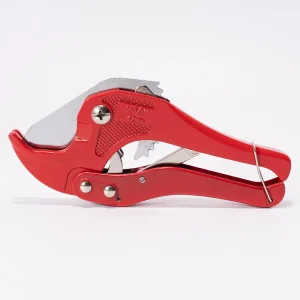
ODM Heavy-Duty 42mm Aluminum PVC Pipe Cutter from China Suppliers - Precision Factory Tool for Professionals Supplier, Factory
View Specifications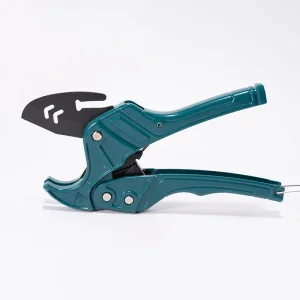
Wholesale 42mm Ratchet Plastic PPR Pipe Cutter - Model 42922 by China Suppliers and Factory for PVC, PPR, PEX Pipes Factories, Factory
View Specifications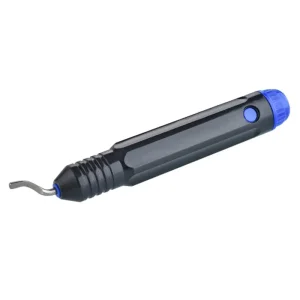
OEM M2 HSS Deburring Tool DT-001 for Metal & Plastic Pipes - China Factory Suppliers for Professional Finishing Suppliers, Factory
View Specifications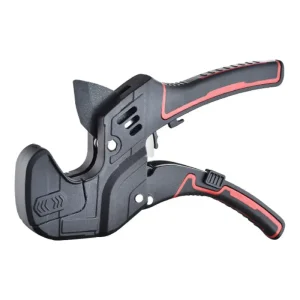
Wholesale Heavy-Duty Adjustable PVC Pipe Cutter from China Suppliers - Model JC-PC-22 for Professional Use Suppliers, Factory
View Specifications
ODM Heavy-Duty Adjustable PVC Pipe Cutter 63mm - China Suppliers Factory Model JC-PC-22 for Large Plastic Pipes Suppliers, Manufacturer
View Specifications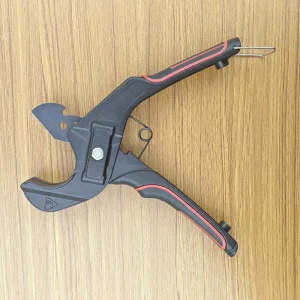
ODM China Suppliers: 36mm Precision PEX Pipe Cutter from Factory - Eliminate Installation Failures in Tight Spaces Supplier, Factories
View Specifications
Industry Intelligence Report
Macro Trends & Sourcing Dynamics in China's Plumbing Tool Sector
Analysis of material advancements, automation shifts, and global procurement strategies for B2B buyers in 2026 and beyond.
Shift to High-Yield Automated Clusters
China's plumbing tool manufacturing paradigm has rapidly transitioned from labor-intensive manual assembly to precision automated manufacturing. Centers like Yuyao and Ningbo now deploy multi-axis CNC machines and robotic blade grinding lines, achieving mechanical tolerance thresholds under ±0.03mm while significantly driving down defect rates.
Evolution of Modern Piping Polymers
The global rapid adoption of high-density polymers—including PPR-CT, PEX-a, PE-RT, PEX-AL-PEX multilayer, and HDPE 100—demands higher cutting geometry, refined thermal fusion profile stability, and zero-distortion blade mechanics to guarantee lifetime joint integrity without stress fractures.
Strict International Compliance Demands
International hardware distributors and retail chains demand rigorous certification compliance. Leading Chinese factories must support complete technical file documentation, including ISO9001:2015 quality control auditing, SGS product verification, CE electrical/gas safety conformity, and RoHS material safety clearance.
< 0.5%
Factory Defect Rate Standard
50+
Global OEM Export Markets
10,000+
Shear Cycle Endurance Rating
1.4 kW
Cordless Gas Fusion Capacity
Technical Deep-Dive
Metallurgy, Mechanical Design & Precision Engineering
Understanding the internal engineering fundamentals that differentiate industrial-grade plumbing tools from low-cost market alternatives.
1. Advanced Blade Metallurgy & Edge Retention
The performance of a plastic pipe cutter hinges directly on the material chemistry and thermal heat treatment of its cutting blade. Chinese OEM specialists primarily utilize three distinct steel grades depending on the intended duty cycle:
- SK5 High-Carbon Tool Steel: Quenched and tempered to 58-62 HRC. Offers exceptional edge sharpness and resistance to mechanical chipping during high-speed ratcheting on heavy-walled PVC and PPR pipes.
- Teflon (PTFE) Coated High-Carbon Alloy: Reduces frictional drag coefficient by over 40% during deep shear penetration, preventing soft plastic binding in warm ambient environments.
- M2 High-Speed Steel (HSS): Employed in rotary deburring blades (e.g., DT-001 series) to handle tough inner/outer pipe edges across both metallic (copper/aluminum) and polymer pipes without edge dulling.
Through controlled vacuum heat treatment and sub-zero cryogenic processing, top-tier factories eliminate residual austenite phases, guaranteeing structural stability and zero blade warping under extreme leverage forces.
2. Ratchet Pawl Geometry & Mechanical Advantage
Manual pipe cutting tools utilize progressive ratchet pawl mechanisms to convert hand clamping force into immense radial shearing pressure. Advanced ratchet cutters feature a multi-tooth gear drive designed to achieve an optimal leverage ratio of up to 1:15.
This mechanical reduction minimizes operator hand fatigue during repeated full-day installations, while the precision-machined progressive ratchet tooth profile prevents handle slippage and sudden blade recoil, ensuring smooth, controlled blade progression through schedule-80 pipe walls.
V-Shaped Shear Geometry Innovation
Traditional flat blades exert compressive stress that deforms thin-walled plastic pipes into oval profiles prior to cutting. Modern V-shaped blade contours concentrate shearing force at a sharp single point of entry, piercing the pipe wall cleanly and maintaining 99.8% roundness for immediate fitting alignment.
Technical Specification Matrix: Pipe Cutting & Joining Machinery
| Tool Category | Primary Material Standard | Supported Pipe Diameter | Target Piping Polymers | Key Performance Metric |
|---|---|---|---|---|
| Ratchet Plastic Cutters | Die-Cast Aluminum / SK5 Blade | 36mm – 42mm (1-5/8") | PVC, PPR, PEX, PE, CPVC | Zero-burr square cut, <3° deflection |
| Heavy-Duty Large Cutters | Reinforced Alloy / Adjustable Jaw | 50mm – 75mm (2-7/8") | HDPE 100, Schedule 80 PVC | Single-handed ratchet stroke balance |
| Gas-Powered Fusion Welders | 1.4KW Gas Cell / Teflon Socket | 20mm – 32mm (PN20/PN25) | PPR, PP-RCT, PE Socket Joint | Cordless off-grid thermal heating (~260°C) |
| Multi-Layer Calibrators | Hardened Zinc Alloy / M2 Blades | 16mm – 32mm (3-in-1 combo) | PEX-AL-PEX Multilayer Pipe | Restores concentricity & chamfers 15° |
| Rotary Deburring Tools | M2 HSS Blade / ABS Ergonomic Shell | Internal / External All Sizes | Copper, Brass, PVC, PEX | 360° smooth edge flash removal |
Procurement Framework
Enterprise Sourcing Strategy & Supply Chain Risk Mitigation
A strategic guide for global purchasing directors evaluating original equipment manufacturers (OEM) and custom design manufacturers (ODM) in China.
Total Cost of Ownership (TCO) vs. FOB Price
Focusing purely on unit FOB cost often exposes buyers to severe downstream liabilities, such as jobsite pipe joint failures, high retail returns, and brand reputation damage. Leading importers evaluate TCO by auditing raw material purity (e.g., primary aluminum alloy vs. recycled scrap castings), blade hardness consistency, and heat treatment certifications.
Custom OEM/ODM Branding Capabilities
Mature Chinese suppliers offer full-spectrum private labeling customization. This includes custom handle dip-coating colors, laser-engraved logos, custom ratchet torque limits, specialized blister packaging, and custom-molded high-density polyethylene (HDPE) blow-mold carrying cases built for professional jobsite transport.
Supply Chain Resiliency & Lead Times
Navigating global shipping fluctuations requires reliable factory production schedules. Strategic suppliers maintain robust safety stocks of raw steel billets and aluminum ingots, supported by automated inventory management to consistently guarantee a 25 to 35-day order-to-container turnaround for high-volume standard lines.
Sourcing Checklist for B2B Plumbing Tool Procurement
When issuing Requests for Quotation (RFQs) to Chinese plumbing tool manufacturers, qualified engineering teams should mandate verification of the following technical benchmarks:
✓ Material Traceability: Mill test certificates for blade steel (SK5/M2) verifying chemical composition (Carbon, Chromium, Vanadium ratios).
✓ Mechanical Endurance: Continuous automated shear test reports validating 10,000+ cuts on PN20 PPR pipes without blade dulling or frame fracture.
✓ Thermal Stability: For PPR socket fusion machines, verify PID electronic heat balance to maintain 260°C ± 2°C across socket surfaces.
✓ Quality Management: Factory audit compliance under ISO9001:2015 with documented statistical process control (SPC) for critical dimensions.
Global Compliance & Support
Macro Industry Solutions & Localization Support
Addressing real-world jobsite challenges with tailored engineering solutions for regional piping standards across North America, Europe, and emerging markets.
Off-Grid Thermal Fusion Solutions (Gas-Powered Technology)
In developing markets or unpowered remote construction sites, electrical infrastructure is often absent. Electric socket fusion welders require bulky generators that are difficult to transport into tight basements or high-rise shafts.
The innovation of 1.4KW Gas-Powered PPR Fusion Welders (e.g., Model 20-32mm) directly solves this field bottleneck. Operating on standard portable gas canisters, these tools reach thermal fusion temperatures within 3 minutes and deliver uninterrupted cordless operation, certified under SGS/CE safety standards for global commercial deployment.
Multilayer PEX-AL-PEX System Integrity Assurance
Press and compression fitting failures on multilayer PEX-AL-PEX pipes are overwhelmingly traced to improper pipe preparation—specifically ovalized pipe ends caused by dull cutters, or unchamfered sharp internal edges that slice internal rubber O-rings during fitting insertion.
Precision 3-in-1 Pipe Calibrators integrate heavy-duty zinc alloy rounding mandrels with M2 HSS chamfering blades. With a single manual twist, the tool restores internal pipe roundness while cutting a precise 15-degree lead-in bevel, guaranteeing a 100% leak-free seal under high hydrostatic test pressures.
Future Technology Outlook
Plumbing Tools Technical Roadmap (2026–2030)
Key technological shifts shaping the next generation of professional pipe cutting, jointing, and preparation machinery.
2026–2027
Ultra-Light Magnesium Alloys
Replacing traditional aluminum bodies with high-strength die-cast magnesium alloys to trim tool weight by 35% without sacrificing clamping yield strength.
2027–2028
Smart Thermal PID Welders
Integration of Bluetooth IoT modules and micro-PID controllers in PPR welders to log real-time fusion temperatures and cycle times for digital compliance reporting.
2028–2029
DLC (Diamond-Like Carbon) Blades
Nano-composite DLC blade coatings delivering micro-hardness exceeding 80 HRC, virtually eliminating wear during high-volume cuts on abrasive glass-fiber reinforced pipes.
2029–2030
Eco-Sustainable Manufacturing
100% closed-loop aluminum scrap recycling, bio-based tool handle grip polymers, and zero-plastic recyclable cardboard packaging systems.
Technical Support & FAQ
Frequently Asked Questions by Global Procurement Teams
Detailed engineering and supply chain insights to accelerate your supplier qualification process.
How do Chinese factories ensure blade alignment and prevent off-square cuts in large cutters?
High-end manufacturers maintain strict blade alignment by utilizing dual-pivot CNC machining for cutter bodies, ensuring the blade slot guide is precisely perpendicular to the base anvil within a ±0.05mm tolerance. Additionally, wide V-shaped base anvils hold the pipe securely, preventing axial twisting during ratchet stroke engagement.
What is the difference between SK5 steel and manganese steel in PVC pipe cutter blades?
SK5 high-carbon steel contains higher carbon content (0.80–0.90%), allowing it to achieve greater hardness (58-62 HRC) and retain a razor-sharp edge significantly longer than standard 65Mn manganese steel (50-54 HRC). While 65Mn is suitable for light-duty retail grade tools, professional industrial tools require SK5 steel to prevent edge rollover when cutting cold or thick-walled pipes.
How does a gas-powered PPR fusion welder control temperature stability without electrical thermostats?
Model 1.4KW Gas-Powered Welders feature an integrated micro-gas flow regulation valve and heat-pipe thermal distribution chamber. Flame heat is dissipated evenly across high-mass aluminum socket dies, utilizing thermal inertia to hold the heating surface steady at the standard 260°C socket fusion target without local overheating.
Why is pipe calibration mandatory for multilayer PEX-AL-PEX compression and press systems?
When cutting multilayer pipes, the internal aluminum layer often flexes inward, slightly flattening the circular profile. Inserting a fitting into an un-calibrated pipe can pinch or displace internal rubber O-rings, leading to microscopic leak paths under pressure. A 3-in-1 calibrator re-rounds the pipe wall and chamfers the interior edge for safe fitting insertion.
What are the standard OEM custom packaging options for international tool brands?
Standard OEM packaging options include double blister cards with sliding color cards, full-color printed display boxes, sealed hanging skin cards, and heavy-duty blow-molded carrying cases. Most factories offer full graphic artwork adaptation, barcode printing, and Master Carton compliance matching Amazon FBA or major retail distribution centers.
Featured Factory Lineup
High-Demand Plumbing Tools & Equipment Solutions
Explore our additional wholesale and ODM catalog offerings engineered for professional tool markets worldwide.
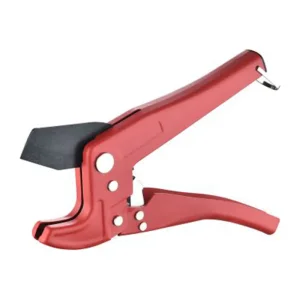
ODM 42mm Heavy-Duty Ratchet Plastic Pipe Cutter PC-25 – Durable Tool for China Suppliers and Factory Projects Suppliers, Manufacturer
View Specifications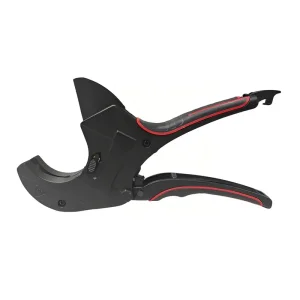
OEM China HDPE Pipe Cutter Suppliers - Professional 63mm One-Handed Tools from a Trusted Factory Supplier, Factories
View Specifications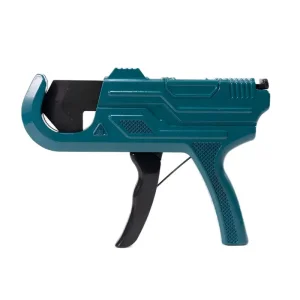
China 42mm Compact Ratchet Pipe Cutter for Narrow Spaces – Reliable Performance by China Suppliers and Factory Suppliers, Manufacturers
View Specifications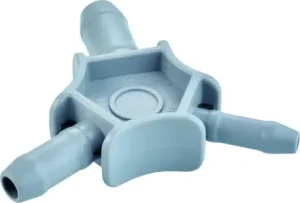
OEM China Suppliers 3-in-1 Pipe Calibrator for PEX-AL-PEX Systems - Factory Price, Precision Calibration Tool Factories, Factory
View Specifications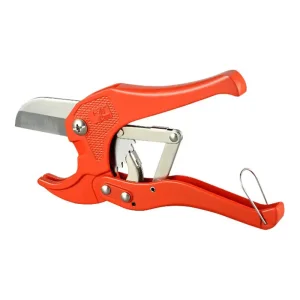
ODM 42mm Manual Plastic Pipe Cutter for PVC, PPR & PEX - China Suppliers, Durable Factory Model JC-PC-001 Manufacturers, Factories
View Specifications
Wholesale 42mm Heavy-Duty Ratchet Plastic Pipe Cutter Model PC-25 - China Suppliers Heavy-Duty Factory Tool for PPR, PVC, PE Pipes Manufacturer, Factory
View Specifications
Wholesale 42mm Ratchet Plastic PPR Pipe Cutter Model 42922 - Reliable China Suppliers & Factory for PVC, PPR, PEX Pipes Suppliers, Factory
View Specifications
ODM 1.4KW Gas Powered PPR Fusion Welder for 20-32mm Pipes - High-Quality China Suppliers & Factory Solution Supplier, Suppliers
View SpecificationsPartner with China's Premier Plumbing Tool Engineers
Looking to expand your brand's tool portfolio with ISO9001 and SGS/CE certified manufacturing? Request full factory audit documentation, technical drawings, and OEM sample kits today.
Request Technical Consultation & RFQ