Featured OEM Plumbing & Fusion Tool Series
Factory-Direct Precision Equipment Manufactured to ISO 9001 & CE Standards
The Global Evolution of Pipe Fusion Welding Equipment (2025–2030)
Analyzing the shift toward high-precision digital socket fusion, cordless gas-powered thermal jointing, and automated pipe preparation systems across civil and industrial infrastructure.
Material Transition & Polymer Dynamics
Global municipal water networks, radiant heating systems, and chemical processing facilities are aggressively replacing metallic piping with advanced polymers—primarily Polypropylene Random Copolymer (PPR), High-Density Polyethylene (HDPE), and PEX-AL-PEX multilayer matrices. This transition demands absolute precision in socket and butt fusion tooling to ensure homogenous molecular bonding and 50+ year zero-leak service lifespans.
Off-Grid Fusion Technology
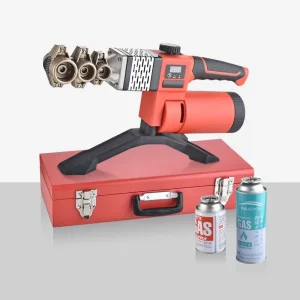
The jobsite requirement for untethered mobility has accelerated the adoption of gas-powered PPR socket fusion welders. Capable of generating rapid thermal cycles (up to 280°C) without reliance on diesel generators or bulky extension cords, off-grid thermostatic fusion tools solve critical bottlenecks in remote construction, high-rise trench work, and emergency utility repairs.
Precision Die & Metallurgical Advancement
Modern fusion heating sockets feature multi-layer PTFE (Teflon Grade 50) anti-stick coatings applied over high-density die-cast aluminum alloys (ADC12). This prevents molten polymer degradation during the jointing cycle, eliminates cold-weld defects, and dramatically extends die operating longevity under high-frequency contractor usage.
Global Corporate Procurement & Risk Mitigation
Empowering multinational hardware distributors, brand owners, and EPC procurement leads with direct-factory manufacturing capabilities, standardized quality assurance, and localized compliance protection.
Defect Minimization & QMS Rigor
In high-volume B2B tool supply chains, product failures lead to catastrophic warranty claims and brand erosion. Premier Chinese manufacturers operate strictly under ISO 9001:2015 Quality Management Systems, achieving verified defect rates of <0.5%. Advanced automated CNC machining of cutter bodies, 100% electronic thermal recalibration of heating plates, and pressure-stroke testing of ratchet cutter blades ensure complete lot-to-lot consistency.
Custom OEM/ODM Private Label Programs
From full blow-molded case branding, custom ergonomic dipping handles (anti-slip PVC/TPR coatings), to micro-thermostatic software calibration, top-tier factories offer end-to-end original equipment manufacturing. Procurement directors gain access to flexible minimum order quantities (MOQs), tailored color-matching (Pantone matching), and custom laser-engraved branding directly on cutter bodies and heating sockets.
Industrial Sourcing Evaluation Matrix
| Evaluation Metric | Standard Commodity Supplier | Tier-1 China OEM/ODM Manufacturer | Procurement Impact |
|---|---|---|---|
| Heating Die Coating | Single-layer basic PTFE (<15 microns) | Multi-layer Industrial PTFE (>35 microns, Grade 50) | 3x longer die life, zero polymer adhesion |
| Thermal Stability | Analog bimetal thermostat (±15°C variation) | Microprocessor PID digital control (±2°C control) | Eliminates brittle joints and pipe scorching |
| Blade Steel Grade | Standard carbon steel (50-52 HRC) | High-Carbon SK5 / 9CrSi Alloy Steel (58-62 HRC) | Burr-free square cuts, 10,000+ shear cycle life |
| International Certifications | Self-declared unverified claims | Full SGS, CE (LVD/EMC), RoHS, ISO 9001 Audited | Seamless global retail and customs clearance |
Thermodynamic Fusion Methodologies & Material Physics
Understanding the molecular dynamics of polyolefin socket fusion, heat saturation phases, and structural pipe preparation standards.
1. Socket Fusion Thermodynamics (DIN 8077 / ISO 15874)
Polypropylene Random Copolymer (PPR) socket fusion relies on precise thermal conduction to melt the outer surface of the pipe end and the inner surface of the fitting socket simultaneously. Upon reaching viscous state equilibrium at 260°C (500°F), the polymer chains uncoil.
When inserted together without rotation, the polymer chains interdiffuse across the interface boundary, creating a monolithic, homogeneous joint that is structurally equivalent to or stronger than the unjoined pipe wall. Precise heating dwell times—ranging from 5 seconds for 20mm pipe to 30 seconds for 63mm pipe—are mandatory to prevent internal bead obstruction or cold-joint failure.
2. Zero-Burr Pipe Preparation Physics
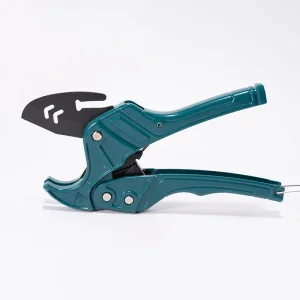
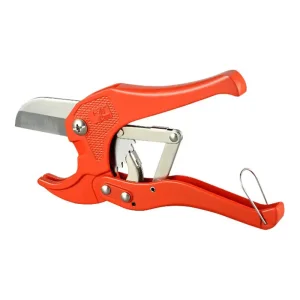
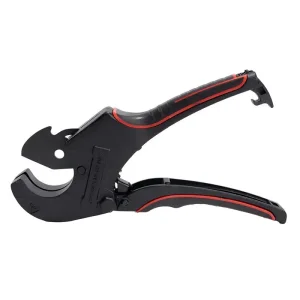
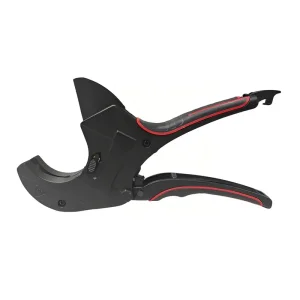
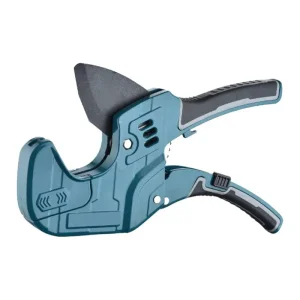
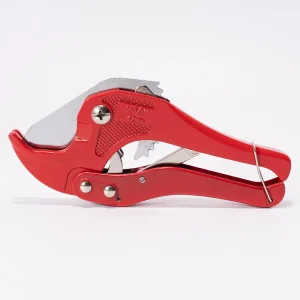
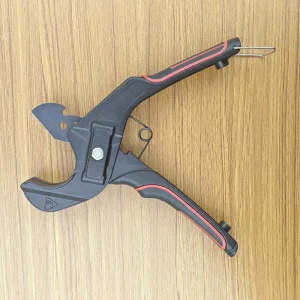
The structural integrity of a thermo-fused or mechanical press joint depends fundamentally on the quality of the initial cut. Utilizing substandard cutters creates ovality, micro-cracks, and internal burrs. Industrial ratchet cutters (e.g., JC-PC-22) utilize V-shaped precision ground high-carbon SK5 steel blades.
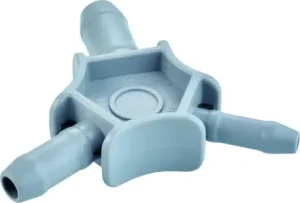
This geometric edge configuration distributes radial compression forces evenly, slicing through thin-wall PEX or thick-wall HDPE without deforming pipe roundness. Post-cutting calibration via 3-in-1 calibrators restores true diameter and chamfers the pipe edge at a precise 15° angle, ensuring seamless socket insertion without scraping off the protective Teflon die layer.
Macro Engineering Solutions & Deployment Scenarios
Delivering complete tool ecosystems engineered for specialized civil, industrial, and residential construction environments.
Residential Radiant Floor & HVAC PEX Systems
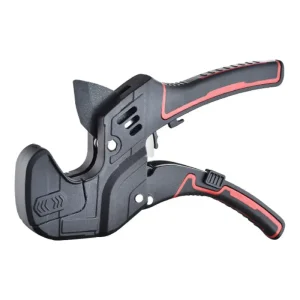
High-density PEX-AL-PEX multilayer tubing requires distortion-free cutting and immediate recalibration. Our 3-in-1 calibrators (16-20-25mm / 16-20-26mm) coupled with ergonomic 36mm precision PEX cutters eliminate deformation, ensuring zero O-ring displacement when inserting push-fit or press fittings in underfloor heating loops.
Commercial Municipal Potable Water Infrastructure
High-volume PPR water distribution lines in commercial high-rises demand rapid cycle fusion. Utilizing 1.4KW gas-powered PPR fusion welders enables plumbing teams to execute continuous 20-32mm pipe installations in newly framed shafts prior to temporary electrical utility hookup, reducing total project labor costs by up to 35%.
Industrial Process Piping & Acid Transport
Corrosive chemical fluid handling relies on PVDF and thick-walled HDPE piping systems up to 63mm/75mm. Specialized heavy-duty adjustable cutters (JC-PC-22) equipped with compound ratchet gear mechanisms deliver massive leverage, allowing technicians to make square cuts through heavy-schedule plastics with one-handed operation in tight pipe trenches.
Precision Metallurgical & Manufacturing Architecture
Inside the factory: How raw aluminum ingots, high-carbon steel coils, and electronic PID controllers are transformed into heavy-duty professional plumbing equipment.
Blade Heat-Treatment & Edge Geometry
The manufacturing process of cutter blades begins with premium raw SK5 high-carbon alloy steel. Through computerized vacuum heat treatment, blades undergo precise hardening and dual-stage tempering to achieve a Rockwell hardness of 58–62 HRC.
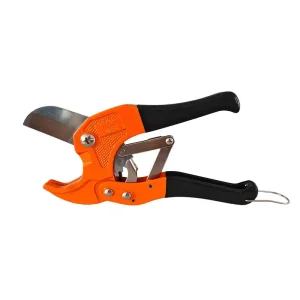
This ideal metallurgical state prevents edge chipping while retaining high ductility. Laser-guided bevel grinding yields a razor-sharp compound cutting edge angle (17° primary / 23° secondary), significantly lowering manual squeeze effort and eliminating plastic fracturing during cold-weather cutting operations.
Thermostatic Heating Element & Aluminum Die-Casting
Fusion welder heating plates are manufactured from high-grade ADC12 aluminum alloy via high-pressure die casting, guaranteeing dense structural integrity completely free of internal air porosity. Embedded tubular heating elements utilize nickel-chromium resistance wire insulated with compressed magnesium oxide powder.
Coupled with micro-processed thermostatic sensors or precision gas flow control valves in portable models, the matrix achieves ultra-fast thermal response times and maintains edge-to-edge heat uniformity within ±2°C across all active sockets.
Regulatory Compliance & Global Localized Support
Ensuring frictionless international trade, environmental alignment, and complete aftermarket warranty protection for international partners.
International Safety Certifications
All powered fusion machines comply strictly with European Low Voltage Directive (LVD 2014/35/EU) and Electromagnetic Compatibility (EMC 2014/30/EU). Carrying full SGS and CE certifications, equipment passes rigorous electrical insulation, thermal runaway, and drop-impact testing, permitting seamless distribution across North America, the EU, and LATAM markets.
Eco-Friendly & RoHS Material Directives
To meet strict global ESG mandates, all plastic dipped handles, paint coatings, and Teflon die coatings adhere to RoHS Directive 2011/65/EU and REACH regulations. Polymeric materials are completely free of polycyclic aromatic hydrocarbons (PAHs) and heavy metals, protecting technician health and supporting recyclable product packaging.
Localized Supply Chain & Spare Parts
Understanding that field downtime translates to lost revenue, Tier-1 manufacturing partners maintain ready-to-ship inventories of high-wear replacement components—including SK5 cutter blades, Teflon sockets, heating elements, and ratchet spring assemblies. Direct OEM technical support and localized agent distribution networks ensure zero project interruption.
Technology Roadmap: Next-Gen Smart Fusion (2026+)
Previewing the integration of IoT telemetry, AI-assisted joint verification, and ultra-lightweight magnesium alloy structures in professional plumbing tools.
IoT Digital Joint Logging & Cloud Telemetry
Next-generation commercial welders feature integrated Bluetooth/NFC modules that automatically log ambient temperature, dwell time, peak fusion temperature, and GPS coordinates for every joint. Technicians and municipal inspectors can instantly generate cloud-certified quality assurance reports, eliminating liability risks on municipal infrastructure projects.
AI-Calibrated Smart Temperature Adaptation
Environmental conditions—such as sub-zero winter temperatures or high altitude—drastically affect heat loss during socket insertion. Advanced smart welders utilize micro-infrared sensors to continuously measure ambient wind and pipe wall temp, dynamically modifying heating plate output in real-time to maintain flawless thermodynamic bonding.
Ultra-Light Magnesium Die-Casting & Ergonomics
Replacing traditional aluminum die-cast housings with high-strength magnesium-zirconium alloys reduces cutter and fusion machine weight by 35%. Combined with biomechanically optimized hand grips and one-touch rapid blade release buttons, operator fatigue is minimized during multi-hundred cut shifts.
Frequently Asked Questions & Technical Query Resolution
Addressing core engineering, manufacturing, and procurement inquiries from global tool buyers and mechanical contractors.
Complete Plumbing Preparation & Deburring Range
High-Performance Ratchet Cutters, Calibrators, and Gas Fusion Machines Direct from Factory