
PVC piping remains a common choice for residential water, drainage, and irrigation systems. Its light weight and corrosion resistance make installation practical. Mordor Intelligence’s 2024 PVC Pipes Market report estimates continued global growth through 2029. More pipe means more cutting decisions on real job sites. That detail matters.
A Pvc Plumbing Pipe Cutter provides a cleaner alternative to a hacksaw. Its sharp wheel or blade can create a straight cut with less edge damage. A straight cut helps fittings seat evenly and reduces excessive deburring. It also keeps plastic dust lower during routine work. Small advantages. They add up.
Industry standards still matter. ASTM D1785 and ASTM D2665 describe requirements for several PVC pipe applications. However, a cutter does not guarantee a compliant installation. The installer must confirm pipe type, diameter, pressure rating, and fitting instructions. Manufacturer guidance should control when recommendations differ. I have found that rushing the cut often causes more trouble than selecting the tool. A slightly crushed end may look harmless, yet it can affect solvent-cement joints. The mistake is easy to miss.
This guide explains when a Pvc Plumbing Pipe Cutter is useful, which designs suit different diameters, and how to avoid common cutting errors. It will also consider blade condition, workspace clearance, and safe hand positioning. Market reports provide useful scale, but field performance depends on technique. That is the part many product pages overlook.
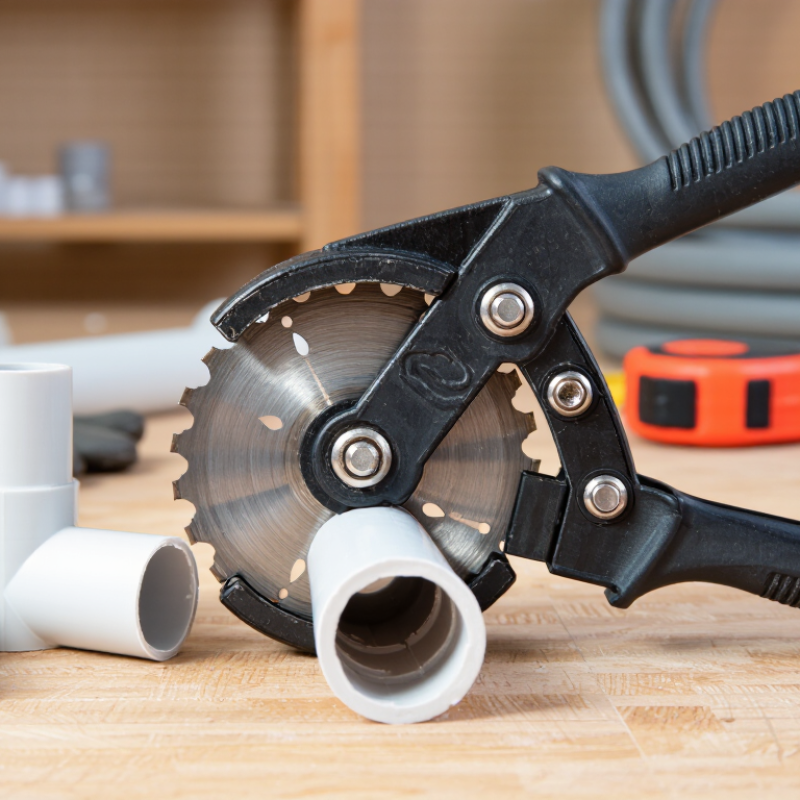
A PVC plumbing pipe cutter is a hand tool designed to cut plastic plumbing pipe cleanly and squarely. It usually combines a sharp cutting wheel with a ratcheting handle. The wheel closes gradually around the pipe, reducing crushing and uneven edges.
Unlike a hacksaw, the cutter creates little plastic dust. Its straight cut also helps fittings seat evenly inside the pipe. That detail matters when applying solvent cement. A small angle can leave a weak joint or a visible gap.
The tool is commonly used on PVC and similar plastic pipes. Always check its stated diameter range before cutting. A cutter meant for small drain pipe may struggle with thicker pressure pipe.
A practical cut starts with a measured mark and a stable pipe position. Rotate the tool slowly, rather than forcing the blade in one motion. The cut should feel controlled.
The U.S. Environmental Protection Agency’s WaterSense program reports that household leaks can waste nearly 10,000 gallons of water yearly. Across the United States, leaks may waste nearly 1 trillion gallons annually. A cutter cannot prevent every leak, but accurate pipe preparation supports better repairs.
ASTM standards for plastic piping and solvent-cemented joints emphasize proper preparation and compatible materials. Still, real work is less perfect. I have seen clean cuts fail because the pipe was not deburred or fully inserted. The tool helps, but technique remains decisive.
A PVC plumbing pipe cutter creates a clean opening without a saw’s rough, wandering teeth. Its sharp blade or cutting wheel applies focused pressure around the pipe. With each squeeze, the tool moves deeper through the plastic. Ratcheting models advance gradually, while rotary cutters score the surface as they turn.
The pipe usually separates after several controlled movements. A steady cut helps fittings seat evenly and reduces the chance of leaks. In practical plumbing work, I check the pipe for cracks before cutting. A damaged section can split under pressure later. I also keep the cutter square to the pipe. A tilted tool may produce an angled end, even when the cut looks acceptable. The process is simple, but not foolproof.
Tips:
Mark the cutting line clearly. Support longer pipe sections to prevent bending. Use moderate pressure instead of forcing the blade.
After cutting, remove small burrs with a deburring tool or fine abrasive pad. Wipe away plastic dust before inserting the fitting.
I sometimes recheck the length after cutting; one rushed measurement can waste an otherwise usable section.
Wear eye protection, especially when brittle PVC chips unexpectedly. Keep fingers behind the blade path.
Why Use a PVC Pipe Cutter for Plumbing Projects?
A PVC pipe cutter gives plumbing projects cleaner, faster, and more controlled cuts. On a cramped bathroom repair, it can cut a pipe squarely without spreading plastic dust across the floor. Clean cuts matter. A straight edge helps the pipe seat fully inside the fitting, supporting a reliable solvent-welded joint. The U.S. Environmental Protection Agency’s WaterSense program reports that household leaks can waste nearly 10,000 gallons of water annually. Preventing weak joints is a practical way to reduce that risk.
Professional plumbing guidance also emphasizes accurate cutting, deburring, and proper assembly. The Plastics Pipe Institute’s technical guidance recommends preparing plastic pipe ends carefully before joining them. A cutter usually leaves less roughness than a coarse saw, so preparation takes less time. It also reduces hand pressure and improves control during repetitive work. Still, a cutter is not foolproof. Excessive force can ovalize thin-wall pipe, especially near the end of a long cut. I check the edge, remove any lip, and test the fitting before applying cement. That extra inspection takes seconds. Skipping it can create a hidden failure behind a finished wall. For larger diameters, a fine-tooth saw may remain more practical, followed by careful deburring and cleaning.
A PVC plumbing pipe cutter gives cleaner control than a saw, but safe cutting still depends on preparation. Measure the required length twice, then mark the pipe with a fine, visible line. Keep the pipe supported on a stable surface. Wear eye protection and cut-resistant gloves, especially when working in a cramped cabinet.
The U.S. Bureau of Labor Statistics reported 2.6 million nonfatal workplace injuries and illnesses in private industry during 2023. That figure covers many tasks, yet it shows why ordinary hand tools deserve serious attention.
Place the cutter blade directly over the mark and keep the tool square to the pipe. Squeeze the handles gradually instead of forcing one sudden cut. A straight cut helps fittings seat evenly and reduces stress on the joint. Check the edge afterward. Remove the thin internal ridge with a deburring tool, then wipe away plastic dust before applying approved joining materials. No shortcuts here. ASTM pipe standards, including ASTM D1785 for PVC pressure pipe, specify dimensional requirements that support reliable installation, but a standard cannot correct a crooked cut. I sometimes remeasure after cutting, even when the mark looked obvious. It feels excessive, but a small error can leave a fitting misaligned or shorten the planned run. Ensure the blade is sharp, the pipe is dry, and your fingers stay behind the cutting path.
Choosing the right PVC pipe cutter starts with the pipe itself. Check its diameter, wall thickness, and installation location. A cutter should cover the pipe size without excessive force. Always compare the tool’s rated capacity with the pipe measurement.
A sharp, replaceable blade usually creates a cleaner cut. Look for a stable handle and a locking mechanism that prevents accidental opening. For narrow cabinets or wall cavities, a compact cutter is easier to control. A ratcheting design can help with larger pipes, but it may feel slower on small ones. Small details matter.
In my own work, I once chose a cutter mainly because it looked strong. It cut quickly, but the handle was awkward near a corner. My wrist became tired after several cuts. That experience changed my selection process. I now test the grip, trigger movement, and cutting alignment before buying. A clean cut should be square, with minimal crushing around the edge.
After cutting, inspect the pipe end under good light. Remove any burrs with a suitable deburring tool, then check the fitting connection. If the edge looks oval or deeply scratched, recut it. Do not trust a cheap-looking blade just because it is new. For repeated jobs, select a cutter with replaceable parts and clear maintenance instructions. Even experienced installers can overlook simple wear.
| Cutter Type | Typical Cutting Capacity | How It Works | Best Applications | Main Advantages | Main Limitations | Selection Guidance |
|---|---|---|---|---|---|---|
| Ratchet PVC Pipe Cutter | Usually up to approximately 42–75 mm outside diameter, depending on the tool. | A curved blade advances through the pipe in short strokes using a ratcheting mechanism. | Common residential plumbing, irrigation, drainage, and repair work involving small or medium PVC pipe. | Requires less hand force than a direct shear; produces fast, generally square cuts without electricity. | The blade can crush thin-wall pipe if the tool is poorly adjusted or used at an angle. | Choose a capacity comfortably above the pipe’s actual outside diameter and select a replaceable hardened blade. |
| Scissor-Style PVC Cutter | Commonly suitable for small pipe and tubing, often up to approximately 25–42 mm outside diameter. | A straight blade closes directly across the pipe in one hand-powered motion. | Light-duty household repairs, small irrigation lines, and repeated cuts on thin or flexible plastic tubing. | Compact, quick to use, and easy to carry in a basic plumbing tool kit. | More demanding on the user’s hand strength; less suitable for large diameter or thick-wall pipe. | Use it when portability and speed matter more than maximum cutting capacity. |
| Plastic Tubing Cutter | Typically designed for smaller tubing, often approximately 3–16 mm outside diameter. | A small sharp blade or wheel makes a controlled cut through soft or semi-flexible plastic tubing. | Water-dispenser tubing, pneumatic lines, aquarium tubing, and small irrigation connections. | Provides clean ends on small tubing and reduces the risk of uneven cuts. | Not intended for rigid PVC plumbing pipe or thick-wall conduit. | Confirm that the cutter is rated for rigid PVC if the material is pipe rather than flexible tubing. |
| Rotary Plastic Pipe Cutter | Often used for smaller to medium pipe sizes; capacity depends on the wheel diameter and guide design. | A cutting wheel scores the pipe while the tool rotates around its circumference. | Situations requiring controlled cuts in confined spaces or where a shear-style blade is unsuitable. | Can provide a consistent cut line and may work well where access around the pipe is available. | Requires room to rotate; excessive pressure can deform or crack brittle PVC. | Check the manufacturer’s material rating and make sure the pipe can be fully surrounded by the cutter. |
| Hacksaw with Fine-Tooth Blade | Suitable for a broad range of PVC sizes, including larger pipe that exceeds hand-cutter capacity. | A toothed blade removes material progressively as it is moved back and forth. | Large pipe, occasional cuts, demolition work, and applications where a dedicated pipe cutter is unavailable. | Versatile and relatively inexpensive; can cut pipe sizes beyond many ratchet tools. | Slower and more likely to leave burrs or an uneven end unless a guide and careful technique are used. | Use a fine-tooth blade, mark the cut around the pipe, and deburr the inside and outside afterward. |
| Power PVC Pipe Cutter | Capacity varies widely; many are intended for repetitive work rather than a specific universal pipe size. | A powered blade or oscillating mechanism cuts through the pipe with limited manual effort. | High-volume installation, maintenance teams, and jobs requiring many repeated cuts. | Reduces operator fatigue and improves productivity during repetitive cutting. | Higher cost, battery or electrical dependence, more noise, and greater safety requirements. | Select it only when cutting volume justifies the added equipment, maintenance, and protective measures. |
It is a hand tool for cutting plastic pipe cleanly and squarely. A sharp blade closes around the pipe. The result is usually cleaner than a saw cut.
The blade applies focused pressure around the pipe. Ratcheting handles advance gradually with each squeeze. Rotary models score the surface as they turn. The process is simple.
A cutter creates less plastic dust and fewer rough edges. Its straighter cut helps fittings sit evenly. A hacksaw may wander or leave a jagged opening.
Measure the required length twice. Mark a clear line with a fine marker. Support long pipe on a stable surface. Check for cracks first.
Place the blade directly over the mark. Keep the cutter square to the pipe. Squeeze gradually instead of forcing one sudden cut. Slow pressure works better.
Remove the thin internal ridge with a deburring tool or fine abrasive pad. Wipe away plastic dust. Check the cut length again before inserting the fitting.
Wear eye protection and cut-resistant gloves. Keep fingers behind the blade path. Use a dry pipe and a sharp blade. Brittle plastic can chip unexpectedly.
Yes. The pipe may not be fully inserted or properly deburred. A tilted cut can also weaken alignment. The tool helps, but technique remains decisive. I sometimes rush this part. That is a mistake.
A Pvc Plumbing Pipe Cutter is a practical hand tool designed to make clean, precise cuts in PVC pipes used for water supply, drainage, and general plumbing projects. Unlike rough cutting methods, it uses a sharp cutting blade and controlled pressure to create smooth, square edges, helping pipes fit properly with connectors and reducing the need for excessive finishing. Its compact design also makes it useful in narrow or difficult-to-reach areas.
Using a PVC pipe cutter can save time, improve accuracy, and support safer work by reducing slipping and uneven cuts. To cut safely, measure and mark the pipe, secure it firmly, position the blade correctly, and apply steady pressure while rotating or closing the tool as directed. When choosing a cutter, consider the pipe’s diameter, material thickness, handle comfort, blade quality, cutting capacity, and ease of maintenance. Selecting the right tool ensures efficient results for both simple repairs and larger plumbing tasks.