
Why Are Plumber Tools Essential for Global Buyers?

Time:2026-09-30 Author:Amelia
0%

For global buyers, Plumber Tools are more than items in a product catalogue. They are working assets that influence installation speed, job safety, repair quality, and long-term operating costs. A wrench that slips on a wet pipe can damage fittings, delay a project, and create avoidable pressure for technicians. A well-balanced cutter, however, can produce a clean edge in seconds.

Roger Wakefield, a plumbing educator and industry communicator, often shares a practical message: “The right tool makes the job easier, safer, and more efficient.” This view matters in international purchasing. Buyers must examine material strength, handle comfort, corrosion resistance, packaging, and replacement support. A tool may look attractive online. It may still fail under daily field conditions.

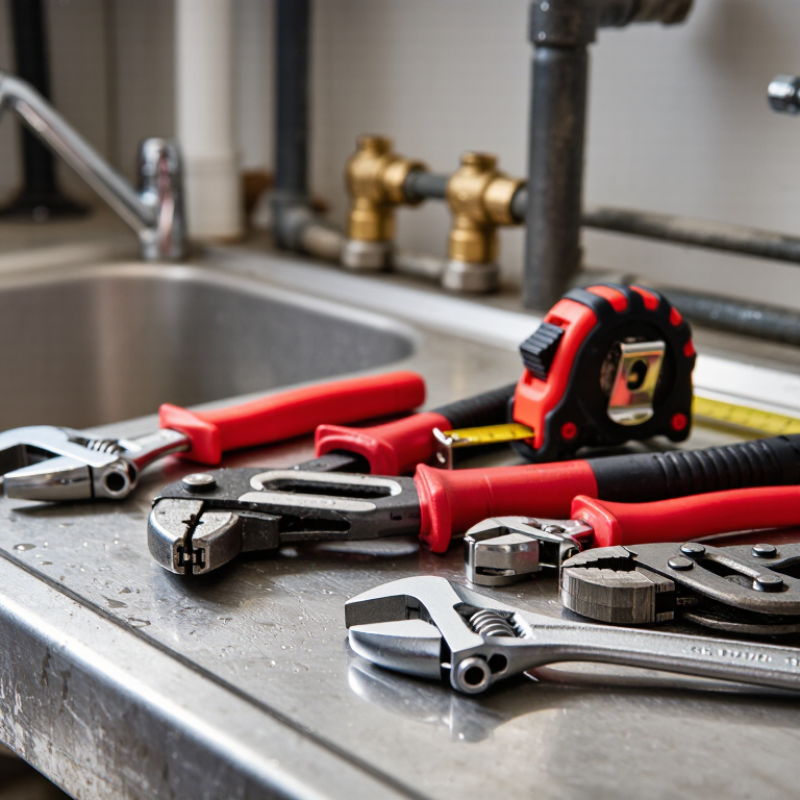
Details reveal quality. Consider a toolbox used beside a crowded commercial sink, where water, dust, and limited lighting are common. Chrome-plated surfaces, readable measurement marks, and non-slip grips can make a real difference. Certification and testing records also help buyers compare suppliers with greater confidence. Yet specifications do not tell everything. Some products perform well in demonstrations but feel awkward after several hours of use.

That uncertainty deserves attention. Global buyers should request samples, inspect tolerances, and ask about warranty terms before placing large orders. They should also consider local pipe systems and technician habits. The cheapest option is not always economical. Sometimes, it becomes expensive twice. Reliable Plumber Tools support consistent workmanship, reduce unnecessary downtime, and build trust between manufacturers, distributors, and professional plumbing teams worldwide.
Why Are Plumber Tools Essential for Global Buyers?

Understanding the Role of Plumber Tools in Modern Plumbing Work

Modern plumbing work depends on tools that control water, pressure, and risk. A plumber’s wrench, tubing cutter, deburring tool, pressure gauge, and inspection camera each solve a specific problem. A slipping wrench can damage a fitting. A rough pipe edge can weaken a seal. Small defects become expensive leaks behind walls.

The WHO/UNICEF Joint Monitoring Programme reported that 2.2 billion people lacked safely managed drinking water in 2022. This gap makes dependable plumbing installation and maintenance especially important. Tools must match local pipe materials, thread standards, and working conditions.

Buyers should check cutting accuracy, grip comfort, corrosion resistance, and calibration records. A pressure gauge without reliable calibration can mislead even an experienced technician. It happens.

The U.S. Bureau of Labor Statistics projects about 42,600 annual openings for plumbers, pipefitters, and steamfitters from 2023 to 2033. This demand reflects continued construction, repair, and infrastructure work. Modern tools also support safer workflows. Compact cutters reduce awkward movement, while inspection cameras limit unnecessary wall removal.

However, efficiency should not replace judgment. A digital reading may look precise, yet the connection still needs visual inspection and a practical leak test. Tool selection is therefore a technical decision, not merely a purchasing exercise.

Key Tool Categories and Their Practical Applications

Why Are Plumber Tools Essential for Global Buyers?

Key Tool Categories and Their Practical Applications

Plumber tools are not interchangeable accessories. Each category solves a different site problem, from accurate cutting to leak detection. Pipe cutters create cleaner edges than rough manual cuts, reducing alignment issues during assembly. Adjustable wrenches handle fittings of varied sizes, while basin wrenches reach confined spaces beneath sinks. Small tools matter.

Pressing and crimping tools support fast, consistent joint work when the pipe system allows those connections. Buyers should check compatible pipe materials, fitting dimensions, jaw profiles, and operating pressure. A tool that fits one market’s systems may be unsuitable elsewhere. This detail is easy to overlook.

Drain-cleaning equipment serves blocked sinks, floor drains, and narrow service lines. Manual augers are portable and useful for light obstructions. Powered units offer greater reach, but they require trained handling and sensible maintenance. Inspection cameras help users locate roots, breaks, or trapped debris before opening a wall. Pressure testers and water-level gauges provide practical evidence after installation.

From field experience, the best purchasing decisions consider grip comfort, replacement parts, calibration, packaging, and clear operating instructions. Corrosion-resistant finishes are valuable in humid storage areas, although they do not remove the need for cleaning. I have seen buyers focus on the lowest unit price and later face costly downtime. That approach needs reflection. Reliable tools are measured by repeatable performance, safe handling, and support throughout their working life.

Why Are Plumber Tools Essential for Global Buyers?

Plumber tools support essential activities across installation, repair, maintenance, blockage removal, and inspection. The chart compares major tool categories by the number of core plumbing application areas they directly support.

Application areas counted: pipe assembly and disassembly, fixture installation, pipe cutting and preparation, blockage removal, and leak or pipe inspection. Broader coverage can help buyers build practical, versatile tool assortments for different markets.

How Quality Tools Improve Efficiency, Safety, and Repair Accuracy

Why Are Plumber Tools Essential for Global Buyers?

Quality plumbing tools directly affect work speed, personal safety, and repair accuracy. Experienced technicians know that a sharp pipe cutter leaves a cleaner edge, reducing leaks at threaded or compression connections. A well-balanced adjustable wrench also improves grip and lowers wrist strain during repeated repairs. Small details matter. Poorly fitting jaws can damage brass fittings or round off fasteners.

Reliable tools usually use durable steel, smooth adjustment systems, and handles that remain comfortable with wet gloves. Corrosion resistance is important in humid workshops and coastal regions. Clear measurement marks help workers cut pipe more precisely, while deburring tools remove rough edges that could weaken seals. Protective eyewear and gloves still matter, even with excellent equipment. Tools reduce risk; they do not remove it.

Global buyers should check material quality, dimensions, maintenance needs, and compatibility with local pipe systems before purchasing. A tool designed for one size range may be useless on another job. That mistake costs time. It happens. Even skilled plumbers occasionally choose the wrong cutter or apply excessive force. Reviewing the tool’s working limits can prevent avoidable damage. In demanding repairs, accurate tools support consistent results, but proper training and careful inspection remain equally necessary.

Factors Global Buyers Should Evaluate Before Purchasing

Why Are Plumber Tools Essential for Global Buyers?

Factors Global Buyers Should Evaluate Before Purchasing

Global buyers depend on plumber tools for repairs, installations, and demanding construction work. Purchasing requires more than comparing prices. A wrench may look strong, yet its grip can fail under repeated pressure. During practical inspections, check handle comfort, jaw movement, and surface finishing. Small details matter. Tools should feel balanced, not excessively heavy or loose.

Before ordering, evaluate materials, manufacturing accuracy, and safety performance. Stainless steel can resist corrosion, but its grade still matters. Ask for material certificates, test reports, and clear product specifications. Reliable suppliers should provide traceable information without hesitation. That is a warning. Check dimensions against local pipe systems and connection standards. One small mismatch can delay an entire project. Confirm whether replacement parts are available in your market.

Global logistics also deserves careful review. Confirm packaging strength, moisture protection, delivery terms, and customs documentation. Request samples before placing a large order. I once underestimated packaging quality, and several tool cases arrived scratched. The tools remained usable, but the delay damaged customer confidence. That mistake changed my inspection process. Buyers should review warranty terms, response times, and technical support before payment. Clear manuals and training materials also indicate professional responsibility. Do not trust vague promises. Reliable purchasing often depends on evidence, not attractive product images.

International Standards, Supply Chains, and Long-Term Tool Value

Why Are Plumber Tools Essential for Global Buyers?

International Standards, Supply Chains, and Long-Term Tool Value

For global buyers, plumber tools must perform beyond a single workshop. Their dimensions, materials, and safety features should match recognized international standards. Clear test records help purchasing teams compare suppliers with greater confidence. In practice, small details matter. A thread that fits one market may fail in another. I have seen buyers overlook this point and pay for costly replacements later.

Reliable supply chains depend on consistent specifications. Suppliers should provide accurate drawings, material information, packaging details, and inspection records. These documents support communication between engineers, distributors, and customs teams. Stable production also reduces delays caused by changing components. Still, supply chains are never perfect. Port congestion, raw material shortages, and unclear forecasts can interrupt even careful plans.

Long-term tool value involves more than the initial purchase price. Durable coatings can resist moisture, while balanced handles reduce fatigue during repeated work. Replaceable parts may extend service life and limit unnecessary waste. Buyers should also examine warranty procedures and technical support before ordering. A cheaper tool can become expensive when repairs are difficult. This is where purchasing experience becomes useful. Yet, even experienced teams can misjudge demand. Reviewing actual usage data remains wiser than relying on assumptions.

Why Are Plumber Tools Essential for Global Buyers? - International Standards, Supply Chains, and Long-Term Tool Value

Practical comparison of tool categories, international references, supply-chain requirements, and long-term purchasing value
Tool Category Primary Plumbing Application International Reference or Standard Common Size or Unit Consideration Key Quality Check Supply-Chain Importance Long-Term Value Indicator
Pipe Wrench Gripping and turning threaded steel, galvanized, and other round pipe connections. ASME B107.110 may be used as a reference for pipe-wrench design and performance; confirm the destination market’s requirements. Nominal pipe sizes are not the same as actual outside diameter. Metric and inch pipe systems should be specified separately. Jaw alignment, tooth sharpness, handle straightness, adjustment-thread fit, and corrosion protection. Different markets may require different handle lengths, packaging formats, and measurement markings. Replaceable or durable jaws, forged load-bearing parts, and a stable adjustment mechanism reduce replacement frequency.
Adjustable Wrench General tightening and loosening of nuts, compression fittings, valves, and service connections. ISO 6787 is a recognized reference for adjustable wrenches; verify the applicable edition and national adoption. Jaw opening is commonly stated in millimetres; 1 inch equals exactly 25.4 mm for conversion purposes. Parallel jaw movement, low play in the worm gear, accurate scale marking, and smooth adjustment. Compact tools lower carton volume and freight weight, while different handle lengths affect shipping-pack dimensions. A forged body, hardened adjustment components, and protective surface treatment support repeated field use.
Basin Wrench Installation and removal of faucet mounting nuts in confined spaces below sinks. Product dimensions and functional testing should be documented because there is no single universal global product standard for every basin-wrench design. Jaw reach, swivel range, and clearance dimensions are more important than nominal wrench size. Jaw engagement, locking stability, handle access, and resistance to deformation under hand force. Small dimensions make it suitable for consolidated shipments, but mixed product sets require clear item-level labeling. A corrosion-resistant head and reliable swivel mechanism preserve performance in humid installation environments.
Tube Cutter Clean cutting of copper, aluminium, plastic-coated, and selected multilayer tubing, subject to model capability. The applicable requirement depends on tubing material and market rules; the supplier should declare compatible materials and diameter range. Diameter ranges may be stated in mm or inches. The cutting range must match the buyer’s local tube dimensions. Wheel hardness, clean cutting edge, spindle smoothness, alignment, and availability of replacement wheels. Replacement wheels and spare parts should be packed and forecast separately to prevent service interruptions. Replaceable cutting wheels and a protected spindle can extend useful service compared with disposable designs.
Deburring Tool Removing sharp internal and external edges after cutting pipes or tubing. Material compatibility, ergonomic safety, and blade performance should be verified through documented product testing. Blade geometry must match copper, stainless steel, plastic, or multilayer tube requirements. Blade retention, cutting consistency, handle grip, and resistance to rust or edge dulling. Low unit weight reduces transport cost, but spare blades should be included in the replenishment plan. Replaceable blades and a robust holder improve total cost of ownership for high-volume installation work.
Torque Wrench Applying a controlled tightening torque to valves, flanges, fittings, and equipment connections. ISO 6789:2017 covers hand torque tools, including calibration and verification principles. Torque may be expressed in N·m, lbf·ft, or lbf·in. 1 N·m equals approximately 0.7376 lbf·ft. Calibration certificate, torque range, repeatability, direction of operation, and adjustment-lock performance. Calibration intervals, service capability, and certificate traceability are essential for international project acceptance. Stable calibration, repairability, and documented verification can reduce joint failures and rework costs.
Socket and Ratchet Set Fast tightening and loosening of hexagonal fasteners during installation and maintenance. ISO 1174-1 specifies connecting squares for hand-operated wrenches and sockets; drive-size compatibility must be checked. Common drive sizes include 1/4, 3/8, 1/2, and 3/4 inch; metric and inch socket sets are not interchangeable in every application. Socket dimensional accuracy, ratchet tooth engagement, reversal mechanism, and resistance to surface damage. Set composition, foam layout, case dimensions, and missing-piece control affect warehouse efficiency. Modular replacement of individual sockets and a serviceable ratchet improve lifecycle economics.
Pressure Test Pump Testing the tightness of water-supply, heating, and selected piping systems before commissioning. Pressure-test procedures are governed by local plumbing codes and project specifications; gauges may require calibration to ISO/IEC 17025-traceable procedures. Pressure is commonly shown in bar, MPa, or psi. 1 MPa equals 10 bar, and 1 bar equals 100 kPa. Pump output, gauge readability, hose and fitting compatibility, leak resistance, and pressure-holding stability. Large or liquid-filled equipment requires stronger packaging, moisture protection, and spare-seal planning. Replaceable seals, serviceable valves, accurate gauges, and corrosion-resistant wetted parts reduce downtime.
Threading Tool Creating or restoring external pipe threads for threaded piping connections. Thread form and tolerance should follow the required regional or project specification, such as ISO metric or applicable pipe-thread standards. Thread systems differ by pitch, angle, diameter, and sealing method; metric, BSP, and NPT requirements must not be mixed without verification. Die hardness, thread profile, alignment, chip clearance, and compatibility with the specified pipe material. Die inventory and replacement availability are critical because regional thread systems require different tooling. Interchangeable dies, a rigid frame, and corrosion protection provide higher value for recurring maintenance work.
Buyer Note: International standards do not automatically guarantee suitability for every plumbing project. Buyers should confirm the destination country’s regulations, thread system, measurement units, required certificates, calibration practices, packaging rules, spare-part availability, and after-sales service before placing an order.

FAQS

Why do plumbers need different tool categories for one project?

Pipe cutters make clean edges, while adjustable wrenches fit varied fittings. Basin wrenches reach cramped spaces beneath sinks. Small tools matter.

What should buyers check before purchasing pressing or crimping tools?

Confirm pipe materials, fitting sizes, jaw profiles, and operating pressure. Compatibility differs across systems and markets. A mismatch can ruin a joint.

When are manual augers suitable for drain work?

Manual augers suit light blockages in sinks, floor drains, and narrow service lines. They are portable and simple to store. Not always enough.

Why use an inspection camera before opening a wall?

A camera can reveal roots, breaks, or trapped debris inside a line. This helps workers target repairs instead of guessing. Guessing gets expensive.

How can buyers judge tool quality beyond the purchase price?

Check grip comfort, replacement parts, calibration, packaging, and instructions. Durable coatings help in humid storage areas, but cleaning remains necessary. Low prices may hide downtime.

Which documents support international tool purchasing?

Request accurate drawings, material details, packaging information, test records, and inspection reports. These documents help engineers, distributors, and customs teams communicate clearly.

How do supply chain problems affect tool orders?

Port congestion, material shortages, and weak forecasts can delay delivery. Consistent specifications reduce confusion when components change. Plans still fail sometimes.

What makes a plumber tool valuable over many years?

Balanced handles can reduce fatigue during repeated work. Replaceable parts, warranty procedures, and technical support may extend service life. Even experienced teams misjudge demand. Review actual usage data.

Conclusion

Plumber Tools are essential to modern plumbing work because they support accurate installation, maintenance, inspection, and repair across residential, commercial, and industrial systems. Different tasks require specialized equipment, including cutting, threading, gripping, measuring, sealing, and drainage tools. When these tools are well designed and properly maintained, they help professionals work more efficiently, reduce physical strain, improve repair accuracy, and minimize the risk of damage, leaks, or workplace injuries.

For global buyers, purchasing decisions should consider material quality, durability, ergonomic design, performance consistency, and compatibility with common plumbing systems. Buyers should also review relevant international standards, product testing procedures, packaging requirements, and supplier reliability before placing orders. A stable supply chain, clear technical documentation, replacement-part availability, and after-sales support can significantly increase long-term value. Choosing dependable Plumber Tools is not only about the initial price; it is an investment in safer operations, lower maintenance costs, and reliable performance in diverse working environments.

Amelia

Amelia

Amelia is a seasoned marketing professional with a wealth of expertise in our company’s core offerings. With an unwavering passion for driving growth and innovation, she plays a pivotal role in shaping our marketing strategies and enhancing brand visibility. A key aspect of her responsibilities......
Certificate preview