Why Choose Wholesale Plumbing Tools for Your Business?

Time:2026-11-17 Author:Sienna
0%

Wholesale Plumbing Tools can help a business keep jobs moving without turning every purchase into a rush order. Contractors, maintenance teams, and plumbing retailers often need dependable wrenches, pipe cutters, plungers, and fittings in steady quantities. Buying wholesale may reduce unit costs and simplify replenishment, especially when commonly used tools are stored, labeled, and reordered with care. The savings are not automatic, though. Poor-quality stock can wear quickly, and excess inventory can tie up cash and shelf space.

A useful buying decision starts with the work itself. Compare tool materials, handle comfort, size ranges, warranty terms, and supplier consistency. Check whether the products meet the specifications your jobs require, and test samples before committing to a large order. A low price looks good on an invoice. It matters less if a cutter slips on a busy site or replacement parts are hard to find.

No source was provided for a real expert quotation, so I won’t attribute invented words to a real person. As an explicitly illustrative industry voice, fictional procurement specialist Alex Morgan might put the principle this way: “Buy for the work you do, not just the discount you see.” That is a starting point, not a complete purchasing rule. Your best choice depends on usage, storage, cash flow, and supplier reliability. Even experienced buyers misjudge demand sometimes. Careful records help them adjust.
Why Choose Wholesale Plumbing Tools for Your Business?

What Wholesale Plumbing Tools Include

What Wholesale Plumbing Tools Include

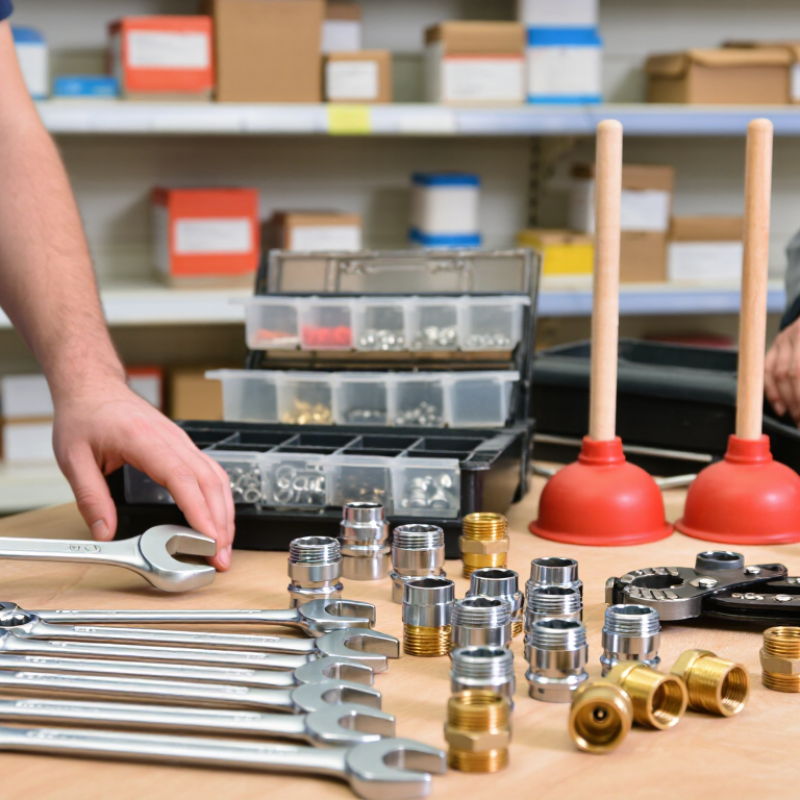
Wholesale plumbing tools cover the everyday work of measuring, cutting, joining, and testing pipe. A stock order may include pipe cutters, reamers, wrenches, tubing benders, threaders, drain augers, and pressure-test gauges. It can also include soldering equipment, sealants, replacement blades, and protective gloves. The exact mix depends on the jobs a business handles. A neat catalog is not the same as a useful van.

The U.S. Bureau of Labor Statistics’ Occupational Outlook Handbook projects 6% employment growth for plumbers, pipefitters, and steamfitters from 2023 to 2033, with about 44,000 openings each year. That outlook suggests steady demand for dependable equipment, though it does not mean every shop needs the same inventory. Wholesale buying can help maintain spare parts and reduce repeat orders. Still, bulk purchasing can tie up cash when sizes or fittings rarely move. That trade-off deserves a closer look.

Tips: Match tool capacity to the pipe materials and diameters your team actually installs. Check gauge ranges, replacement-part availability, and case durability before ordering. Keep a small sample on hand; paper specifications can miss awkward grips or bulky storage.

How Bulk Purchasing Reduces Business Costs

Wholesale plumbing tools can reduce the cost per item when a business orders commonly used supplies in larger quantities. For a repair team, that might mean keeping extra pipe wrenches, cutters, and tape on hand instead of placing frequent small orders. Bulk orders can also reduce delivery charges and time spent reordering. That time matters. A stocked van may help a technician finish a routine job without another supply run. Savings depend on storage, demand, and tool durability, not just the listed unit price.

Tips: Compare total costs, including freight, shelf space, and expected tool replacement. Track monthly use before setting order quantities. Buy too much, and cash sits on the shelf.

Ask suppliers for written quantity pricing and confirm that specifications match the work your team performs. Standardizing a small set of tool types can simplify training and replacement, but avoid forcing one tool into every task. Demand estimates are imperfect; a seasonal spike can make old averages misleading. Review inventory every few weeks and adjust the next order based on actual use.

Why Choose Wholesale Plumbing Tools for Your Business?

How bulk purchasing can reduce costs: modeled purchase costs for 100 units of each tool type.

Illustrative planning scenario, not a market price quote: bulk prices are modeled at 15% below assumed individual-purchase prices. Across these five tool types, the estimated total falls from $8,000 to $6,800—a modeled saving of $1,200. Actual prices and discounts vary by supplier, product, and order size.

How Product Variety Supports Different Plumbing Jobs

A plumbing business rarely handles the same repair all day. One call may involve a dripping kitchen tap; the next may require cutting pipe beneath a cramped sink. Wholesale plumbing tools can provide a wider selection for these changing jobs. That matters. Different pipe materials, fitting sizes, and access conditions call for different tools, not one universal solution.

A useful stock may include adjustable wrenches, basin wrenches, pipe cutters, deburring tools, drain equipment, and pressure gauges. For example, a compact basin wrench can reach a fastening nut behind a sink, while a clean pipe cut helps fittings seat properly. Small details count. Having the right size available can prevent a second trip to the supplier and keep a repair moving. Still, tool choice depends on the job and the material being worked on.

Variety should be planned, not collected without thought. Too many rarely used tools can tie up money and storage space. Reviewing common service calls can help a business choose practical sizes and replacement parts. It is also worth checking tool specifications, handle clearance, and compatibility before ordering in bulk. A broad range can miss the mark if the tools do not fit the work crews actually perform.

How Quality and Reliability Affect Daily Operations

On a busy service day, a dependable wrench saves more than a few seconds. It helps a technician tighten fittings without slipping or damaging nearby surfaces. Buying plumbing tools wholesale can make it easier to equip several vans with the same core kit. That consistency matters. A replacement tool should feel familiar when a crew member reaches for it under a sink.

Quality also affects how smoothly work moves between jobs. Durable cutters make cleaner pipe cuts, while sturdy pliers hold their grip after repeated use. When tools wear quickly, crews lose time searching for replacements or adjusting their technique. I’ve seen small defects create surprisingly large delays. Still, a higher price alone does not guarantee better performance. Check the tool’s materials, joint movement, handle comfort, and suitability for the pipe sizes your team regularly handles.

Reliability is often revealed in ordinary moments: a valve that will not budge, a cramped cabinet, or a wet glove slipping on a handle. Tools that remain comfortable and predictable can reduce frustration during these tasks. Wholesale purchasing may also help keep spare tools available, so one damaged cutter does not stall the day. It is worth reviewing feedback from the people who use the tools, not just the purchasing team. Their notes can be blunt, and occasionally inconsistent, but they often reveal what specifications miss.

Why Choose Wholesale Plumbing Tools for Your Business? - How Quality and Reliability Affect Daily Operations

Tool Category Typical Daily Use Quality and Reliability Factors Operational Effect Practical Purchasing or Maintenance Check
Pipe wrenches Gripping and turning threaded pipe and fittings Secure jaw engagement, durable handle, and a working adjustment mechanism Reliable grip helps reduce slipping and damage to workpieces; worn jaws can make fittings harder to control. Inspect jaws and adjustment movement; keep sizes commonly needed for the pipe work in stock.
Pipe cutters Cutting copper, plastic, or other compatible pipe types A sharp, correctly matched cutting wheel and smooth, controlled adjustment Consistent cuts can simplify fitting preparation; a dull or unsuitable wheel may cause rough cuts or require extra work. Match the cutter to the pipe material and diameter; check the wheel and replace it when worn.
Pipe threading tools Producing threaded ends for compatible pipe and fittings Correct die size, sharp cutting edges, stable alignment, and appropriate cutting lubricant Consistent threads support proper fitting engagement; damaged dies or poor alignment can result in unusable threads. Verify die sizes against the jobs performed and inspect dies for wear or damage.
Plungers and drain augers Clearing common drain blockages A sound plunger cup or cable, secure connections, and a suitable design for the drain Dependable tools are ready for repeat service calls; damaged cups or cables may reduce effectiveness and require replacement. Check cables and fittings for wear, clean tools after use, and stock tools suited to the drains serviced.
Pressure-test gauges Monitoring pressure during relevant system tests A readable scale, undamaged connections, and accuracy appropriate to the test Clear, dependable readings support informed test decisions; a damaged or inaccurate gauge can make results unreliable. Inspect the gauge and connections; follow the manufacturer’s guidance for accuracy checks or calibration.
Hand tools and pliers Holding, tightening, and adjusting components Secure joints, correctly aligned jaws, and handles that remain firmly attached Well-maintained tools provide controlled handling; loose or misaligned parts can make work less dependable. Check for looseness, cracks, corrosion, and jaw wear during routine tool checks.
Wholesale purchasing and stock planning Replenishing frequently used tools and replacement parts Consistent specifications, clear product information, dependable availability, and suitable replacement-part access Planned bulk purchasing can simplify replenishment and help keep commonly used items available, while unsuitable stock can tie up storage and budget. Review usage, required sizes, storage capacity, warranty terms, and replacement-part availability before ordering.

Routine inspection, correct tool selection, and maintenance in line with manufacturer instructions help support reliable day-to-day operation.

What to Consider When Choosing a Wholesale Supplier

When choosing a wholesale plumbing-tools supplier, treat availability as an operating requirement, not just a discount. A delayed pipe cutter or press-tool accessory can leave a crew waiting at the van while the job schedule keeps moving. Stock matters. Ask how often key items are available, whether backorders are disclosed before purchase, and whether delivery dates are tracked against actual dispatch.

The Associated General Contractors of America’s 2024 workforce survey found that 94% of firms with craft openings struggled to fill them.

The U.S. Bureau of Labor Statistics projects 6% employment growth for plumbers, pipefitters, and steamfitters from 2023 to 2033.

Use published evidence to weigh the risk. These figures do not prove any supplier is reliable, but they highlight why avoidable tool downtime matters. Check product specifications, compatibility notes, and maintenance documentation where relevant.

Compare total purchasing terms, not just unit prices: minimum order quantities, freight thresholds, warranty handling, return windows, and payment terms. Request a sample order or written service commitments, then compare promised delivery with the cartons received. Check it physically. Look for clear labels, intact packaging, and consistent tool models. A lower quote may still be the better choice if the supplier explains substitutions and resolves shortages quickly. Revisit the decision after several orders; one smooth shipment is not a pattern.

FAQS

What tools are commonly included in wholesale plumbing orders?

Orders may include pipe cutters, reamers, wrenches, tubing benders, threaders, drain augers, and pressure-test gauges. Soldering equipment, sealants, blades, and gloves may also be included.

How can buying plumbing tools in bulk reduce costs?

Larger orders may lower the price per item and reduce delivery charges. Keeping spare cutters and tape in a van can also prevent extra supply runs. Savings depend on storage, demand, and tool life.

What should a business check before ordering tools?

Match tool capacity to the pipe materials and diameters your crew handles. Check gauge ranges, replacement parts, and case durability. Try a sample first. Paper specs can miss an awkward grip.

How can a business choose the right order quantity?

Track monthly use and review stock every few weeks. Consider freight, shelf space, and replacement costs, not only unit prices. I may still misjudge a seasonal spike.

What should a business look for in a wholesale supplier?

Check stock levels, backorder notices, and delivery tracking. Ask about minimum quantities, freight thresholds, warranties, returns, and payment terms. Availability matters.

How can a business check whether promised delivery is reliable?

Start with a sample order or written service commitments. Compare the promised date with actual dispatch and arrival. Inspect the cartons. One smooth shipment proves little.

Is it useful to standardize plumbing tools across a team?

A small set of standard tool types can simplify training and replacements. Still, one tool may not suit every task. That deserves a second look.

What risks come with bulk purchasing?

Large orders can tie up cash when certain sizes or fittings move slowly. A full shelf is not always useful. Review actual use before reordering.

Conclusion

Wholesale Plumbing Tools give plumbing businesses access to the equipment and supplies they need for a wide range of everyday jobs, from pipe cutting and fitting to repairs and installations. Buying in bulk can lower the cost per item, reduce repeat ordering, and help maintain a dependable stock of commonly used tools. A broad product selection also makes it easier to equip workers for different tasks and respond to changing project requirements.

Choosing tools with consistent quality and reliability can reduce delays, replacements, and disruptions to daily operations. When comparing wholesale suppliers, businesses should consider product range, material quality, pricing, order flexibility, delivery timelines, and customer support. A supplier that meets these needs can help a business manage inventory more effectively and keep work moving smoothly.

Sienna

Sienna

Sienna is a skilled marketing professional with a deep expertise in our company’s core products and services. With a passion for innovation and detail, she plays a pivotal role in crafting insightful blog posts that not only highlight the unique features of our offerings but also provide valuable......
Certificate preview