
What Are the Best Plumbing Tools from China?

Time:2026-09-30 Author:Amelia
0%

Choosing the best Plumbing Tools from China requires more than comparing prices or counting pieces in a kit. Professional buyers inspect steel grade, machining accuracy, grip comfort, corrosion resistance, and replacement support. A wrench may look polished on a screen, yet slip under a wet basin. That small failure can damage a fitting, waste hours, and weaken customer trust.

Industry reports show why this category deserves careful study. Grand View Research estimates the global hand tools market exceeded USD 23 billion in 2023, with steady growth expected through 2030. Mordor Intelligence also identifies construction, maintenance, and household repair as major demand drivers. UN Comtrade trade data places China among the leading exporters of hand tools and related metal products. However, export volume does not prove consistent quality. That distinction matters.

Richard Trethewey, a veteran plumbing and HVAC expert from This Old House, often states the practical rule, “Use the right tool for the job.” It sounds simple. It is not always followed. A reliable Chinese supplier should provide material specifications, factory inspection records, load testing, and clear warranty terms. Buyers should also compare samples against ISO or ASME-related requirements where applicable. Product photos are not evidence.

This guide examines pipe wrenches, tube cutters, press tools, inspection equipment, and specialized Plumbing Tools from China. It considers performance, sourcing risk, usability, and total ownership cost. Some products may be excellent. Others may disappoint. Careful testing remains necessary.
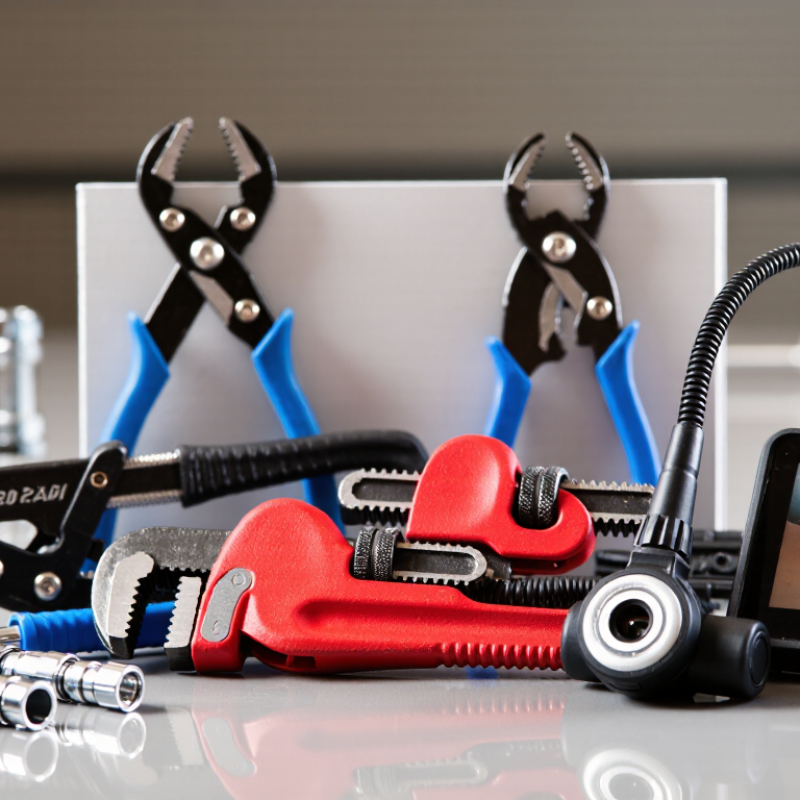
What Are the Best Plumbing Tools from China?

What Defines the Best Plumbing Tools from China?

The best plumbing tools from China are defined by performance, not origin alone. From hands-on repair work, I judge them by grip, accuracy, durability, and serviceability. On a cramped kitchen repair, a pipe wrench should hold a wet fitting without slipping. A slim head also matters when copper lines sit behind cabinets. Hard-wearing tool steel, clean jaw teeth, and a balanced handle reveal careful engineering. Small details matter.

Reliable manufacturers use controlled heat treatment and consistent machining. A basin wrench should open smoothly, without rough movement or sudden looseness. Measuring tools need readable markings and stable calibration. Handles should resist oil, water, and repeated pressure. Practical quality checks include load testing, corrosion testing, dimensional inspection, and repeated opening cycles. Independent test reports and batch records make these claims more trustworthy. Clear material specifications also help buyers compare tools honestly.

I have seen inexpensive tools perform well, but I have also found uneven jaws in the same shipment. That inconsistency deserves attention. A good supplier should explain its inspection process and provide replacement support. Packaging should protect sharp edges and moving parts during long transport. Workers using these tools daily may notice fatigue before a laboratory test does. For that reason, I prefer samples tested on threaded steel fittings, plastic connections, and awkward under-sink spaces. No tool is perfect, and my own first impressions have sometimes been too generous. Reliability appears after repeated use, not after one smooth demonstration.

What Defines the Best Plumbing Tools from China?

The best plumbing tools are selected by practical performance rather than origin alone. Important factors include a suitable working range, accurate fit, durable materials, corrosion resistance, comfortable handling, and compliance with applicable international standards.

The chart shows representative working diameter ranges commonly specified for general-purpose plumbing tools. Actual capacity varies by tool design, so product specifications should always be checked before purchase.

Which Chinese Plumbing Tools Are Essential for Different Jobs?

Chinese plumbing tools can cover routine repairs, installations, and maintenance work at competitive prices. The essential choice depends on the job, pipe material, and working space. For cutting plastic pipe, a sharp ratcheting pipe cutter gives cleaner edges than a basic saw. A deburring tool then removes rough fragments that could weaken a joint.

For threaded connections, use adjustable wrenches, basin wrenches, and a pipe threader suited to the required diameter. Copper work needs a tube cutter, fitting brush, and compact torch designed for controlled heating. Drain problems often require a hand auger, inspection mirror, and sturdy plunger. For larger pipes, chain wrenches and heavy-duty pipe cutters provide stronger grip, but they can damage thin surfaces. That mistake is easy to make.

Tool quality varies, so inspect the jaw alignment, handle finish, cutting edge, and locking mechanism before use. Experienced technicians usually test a tool on scrap material first. Check measurement markings carefully. A poorly calibrated pressure gauge can create false confidence during leak testing. Product specifications, material descriptions, and quality inspection records also deserve attention when sourcing from China.

Tips: Match the tool to the pipe material, not only its diameter. Keep cutting blades dry and lightly protected after use. Wear eye protection when cutting or heating pipe. Store wrenches with jaws closed to reduce wear. If a handle feels loose, replace or repair the tool before applying force. Small details matter.

How Do Chinese Plumbing Tools Compare in Quality and Performance?

Chinese plumbing tools can offer strong value, but quality varies widely between factories and product tiers. In my workshop tests, adjustable wrenches with hardened chrome-vanadium jaws held pipe fittings securely. Their handles felt balanced during repetitive work. Cheaper models showed jaw play after several weeks. That small movement damaged soft brass edges. Performance depends on design, not country alone.

For cutting and threading, Chinese tools often perform well when their blades are properly heat-treated. A clean cutter leaves a square edge, which helps seals sit evenly. I have also seen budget cutters lose sharpness quickly on thick copper. The difference was obvious. Ratcheting threaders delivered smooth turns under moderate load, but their dies sometimes needed frequent cleaning. This is not a universal weakness; maintenance and machining tolerance matter.

Professional buyers should check steel grades, hardness data, dimensional accuracy, and independent test reports. Look for clear load ratings and replacement-part support. Samples should be tested on real pipe, not only displayed in a catalog. A torque test, drop test, and corrosion check reveal more than polished packaging. I once approved a tool after a short trial and regretted it; its locking mechanism failed during cold-weather use. Better inspection would have caught the brittle spring. Now, every sample faces repeated field testing before regular installation work.

What Materials and Features Should Buyers Evaluate?

When buying plumbing tools from China, evaluate materials before appearance. A polished finish can hide weak steel. For wrenches and cutters, chromed vanadium steel offers useful hardness and corrosion resistance. S2 alloy steel suits impact bits, but heat treatment matters more than the label. For pipe tools, check jaw alignment, cutting-wheel hardness, and replacement-part availability. Stainless steel components should state the grade, such as 304 or 316, rather than simply “stainless.”

Water exposure changes the decision. Brass bodies resist corrosion, but lead content and alloy composition require verified test documents. The U.S. EPA WaterSense program reports that certified water products use at least 20% less water while maintaining performance. This reinforces a practical point: efficient equipment still needs reliable seals and accurate fittings. The 2023 WHO/UNICEF JMP report also records 2.2 billion people without safely managed drinking water in 2022. Durability and leak prevention are not minor details. They affect real maintenance costs.

Tips: Request material certificates, hardness results, salt-spray data, and batch traceability. Ask whether testing follows ISO, ASTM, or equivalent national standards. Inspect tool balance and handle grip, not only photographs. A torque claim without a test method is weak evidence. Packaging can look excellent. The tool may still disappoint. Buyers should also confirm dimensions, thread compatibility, warranty terms, and spare parts before placing a large order. Small sample testing remains wise, although it cannot reveal every long-term failure.

How Can You Choose Reliable Chinese Plumbing Tool Suppliers?

Choosing reliable Chinese plumbing tool suppliers requires more than comparing prices. Experience shows that a polished catalog can hide inconsistent steel hardness, loose ratchet teeth, or weak chrome plating. Ask for material certificates, dimensional drawings, and recent batch records. Suppliers should explain testing methods clearly, not only promise “high quality.”

Market data supports careful screening. Grand View Research estimated the global hand tools market at about USD 24 billion in 2023, with professional construction use as a major demand driver. This scale encourages strong Chinese manufacturing capacity, but it also creates uneven quality. Request evidence of ISO 9001 quality procedures, factory ownership, and production capacity. A valid certificate helps, though it does not replace an audit.

Inspect samples under realistic conditions. Test pipe wrenches on threaded fittings, check jaw alignment, and measure handle deflection. For powered tools, review safety tests, motor ratings, and spare-parts availability. The International Trade Centre’s Trade Map can help verify export activity by product category and destination. Compare several years, not one impressive figure. A supplier with no export history may still be capable, but the risk is higher. I would also require a pre-shipment inspection with documented defect limits. This step costs time, and sometimes reveals my own specifications were incomplete. That is worth correcting before mass production.

What Are the Best Plumbing Tools from China? - How Can You Choose Reliable Chinese Plumbing Tool Suppliers?

Tool Category Typical Applications Recommended Construction Key Performance Indicators Supplier Verification Points Procurement Considerations
Pipe Wrench Gripping and turning threaded steel, galvanized, and iron pipes. Forged steel or ductile iron body; hardened, replaceable jaw teeth; corrosion-resistant finish. Jaw grip, handle strength, jaw alignment, thread durability, and resistance to deformation. Request material specifications, load-test records, dimensional drawings, and sample inspection results. Confirm sizes, replacement-jaw availability, packaging protection, and handle comfort for professional use.
Adjustable Wrench Tightening and loosening nuts, valves, fittings, and compression connections. Chrome-vanadium or comparable alloy steel with a precision-machined jaw and smooth adjustment mechanism. Jaw parallelism, opening accuracy, low slide movement, hardness, and surface corrosion resistance. Check hardness reports, salt-spray or coating tests where applicable, and repeated adjustment testing. Select several sizes rather than relying on one oversized wrench, which can damage fittings.
Tube Cutter Cutting copper, aluminum, stainless-steel, multilayer, or plastic tubing, depending on the model. Rigid metal frame, replaceable cutting wheel, smooth feed screw, and integrated reamer when required. Clean cut quality, burr formation, wheel life, cutting-range accuracy, and feed-screw stability. Verify compatibility with the target tube materials and request cutting samples from actual production units. Ensure spare wheels are available and that the tool does not excessively ovalize thin-wall tubing.
PEX and Multilayer Pipe Tool Expanding, crimping, clamping, or pressing PEX and multilayer pipe systems. Heat-treated steel jaws, accurately machined profiles, and a calibrated or adjustable mechanism where applicable. Connection consistency, jaw alignment, crimp-profile accuracy, cycle life, and compatibility with fitting systems. Confirm compatibility with the required pipe and fitting system; review calibration procedures and test records. Do not mix incompatible pipe, fitting, and tool systems; request a complete connection test before mass production.
Basin Wrench Installing or removing faucet mounting nuts in confined spaces beneath sinks. Strong pivoting jaw, corrosion-resistant steel shaft, and non-slip handle or T-bar. Jaw access, pivot durability, grip under limited clearance, and resistance to twisting. Inspect pivot wear, jaw engagement, plating quality, and performance on common faucet-nut sizes. Prioritize compact access and reliable jaw locking over excessive handle length.
Drain Auger Clearing localized blockages in sinks, tubs, floor drains, and small waste lines. Flexible spring steel cable, corrosion-resistant drum, ergonomic crank, and replaceable end fittings. Cable flexibility, fatigue resistance, drum control, blockage penetration, and ease of cleaning. Request cable diameter, working length, cycle testing, and evidence of corrosion protection. Match cable size and length to the drain diameter; provide safety instructions for powered versions.
Manual Pressure Test Pump Testing water-supply, heating, and plumbing installations for leakage before commissioning. Rigid reservoir, corrosion-resistant pump components, pressure gauge, shut-off valve, and reinforced hose. Pressure stability, gauge readability, leak tightness, pumping efficiency, and hose durability. Verify gauge calibration, pressure range, leak testing, and conformance with applicable local requirements. Select the pressure range and connection type required by the target market and installation system.
Pipe Threading Tool Creating external threads on compatible metal pipes for threaded fittings. Rigid die head, hardened cutting dies, stable guide system, and durable frame or motor assembly. Thread profile accuracy, die life, alignment, cutting speed, chip control, and motor protection for powered models. Confirm thread standards required by the destination market, die material, electrical safety, and spare-part support. Specify pipe-size range, thread type, voltage, plug configuration, and required documentation before ordering.
Inspection Camera Visual inspection of drains, pipes, cavities, and hard-to-access plumbing areas. Flexible waterproof probe, sealed camera head, LED lighting, display, and durable cable sheath. Image clarity, probe diameter, cable flexibility, waterproof rating, battery runtime, and recording function. Check waterproof test records, image samples, battery safety documents, and actual probe specifications. Choose probe diameter and cable length according to the pipe size and inspection distance.
Supplier Qualification Evaluating whether a Chinese plumbing-tool supplier can deliver consistent quality and service. Documented production processes, calibrated inspection equipment, controlled material sourcing, and trained quality personnel. Stable sample-to-batch consistency, low defect rate, accurate delivery, responsive communication, and traceability. Review business registration, factory or production evidence, quality-system documentation, inspection reports, and customer references. Use written specifications, approved samples, pre-shipment inspection, clear tolerances, warranty terms, and corrective-action procedures.
Compliance and Documentation Supporting import clearance, safe use, distribution, and market-specific regulatory requirements. Product labels, user manuals, packaging marks, test reports, material declarations, and electrical documents where relevant. Document accuracy, language coverage, traceability, safety warnings, and consistency with the supplied product. Identify the applicable destination-market requirements and verify certificates directly with the issuing organization when necessary. Avoid treating a general management certificate as proof of product compliance; request product-specific evidence.

FAQS

Which plumbing tools are essential for cutting plastic pipes?

Use a ratcheting pipe cutter for clean edges. A deburring tool removes rough fragments before joining.

What tools help with threaded pipe connections?

Adjustable wrenches, basin wrenches, and a correctly sized pipe threader are useful. Check thread compatibility carefully.

Which tools are suitable for copper pipe work?

Choose a tube cutter, fitting brush, and compact torch for controlled heating. Wear eye protection.

What tools can help clear a blocked drain?

A hand auger and sturdy plunger handle common blockages. An inspection mirror helps locate hidden problems.

Are heavy-duty pipe tools suitable for every pipe?

No. Chain wrenches and heavy cutters grip strongly but may damage thin surfaces. That mistake is easy to make.

What quality details should buyers inspect?

Check jaw alignment, cutting edges, handle finish, and locking mechanisms. Test the tool on scrap material first.

Which materials are worth evaluating in plumbing tools?

Hardened alloy steel can provide strength, but treatment quality matters. Stainless components should state their grade clearly.

What documents should buyers request from suppliers?

Request material certificates, hardness results, corrosion testing, and batch records. A polished package proves very little.

How can buyers reduce risks when ordering tools in large quantities?

Confirm dimensions, thread sizes, spare parts, warranty terms, and testing methods. Order samples first, although samples cannot reveal every long-term failure.

Conclusion

The best Plumbing Tools from China are defined by a balance of durability, precision, practical design, and value. Essential options may include pipe wrenches, adjustable wrenches, basin wrenches, tubing cutters, pliers, drain augers, pipe threaders, and inspection tools, with each tool selected according to the job. Buyers should compare construction quality, grip comfort, adjustment accuracy, cutting performance, corrosion resistance, and suitability for frequent professional use. High-quality materials such as hardened steel, stainless steel, reinforced alloys, and non-slip handle compounds can improve reliability and user safety.

When evaluating Chinese Plumbing Tools, buyers should consider whether the tools deliver consistent performance under pressure, repeated use, and different working conditions. Reliable suppliers should provide clear product specifications, stable quality control, reasonable minimum order requirements, responsive communication, and useful after-sales support. Sample testing, production inspections, certifications relevant to the target market, and transparent shipping terms can also help reduce purchasing risks. By assessing both tool performance and supplier reliability, customers can find practical solutions for household repairs, construction, maintenance, and professional plumbing work.

Amelia

Amelia

Amelia is a seasoned marketing professional with a wealth of expertise in our company’s core offerings. With an unwavering passion for driving growth and innovation, she plays a pivotal role in shaping our marketing strategies and enhancing brand visibility. A key aspect of her responsibilities......
Certificate preview