
China Best Plumbing Cutters Manufacturers for Global Buyers
Global plumbing maintenance is expanding with urban development, infrastructure upgrades, and professional construction demand. The United Nations World Urbanization Prospects reports that 56% of the global population lived in urban areas in 2021. This share may reach nearly 68% by 2050. More buildings require dependable cutting tools. Plumbing Cutters support clean pipe preparation across residential, commercial, and industrial projects.
Market research from Grand View Research identifies hand tools as a growing industrial category, supported by construction, repair, and manufacturing activity. However, broad market figures do not measure cutter quality directly. Buyers must examine the details. Blade hardness, jaw alignment, handle comfort, corrosion resistance, and replacement-part availability can affect long-term value. A smooth cutting action matters on a crowded jobsite. It saves effort.
China remains an important sourcing base for hand tools and plumbing equipment. Its manufacturers offer varied production capabilities, from compact tube cutters to heavy-duty models for copper, aluminum, plastic, and multilayer pipes. Reliable suppliers should provide material specifications, factory quality records, sample testing, and consistent packaging. ISO 9001-based quality systems can strengthen process control, but certification alone proves little about every product batch. That point deserves attention.
This guide compares China Best Plumbing Cutters Manufacturers for Global Buyers through practical purchasing criteria. It considers performance, customization, export experience, and after-sales support. Trade data can show market activity, but real samples reveal cutting precision. No catalog replaces testing. Wise buyers should verify claims before placing large orders.
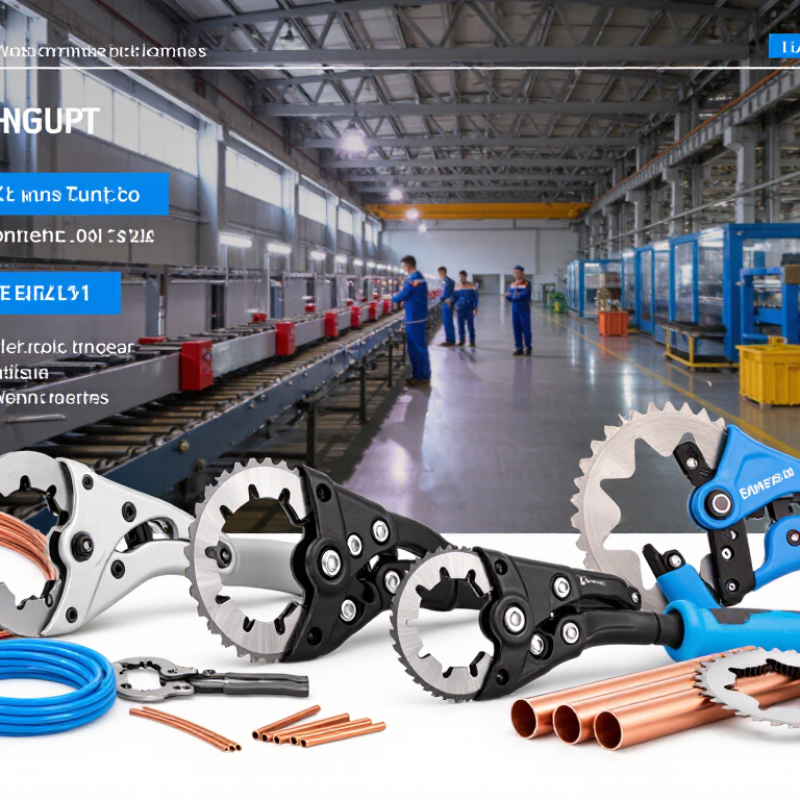
Types of Plumbing Cutters Made by Chinese Manufacturers
Chinese manufacturers produce several plumbing cutter types for different pipe materials and jobsite conditions. Rotary pipe cutters are common for copper, brass, aluminum, and thin-wall steel pipes. A compact wheel circles the pipe and creates a clean, controlled cut. Many factories offer adjustable models for narrow service spaces. These tools often include spare cutting wheels and hardened steel frames.
Ratchet PVC and PPR cutters suit plastic pipes used in water supply systems. Their curved blades reduce crushing around the cut edge. Larger handles provide better leverage during repeated work. For multilayer and composite pipes, manufacturers make roller cutters with calibrated guides. Chain pipe cutters handle larger diameters, especially when a full rotation is difficult. Electric and battery-powered versions also appear in professional tool ranges.
Experienced buyers should check blade hardness, handle alignment, wheel replacement, and actual pipe tests. A smooth cut matters because rough edges can damage seals or complicate fitting installation. Chinese factories commonly test samples for cutting force, burr formation, and repeated opening cycles. Packaging may include measurement guides, protective sleeves, and storage cases. Still, not every inexpensive cutter performs equally well. Some handles feel strong but loosen after heavy use. That detail is easy to miss. Requesting sample tools and batch inspection records can reveal these weaknesses before a large order.
| Plumbing Cutter Type | Typical Cutting Capacity | Compatible Pipe Materials | Typical Blade or Cutting System | Common Applications | Key Product Features | Typical Buyer Requirements |
|---|---|---|---|---|---|---|
| Manual Ratchet Pipe Cutter | Approximately 0–42 mm outside diameter | PVC CPVC PE PEX | Replaceable hardened steel or stainless steel blade with ratchet-assisted handles | Plumbing installation, heating systems, irrigation and general plastic-pipe maintenance | Low cutting effort, quick release mechanism, clean square cuts and compact operation | Blade hardness, cutting range, handle strength, spare-blade availability and packaging format |
| Plastic Tube Scissor Cutter | Approximately 0–25 mm outside diameter | PVC PE PP PEX | Single stainless steel or carbon steel guillotine-style blade | Small-diameter tubing, water filters, pneumatic tubing and household plumbing work | Lightweight body, one-handed use, safety lock and relatively low purchase cost | Cutting precision, corrosion resistance, spring performance and handle ergonomics |
| Heavy-Duty Ratchet Cutter | Approximately 0–63 mm outside diameter | PVC CPVC ABS PE | Thick replaceable blade with multi-step ratchet drive | Construction sites, drainage pipe installation and larger plastic pipe systems | High mechanical advantage, reinforced frame, stable pipe positioning and reduced hand fatigue | Maximum pipe size, blade replacement method, frame durability and cycle-life testing |
| Copper Tube Cutter | Approximately 3–35 mm outside diameter | Copper Brass Aluminium Thin-wall metal tube | Rotating cutting wheel with adjustable feed screw and guide rollers | Refrigeration, HVAC, water-supply and gas-line preparation before joining | Controlled cutting depth, compact body, replaceable wheel and smooth tube guidance | Wheel material, burr formation, minimum tube diameter, adjustment smoothness and spare parts |
| Mini Tube Cutter | Approximately 3–22 mm outside diameter | Copper Brass Aluminium | Small rotary cutting wheel with compact screw adjustment | Restricted spaces, appliance repair, refrigeration service and cabinet plumbing | Small turning radius, low weight and suitability for confined installation areas | Overall dimensions, wheel concentricity, grip design, burr control and corrosion protection |
| Soil and Drain Pipe Cutter | Commonly used for larger plastic pipe sizes, often up to approximately 110 mm | PVC-U ABS PE | Long-handle ratchet mechanism, chain-assisted system or heavy-duty blade assembly | Drainage, sewer, rainwater and underground non-metallic pipe installation | High leverage, reinforced cutting head and improved stability on large-diameter pipe | Pipe-size range, operating force, transport dimensions, safety lock and structural testing |
| PEX and Multilayer Pipe Cutter | Approximately 0–32 mm outside diameter | PEX PE-RT PB Multilayer pipe | Precision curved blade designed to minimize ovalization and deformation | Underfloor heating, potable-water systems and flexible plumbing installations | Clean perpendicular cuts, return spring, locking mechanism and comfortable grip | Cut quality, blade alignment, compatibility with pipe-wall thickness and long-term spring durability |
| PVC Ratchet Shear with Chamfering Function | Approximately 0–42 mm outside diameter | PVC CPVC PP-R PE | Ratchet blade with integrated deburring or chamfering accessory | Solvent welding, socket fusion preparation and general plastic-pipe installation | Combines cutting and edge preparation, reducing the number of tools required on site | Chamfer quality, blade replacement, locking safety, cutting angle and tool-life verification |
| PP-R Pipe Cutter | Usually approximately 0–42 mm outside diameter for hand-operated models | PP-R PP-RCT PP | Hardened blade or ratchet blade with a broad pipe-support surface | Hot- and cold-water distribution systems using polypropylene pressure pipe | Square cutting performance, stable support and reduced pipe deformation | Compatibility with pipe wall thickness, blade sharpness, handle load and dimensional consistency |
| Chain-Type Pipe Cutter | Varies by chain length; commonly selected for medium and large pipe diameters | Cast iron Ductile iron Steel Plastic pipe | Multiple cutting wheels mounted on an adjustable chain | Repair work where a full circular cutting path is difficult or access is limited | Adaptable to different diameters, compact storage and suitability for irregular workspaces | Chain strength, wheel material, pipe-diameter range, handle compatibility and replacement components |
| Deburring and Reaming Tool | Suitable for the internal and external edges of cut tubes and pipes | Copper Steel PVC PEX | Replaceable reaming blades or hardened scraping edges | Preparing pipe ends for soldering, compression fittings, press fittings and solvent joints | Removes sharp edges, supports better fitting insertion and helps reduce flow obstruction | Blade sharpness, suitable material range, grip comfort, corrosion resistance and replacement-blade supply |
| Battery-Powered Pipe Cutter | Model-dependent; commonly designed for small to medium plastic or metal tubes | PVC PEX Copper Thin-wall metal tube | Motor-driven rotary wheel or powered blade mechanism | High-volume installation, maintenance work and applications requiring reduced manual effort | Fast operation, repeatable cuts and improved productivity in continuous work | Battery voltage, charging system, runtime, safety controls, cutting capacity and service parts |
| Quality and Export Inspection Points | Specified according to the selected cutter type and target market | Material-specific inspection based on the intended pipe application | Dimensional inspection, blade hardness checks, functional testing and surface-finish inspection | Private-label sourcing, wholesale distribution, project supply and professional-tool importation | Consistent cutting performance, secure packaging, traceable production batches and clear user instructions | Sample approval, agreed tolerances, carton drop testing, labeling language, spare parts and requested compliance documentation |
FAQS
Rotary cutters suit copper, brass, aluminum, and thin-wall steel pipes. Ratchet cutters work well with PVC and PPR pipes. Chain cutters handle larger diameters.
Compact rotary cutters can work in restricted spaces. Their small wheels circle the pipe gradually. Space still matters.
Curved blades reduce crushing around the cut edge. Longer handles provide stronger leverage during repeated cutting. They may feel tiring during extended work.
Check blade hardness, handle alignment, wheel replacement, and cutting results. Test actual pipes, not only catalog samples. Pictures are insufficient.
Rough edges can damage seals or complicate fitting installation. A clean edge supports faster assembly and fewer adjustments. Small burrs still matter.
Request sample tools and batch inspection records. Check cutting force, burr formation, and repeated opening cycles. Audit records may still miss occasional defects.
Options may include jaw geometry, handle length, surface treatment, markings, and packaging. Use clear drawings and approve physical samples. Comfort is not universal.
Request material certificates, dimensional checks, inspection records, and carton specifications. Also verify labels, customs codes, pallets, and destination packaging rules. Low prices deserve careful questions.
Conclusion
China has become an important sourcing destination for Plumbing Cutters, offering a broad range of tools for cutting plastic, copper, stainless steel, and other common piping materials. Chinese manufacturers typically produce manual ratchet cutters, rotary tube cutters, heavy-duty pipe cutters, and customized models for professional and industrial applications. High-quality products are expected to provide sharp and durable blades, smooth operation, accurate cutting, ergonomic handles, corrosion resistance, and reliable service life. Many factories support consistent quality through material inspection, precision machining, assembly checks, and performance testing.
For global buyers, evaluating a Chinese supplier involves reviewing production capabilities, quality-control procedures, technical documentation, sample performance, communication efficiency, and delivery reliability. Buyers should also confirm compliance with relevant international standards, packaging requirements, labeling rules, and export procedures. Customization may include blade materials, handle design, dimensions, color, packaging, and private specifications. By combining supplier verification with clear technical requirements and inspection plans, international purchasers can select dependable Plumbing Cutters that meet project needs while achieving stable quality and efficient global delivery.
